





 Portuguese
  English
  Spanish
  5 min of reading
  0 comments


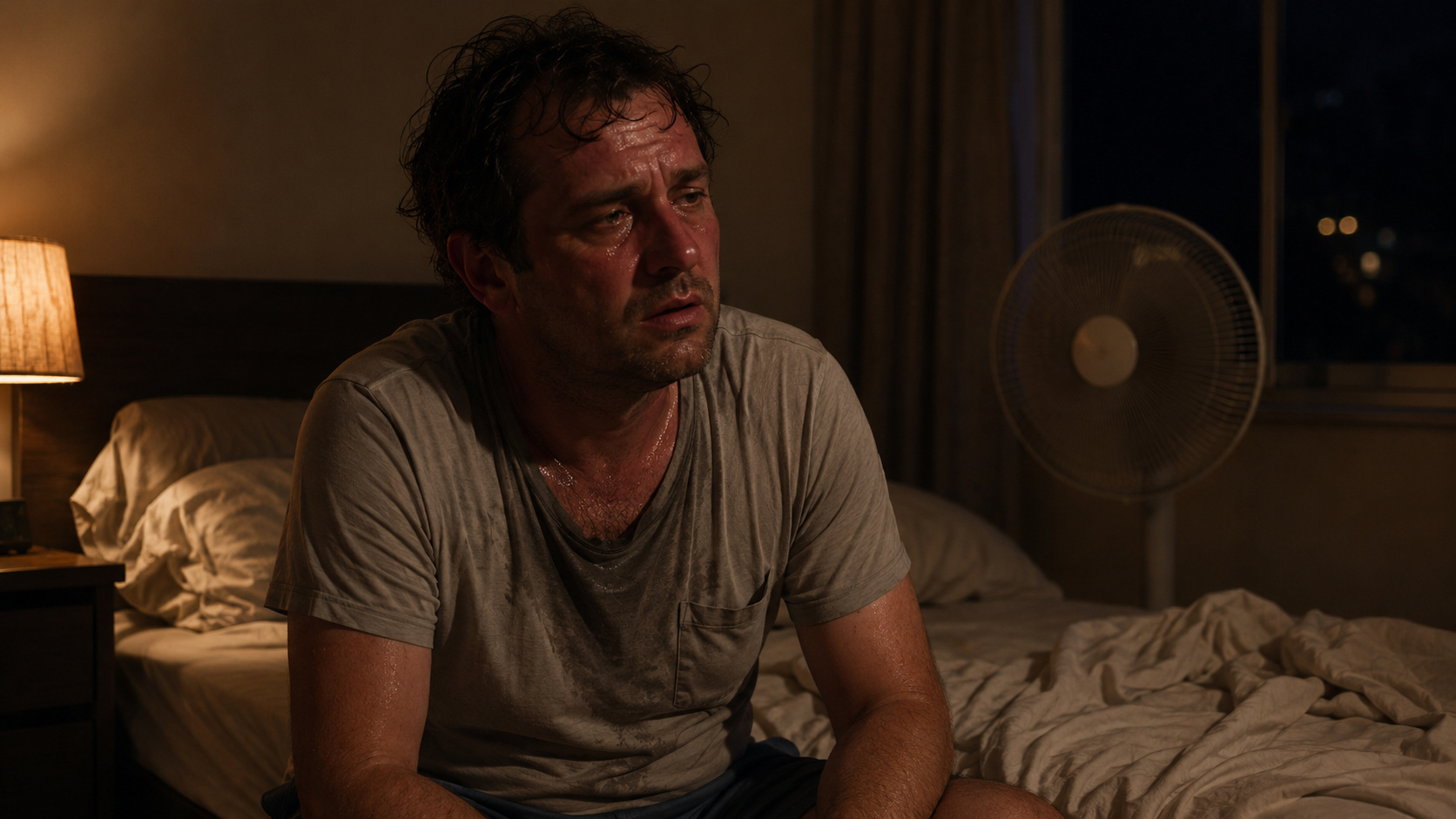
Study with over 7 million sleep records in 68 countries shows that warmer nights reduce rest and increase the risk of insufficient sleep.
Sleeping has always been one of the most basic activities of human life, but the advance of global warming may be affecting precisely this essential process for physical and mental recovery. A study published in the One Earth journal showed that higher nighttime temperatures reduce sleep time and increase the risk of insufficient restful nights. The research analyzed over 7 million sleep records from 47,628 adults in 68 countries, with data collected by smart wristbands between 2015 and 2017 and cross-referenced with local weather information. According to the authors, this is one of the largest analyses ever conducted on the relationship between temperature and human sleep in real-life conditions, outside the laboratory.
Millions of monitored nights showed that nighttime heat consistently reduces sleep
The study was designed to answer a simple but difficult question to measure on a global scale: do warmer nights really impair sleep? The answer found by the researchers was yes. The effect appeared consistently in different countries, seasons, and climatic contexts.


According to the authors, nighttime heat reduces sleep mainly because it disrupts the onset of falling asleep. In other words, people tend to take longer to fall asleep on nights above the local average and, at the same time, start waking up earlier. The greatest impact is not on long awakenings throughout the night, but on the overall shortening of the rest window.
-
Scientists uncover surprising secrets of a mysterious man buried in Finland 400 years ago

-
Former xAI engineer says he tried to warn about security flaws in Grok, ended up fired, and has now put Elon Musk’s company in a legal dispute that could reveal explosive behind-the-scenes details of artificial intelligence.

-
Finnish startup transforms recycled wood and agricultural waste into a renewable supercapacitor, promises up to 80% lower cost and targets more stable power grids without relying heavily on lithium, nickel, and cobalt.
-
Argus robot with 20 eyes and 20 legs surprises by walking on sand, concrete, and vegetation without relying on front or back.


This detail is important because it shows that the problem can be silent. Often, the person does not immediately notice a major disruption in the middle of the night but loses precious minutes at the beginning and end of sleep, accumulating a deficit over time.
Nights above 30°C caused an average loss of more than 14 minutes of sleep
The effects were clearer at higher temperatures. On nights above 30°C, participants slept on average just over 14 minutes less per night. Additionally, there was a significant increase in the likelihood of a person sleeping less than seven hours, a range often used as a minimum reference for adults.
Individually, losing about 14 minutes may seem insignificant. The problem lies in repetition. According to researchers from the journal One Earth, when this pattern repeats night after night, over months or years, the accumulated effect turns into a significant reduction in annual rest.
It is precisely this invisible accumulation that makes the phenomenon more concerning. Warming does not need to cause a major acute crisis in a single night to affect health. It can act slowly, a few minutes at a time, until it produces a significant loss of sleep over a lifetime.
The body needs to lose heat to sleep, and a warm environment hinders this process
The biological explanation is straightforward. To fall asleep well, the human body needs to reduce its core temperature. During the night, the body increases blood flow to extremities like hands and feet to dissipate heat to the environment. When the bedroom or the external environment remains too warm, this mechanism loses efficiency.
Instead of cooling easily, the body finds it difficult to release heat. This delays the onset of sleep and compromises the total duration of rest. This is why many people report difficulty sleeping during heatwaves even when they are physically tired.
The study reinforces that this process does not depend solely on subjective thermal sensation. It appears in objective sleep measurements, recorded by monitoring devices, which makes the evidence more robust than simple individual reports.
Elderly, women, and residents of poorer countries suffered greater impacts
The researchers from One Earth also observed that the effect of heat is not distributed equally among all groups. The loss of sleep was more intense among elderly, women, and residents of lower-income countries.
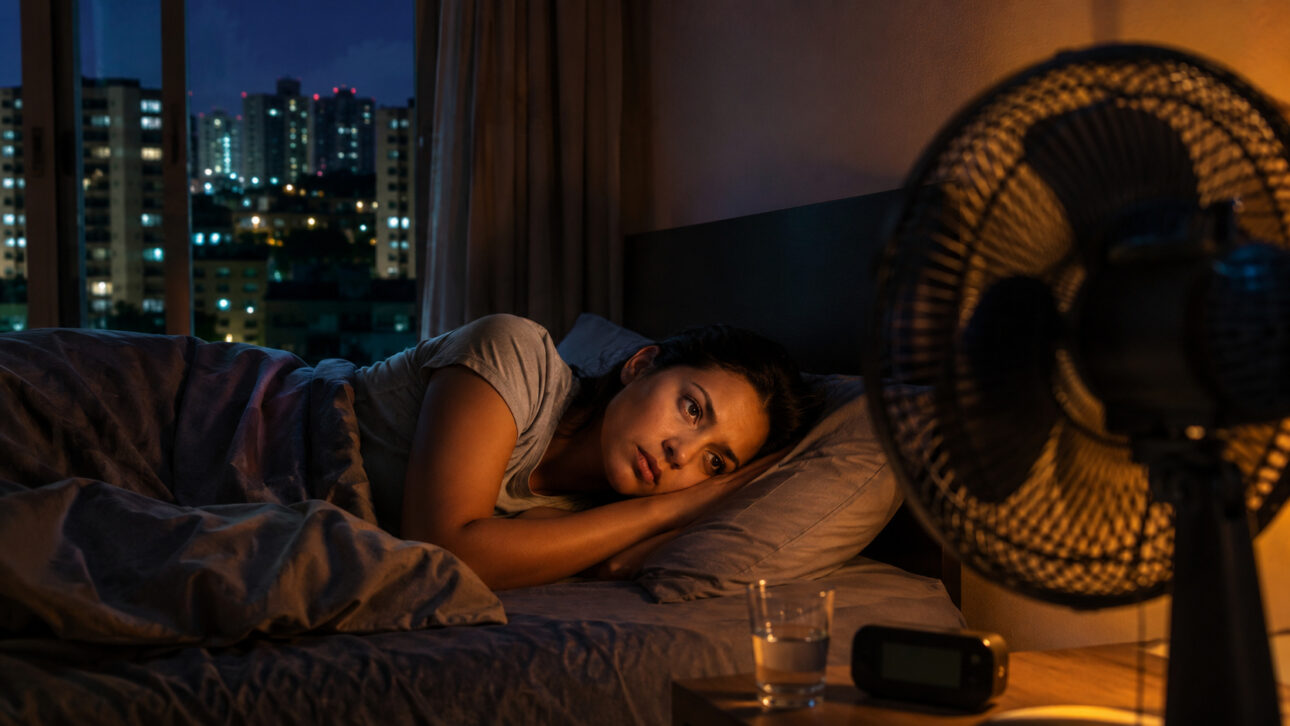
One of the interpretations presented by the authors involves differences in access to air conditioning, adequate ventilation, housing quality, and the ability to adapt to extreme heat. In more vulnerable regions, the same temperature rise tends to produce a stronger effect because people have fewer resources to neutralize the warm environment during the night.
Another important point is that residents of traditionally hot areas did not show sufficient adaptation to neutralize the problem. This weakens the idea that populations accustomed to heat would simply adjust spontaneously to the increase in nighttime temperatures.
Insufficient sleep affects cardiovascular health, cognition, and mental well-being
Sleeping less doesn’t just mean waking up tired. According to the authors and the medical literature cited in the study, insufficient sleep is associated with a higher risk of cardiovascular diseases, metabolic changes, decreased cognitive performance, mood deterioration, and reduced physical and mental capacity.
This helps explain why researchers treat sleep as one of the less visible ways in which climate change can affect human health. Floods, droughts, and heatwaves are immediately perceived. Meanwhile, the gradual reduction of sleep hours occurs inside bedrooms, houses, and apartments, without the same public visibility.
The impact, however, can be profound. When rest is continuously eroded, the loss ceases to be just individual and becomes a collective public health issue.
Global warming could take away 50 to 58 hours of sleep per person per year by the end of the century
In addition to historical analysis, the researchers also used climate projections to estimate what might happen in the coming decades. According to the study, if global warming continues to advance, temperatures unsuitable for sleep could cause an average loss of 50 to 58 hours of sleep per person per year by 2099.
The authors emphasize that this effect tends to be more severe in regions more exposed to heat and in populations with fewer resources for adaptation, which exacerbates existing inequalities. In this scenario, global warming not only reduces thermal comfort. It can directly reduce one of the biological foundations of human health.
The major conclusion of the study is that the climate is beginning to interfere with a fundamental biological behavior. And this can occur discreetly, night after night, until it turns into hundreds of hours of lost rest over a lifetime.






Be the first to react!