Portuguese
  Spanish




Revealed The Engineering Giant That Transforms Mining With Technology And Real-Time Monitoring Systems Capable Of Replacing The Labor Of 40,000 Miners
Imagine a machine so powerful that it replaces the work of 40,000 miners, operating with unmatched precision and efficiency, while transforming the landscape of global mining. This is the Bagger 293, the engineering giant built by ThyssenKrupp, which, with its cutting-edge technology and real-time monitoring system, is revolutionizing the industry.
Discover how this masterpiece, holding world records, can excavate mountains in days and redefine the limits of sustainable mining.
Colossal Machines: Bagger 293, The Largest Excavator In The World
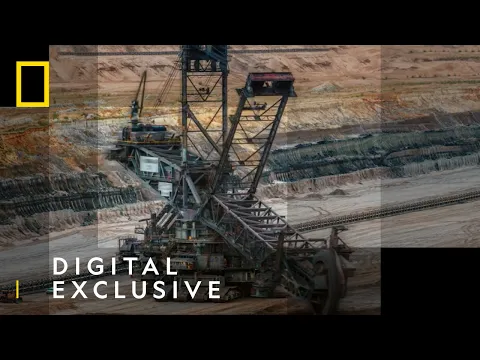

The Bagger 293, built by the German company ThyssenKrupp, stands out as one of the greatest technological feats in mining engineering. This monumental machine was designed to operate in open-pit mining, replacing the work of about 40,000 miners with a continuous monitoring system capable of performing extractions effectively and on a large scale.
-
China could reduce iron ore imports from 80% to 50% of consumption by 2030, while its share in global steel production falls from 52% to 46%, in a shift that could reshape the global market, says CMRG.

-
Brazil is sitting on one of the largest lithium reserves in the world, in the Jequitinhonha Valley, but national mining has almost become an appendage of China: 97% of the metal’s export goes to a single country, which also dominates refining.
-
Iron ore falls to 762 yuan in China as real estate sales decline and steel production hits lowest level since 2018
-
Brazil has minerals, clean energy, and a waiting market, but it could miss a billion-dollar opportunity if it doesn’t speed up the race for green minerals, while the steel industry seeks to reduce emissions.


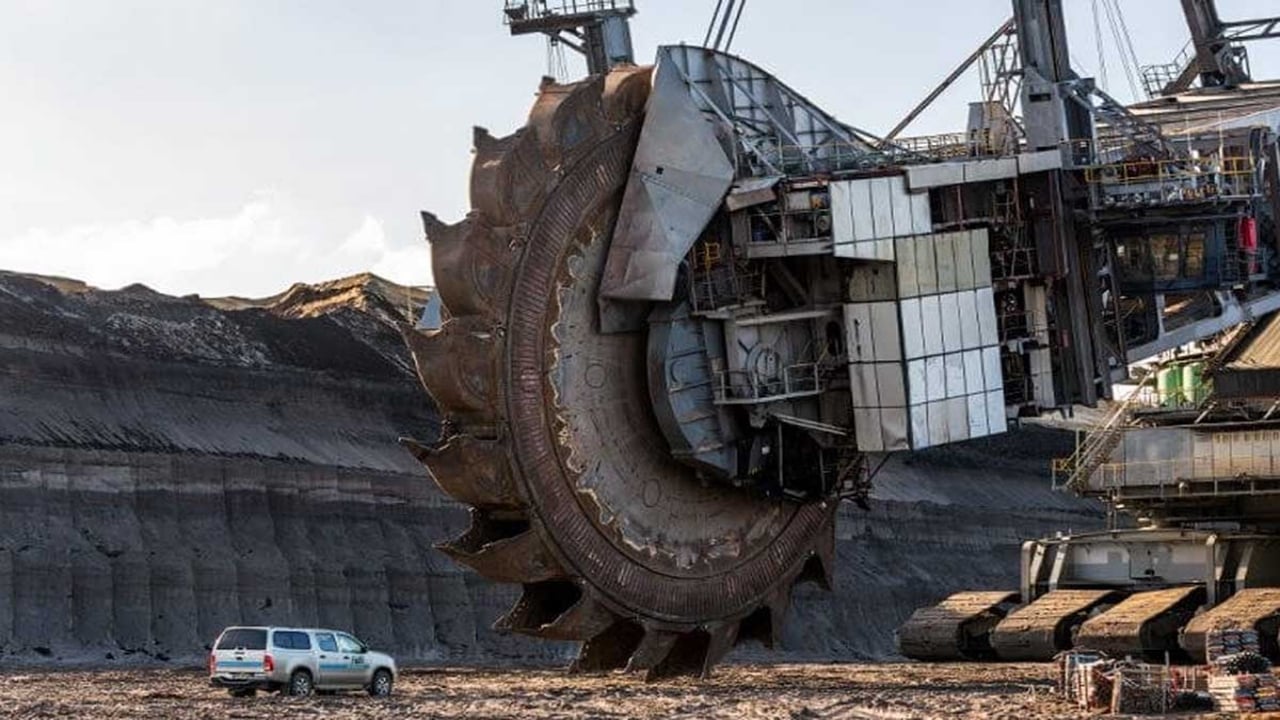
Considered the largest excavator in the world, the Bagger 293 is a colossus of engineering. At an impressive 226 meters long, 96 meters high, and weighing approximately 14,000 tons, its immense structure rivals the height of two Eiffel Towers.
Designed by ThyssenKrupp, the machine holds Guinness records due to its robust structure and ability to operate continuously in mining, demonstrating unprecedented mobility and efficiency in the industry.
Bagger 293 Can Demolish A Hill In A Few Days
Equipped with a platform that is 22 meters in diameter and 18 large buckets, the equipment can excavate and transport enormous amounts of soil continuously. With its intense productivity, the Bagger 293 can demolish a hill in a few days.
Currently, it is operating in one of the largest open-pit mines in the world, in North Rhine-Westphalia, Germany, where its advanced technology significantly contributes to increasing productivity rates in coal mining.
Powerful Excavator Consumes Energy Equivalent To That Of A Small City, With About 20,000 Inhabitants!
The aluminum conveyor belt system allows the Bagger 293 to move, even at a low speed, reaching up to 600 meters per hour. With its continuous excavation capability, the machine removes up to 6 million tons of earth daily.
Although it consumes energy equivalent to that of a small city, with about 20,000 inhabitants, its extraction efficiency compensates for the high consumption, optimizing operation time and thus costs.
Environmental Challenges And Usage Limitations In The Mining Industry
The use of the Bagger 293 in mining presents some environmental issues, such as extensive vegetation removal and dust generation. Additionally, its large size requires it to operate on vast and flat terrain, posing difficulties in rugged areas where it may need assistance from other machines for mobility.
Despite these obstacles, the excavator stands out for its efficiency in extensive mining locations, such as coal mines, where it is essential to remove large volumes of earth to access mineral deposits.
This ‘Toy’ Cost About 100 Million Dollars
With technology that promotes efficiency and high productivity, the Bagger 293 represents the future of large-scale mining. Although its construction cost in 1995 was high—about 100 million dollars—the return on investment is justified in intensive operations, replacing the work of tens of thousands of miners.