Portuguese
  Spanish


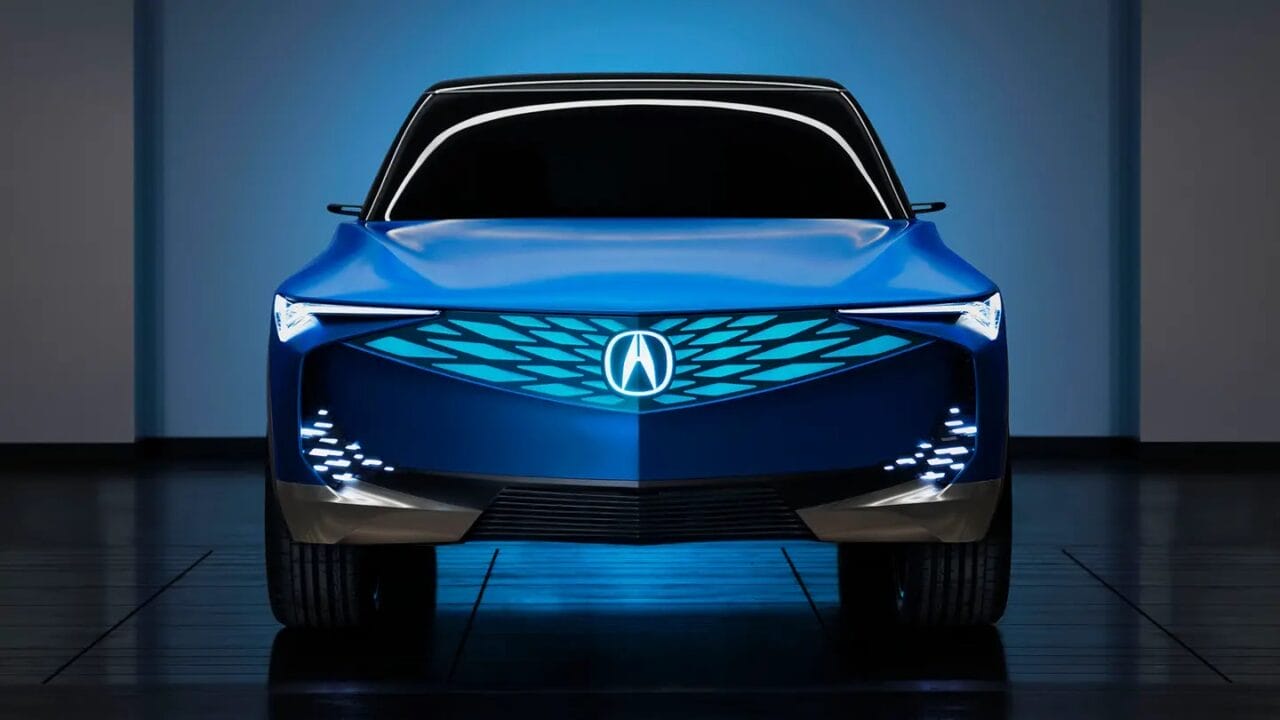

Honda Prepares Launch of Electric SUV Acura ZDX to Compete with BYD and Volvo, Promising High Performance Even in the Base Version and Advanced Technologies.
Honda’s new electric SUV has already been announced and promises to change the game against BYD and Volvo. This is because, in addition to being full of new technologies, power, and design, it is a great example of electrification. The model will hit the market in 2024.
Acura ZDX Electric SUV from Honda Delivers Over 300 Horsepower
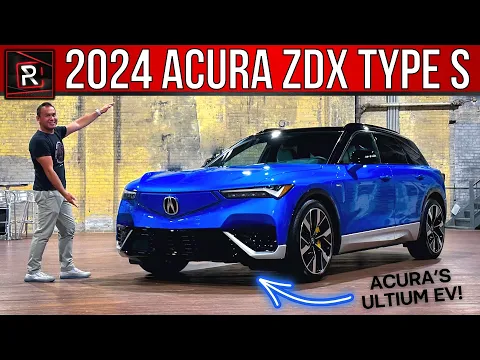

Acura, Honda’s luxury car division, revealed its next launch at the Monterey Car Week: the new Acura ZDX electric SUV. This model marks the company’s debut among fully electric vehicles. Available in two versions (ZDX and ZDX Type S), Honda’s SUV will enter the global market in 2024 to compete with BYD and Volvo.
However, there is still no data confirming its arrival in Brazil. Although information is very limited, the media has already speculated some specifications. For example, the ZDX Type S is expected to come equipped with an engine of approximately 500 horsepower, while its base version should feature around 340 horsepower in its A-Spec.
-
Hilux’s little sister: Toyota relaunches the Land Cruiser 70 in the 2027 lineup with over 40 years of production, a 2.8 turbo diesel engine with 201 hp and 51 kgfm, a six-speed automatic transmission, and a renewed retro look.

-
Automatic, economical, and known for reliability: with a 1.5 engine of up to 110 hp, CVT transmission, seven airbags, and fuel consumption of up to 15.9 km/l, this used hatchback appears as a rational alternative to Polo, HB20, and Onix; meet the Toyota Yaris XLS 2020.
-
He surpassed the Tera, Creta, and Tracker: With a TSI engine of up to 150 hp, 6-speed automatic transmission, and a 373-liter trunk, the Volkswagen T-Cross was the best-selling SUV in June, with 11,753 registrations.

-
It looks factory-made, but it came out of a workshop: a mechanic from Pernambuco builds a handcrafted “mini Toyota,” drives it through the streets, and the video goes viral on social media, leaving residents astonished.



Featuring a DC Fast Charging system, the electric SUV can achieve rates of up to 190 kW. According to the automaker, it is possible to recharge about 130 km of autonomy in about 10 minutes.
Finally, the audio experience will be luxurious due to the Bang & Olufsen sound system. In terms of technology, the ZDX Type S will feature Automatic Parking Assistance and an advanced Driving Assistance system with Cruise.
SUV Electric Will Have a Price Equivalent to R$ 294,000 in Direct Conversion
Regarding the price, it is estimated that Honda’s SUV, the Acura ZDX, will have an initial cost of around US$ 60,000, equivalent to R$ 294,000 in direct conversion.
The ZDX Type S version is expected to be sold for around US$ 70,000, equivalent to R$ 343,000 in direct conversion, excluding taxes. The automaker plans innovation in the sales process by adopting an omnichannel digital model.
The start of pre-sales is scheduled for this year, with the first deliveries set for early 2024. Those interested should register on the automaker’s official website. More advance data and details about the reservation of the Acura ZDX can also be found on the page. The launch of Honda’s new SUV is not without reason, of course.
After all, the automaker must position itself in a scenario where BYD and Volvo are gaining prominence. Thus, even aimed at a limited audience, the new Acura ZDX will undoubtedly play an important role in this competition.
Volvo Brings New Electric SUV to the Brazilian Market
Everyone is waiting for the day when electric cars will have competitive prices with equivalent combustion cars. BYD is showing with the Dolphin that if the price is good, people will buy. However, it is not the only one, and even Volvo has launched the EX30 with prices starting at R$ 220,000 to explore what is currently the category of the least expensive electrics.
The EX30 is expected to start arriving in Brazil imported from China only in April and May of next year; however, this has not prevented nearly two thousand people from already making a reservation.
The model is capable of delivering 276 horsepower and 34.9 kgfm of torque. The difference lies in the battery pack capacity. The entry-level Core Single Motor version delivers 51 kWh, while the others deliver up to 69 kWh. Thus, the cheapest version goes from 0 to 100 km/h in 5.7 seconds, while the other versions accomplish the task in 5.3 seconds.