Portuguese
  Spanish


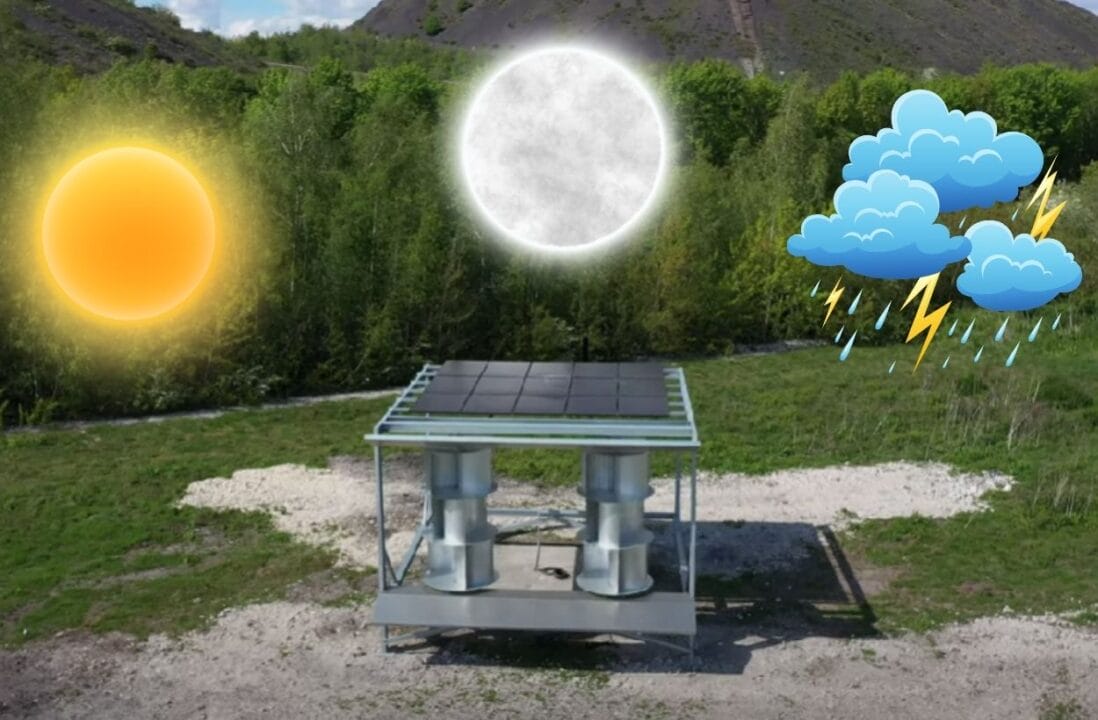

French Innovation Launches Hybrid System That Combines Wind Turbines With Solar Panels, Promising Continuous Renewable Energy Generation in Urban Areas, Including at Night and on Rainy Days, Challenging the Traditional Limitations of Solar Energy and Paving the Way for Sustainable Energy Solutions in the Heart of Cities.
In an era where the demand for renewable energy sources is growing exponentially, an innovation from France promises to revolutionize the concept of energy generation in urban areas by Unéole. The company Uneólise presents a hybrid system that, by combining wind turbines with photovoltaic solar panels, guarantees the production of clean energy both during the day and at night and on rainy days. This system represents a milestone in the search for sustainable energy solutions adaptable to the limited spaces of cities.
The main challenge faced by solar energy, the reliance on weather conditions and direct sunlight, is skillfully circumvented with the introduction of this hybrid system. Traditionally, photovoltaic solar panels, while effective during the day, see their production drastically reduced or even halted at night or on cloudy days. Unéole’s solution offers an innovative alternative that utilizes the airspace above rooftops to capture not only sunlight but also wind energy.
How the Hybrid System in Solar Energy Works?

The system consists of a platform that efficiently integrates silent wind turbines — specifically designed for the urban environment — and solar panels that cover the surface of the structure. This platform is designed to adapt to a variety of rooftops, thus maximizing the energy potential of each building.
-
Brazil saved US$ 32.4 billion in 2025 by switching from fossil to renewable energy and only ranked behind China and the United States on the IRENA global podium.

-
Fired during apartheid and with a little borrowed money, an electrician started with a borrowed truck and transformed electrical services into a group connected to energy, real estate, and infrastructure in South Africa.

-
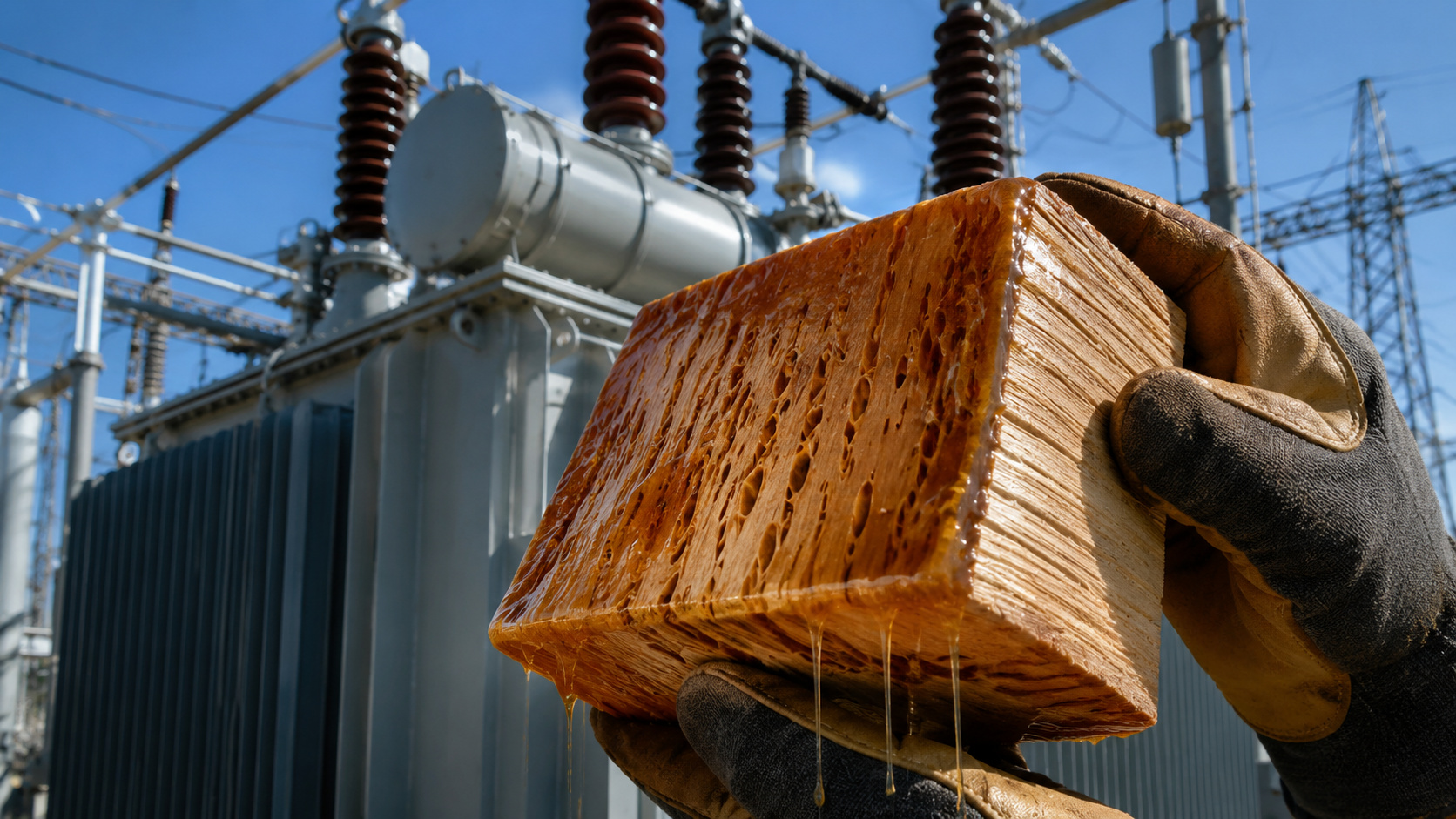
Wood has ceased to be just a construction material in Yale research and has become insulation for electrical transformers that face intense heat, aging, and increasing pressure from the renewable energy-powered grid.
-
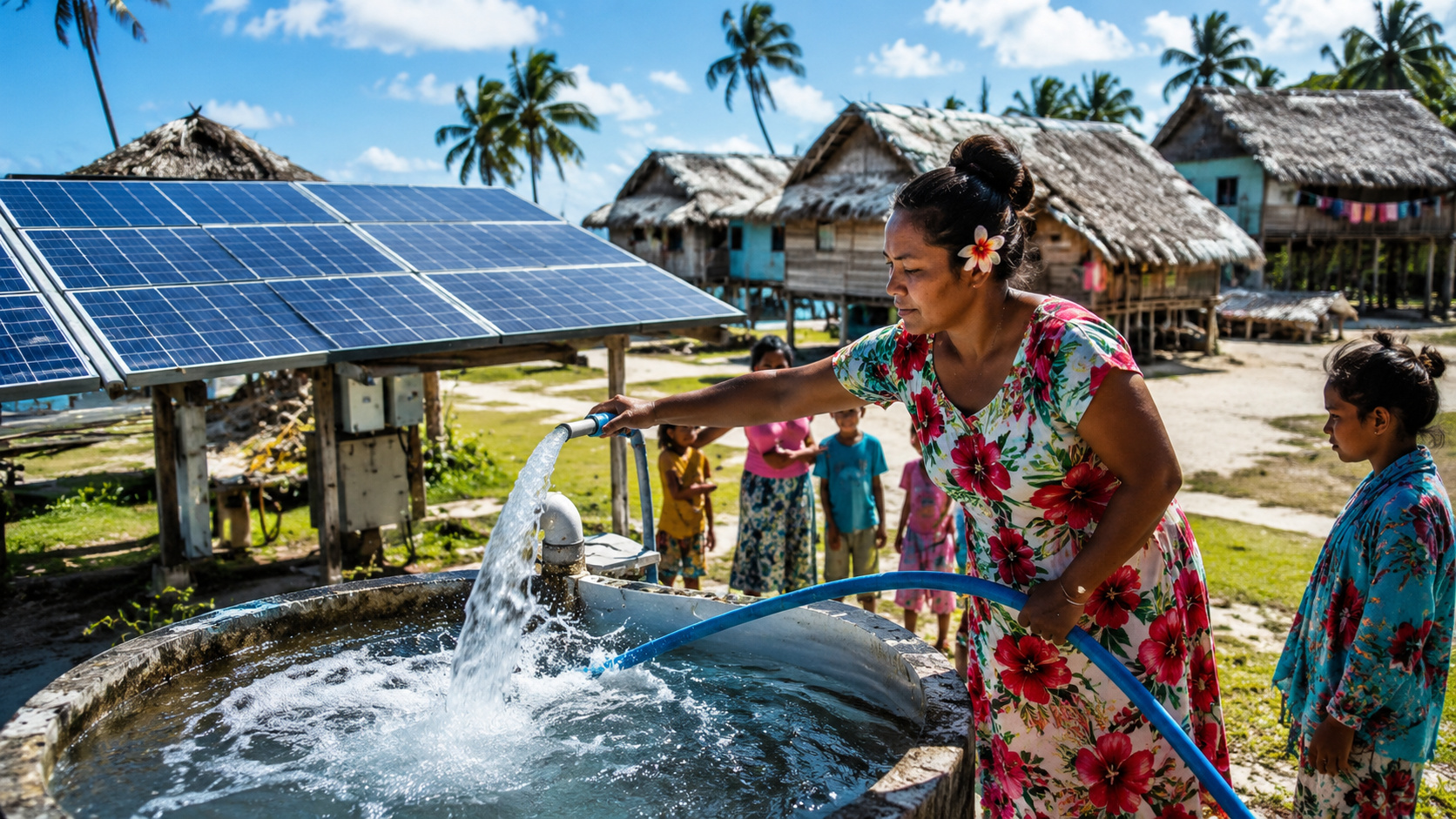
More than 1,000 residents of a remote island in Kiribati now have clean water and electricity with solar systems operated by the community itself.

During the day, the photovoltaic panels capture sunlight, while the wind turbines complement energy generation by harnessing urban winds. At night, the turbines continue to produce energy, ensuring a continuous source of renewable electricity.
Advantages and Potential
This hybrid system not only promises to maximize the efficiency of available space in urban areas but also represents a significant advancement in diversifying renewable energy sources. By offering a solution that generates energy consistently, regardless of weather conditions, the system opens up new possibilities for energy sustainability in cities. Furthermore, with a competitive installation cost and the promise of clean, uninterrupted energy, the hybrid system could attract widespread interest from both residential and commercial consumers.
The Future of Renewable Energy: Complementarity, Not Competition
The introduction of this hybrid system reinforces the idea that the future of renewable energy does not lie in competition between different technologies, but in their integration and complementarity. By combining photovoltaic solar energy with wind energy, Unéole’s hybrid system exemplifies how innovative solutions can maximize the generation of clean energy, bringing us closer to a sustainable future. This advancement highlights the importance of ongoing innovation in the field of renewable energies, pointing to a horizon where clean energy is accessible to all, at any time.
Unéole’s hybrid system is an invitation to rethink how cities can become self-sufficient in energy, using available natural resources intelligently and sustainably. As we move towards an era of greater environmental awareness and demand for clean energy, technologies like this play a crucial role in transforming the global energy landscape, proving that it is possible to generate solar energy even at night and on rainy days.