Portuguese
  Spanish





More Than Three Years of Research Result in Liquid Robot Capable of Navigating the Human Body and Could Transform the Future of Minimally Invasive Surgical Procedures.
A major technological innovation in the medical field recently emerged in South Korea.
Additionally, the novelty caught worldwide attention.
Researchers at the Korea Advanced Institute of Science and Technology (KAIST) presented a functional liquid robot in June 2024.
Therefore, the equipment moves safely and controlled within the internal environments of the human body.
Experts consider this creation one of the greatest innovations in medical robotics of the last decade.
Thus, the expectation is to mobilize billions in investments in the global healthcare sector.
-
In Andradina, in the interior of SP, a tannery transformed tilapia skin that slaughterhouses used to throw away into exotic leather for bags, shoes, and even wedding dresses, producing about 2,000 pieces per month and exporting to seven countries, proving that fish waste has become high-value fashion.

-
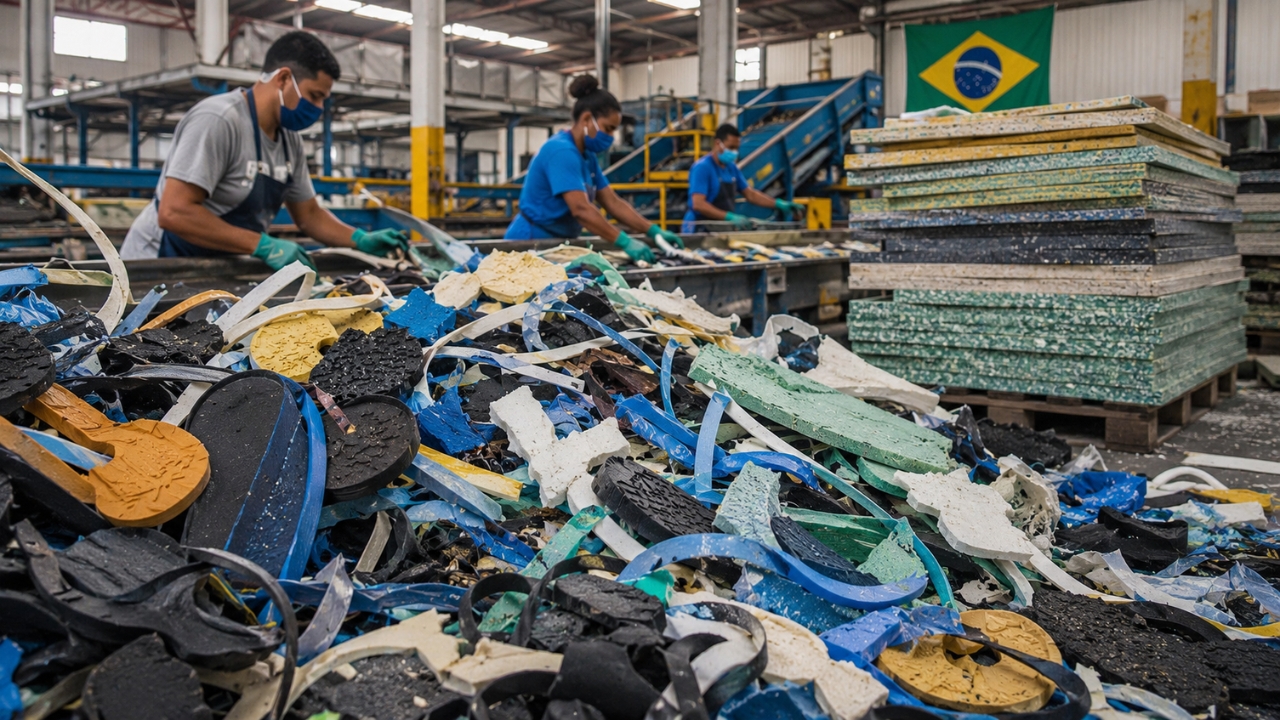
The industrial waste that even recyclers didn’t want has gained value in the interior of Bahia: two entrepreneurs invested R$ 2.8 million to transform 350 tons per year of foam, rubber, and plastic into boards that can replace wood and MDF.

-
What is a red flashlight used for, after all? See why it is so commonly used at night.

-
He has never read a line of code, but he already knows how to work: the French company UMA presented in Paris the Northstar, its first AI-powered humanoid robot designed for factories and warehouses, capable of copying tasks just by observing an employee in action.



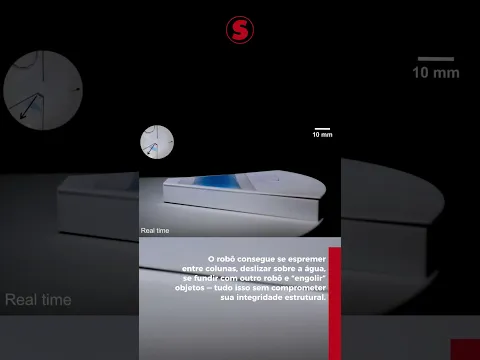
Doctors and engineers highlight that this advance represents a leap for minimally invasive medicine.
Hence, this solution facilitates the removal of clots, delivery of medications, and complex internal repairs.

Technical Research Reveals Unique Potential for Surgeries
Mechanical and biomedical engineering teams at KAIST developed the prototype.
Furthermore, the South Korean government financially supported the entire research.
According to the official report, researchers conducted three years of laboratory tests and simulations.
Thus, the goal was to ensure total safety and practical viability.
The liquid robot combines special metal alloys with magnetic properties.
Therefore, this composition allows it to change shape and movement according to external magnetic fields.
Additionally, the flexible structure compresses or expands the robot to pass through narrow spaces.
This way, the design avoids damage to sensitive body tissues.
Professor Kyu-Jin Cho, who leads the project, assures that tests under real conditions confirmed high precision.
Thus, he believes in the great potential for application.
Medical and Economic Impacts of the Discovery
The creation of the liquid robot opens a strategic opportunity for hospitals to modernize procedures.
Moreover, this technology can reduce hospitalization costs, surgery time, and risks to patients.
Consequently, the advance stimulates new global partnerships and attracts foreign capital.
Hence, biotechnology startups see space to grow alongside this solution.
KAIST data projects that the market for robotic medical devices could generate over 3 billion dollars by 2030.
Therefore, this value includes innovations similar to the liquid robot.
The team emphasizes that clinical tests are still necessary before operating on humans.
Thus, the forecast is to start trials between 2025 and 2026 with ethical rigor.
Expectations for Use and Future Challenges
Despite the optimism, the new technology also faces challenges to scale up.
Therefore, researchers acknowledge that production costs remain high.
The team seeks cheaper materials and more efficient processes.
Moreover, regulatory agencies are already discussing clear rules to ensure the safety of doctors and patients.
According to the South Korean Ministry of Health, a regulatory plan is underway.
Thus, this planning includes tests on animal models already in the second half of 2025.
This cautious approach avoids common problems in other medical innovations.
Therefore, the project reduces risks of improper use or unexpected side effects.
Innovation that Puts South Korea in Global Spotlight
This technology confirms a global trend of creating adaptable robots for the human body.
Additionally, researchers are seeking safer ways to perform complex procedures.
In 2023, teams in Europe advanced in developing nanorobots to treat cancer.
Thus, the World Health Organization published this data.
These movements reinforce the importance of balancing innovation and responsibility.
Therefore, technological advances deliver real results without compromising safety.
What Does the Future Hold for Medicine?
Technology analysts believe that the liquid robot could revolutionize medicine in a short time.
Additionally, the device allows for less invasive procedures with faster recovery.
On the other hand, the medical community warns about the risks of rushing the process.
Thus, excessive haste could threaten the sustainability of the technology.
Researchers advocate for fair, accessible, and transparent regulation.
Moreover, the South Korean government bets on efficient governance with support from universities and hospitals.
This joint work ensures that the innovation benefits millions of people worldwide.
Therefore, the expectation is to start tests on humans in 2026, marking a new phase in biomedical robotics.
What do you think should be a priority for science: to use this technology now to save lives or to proceed with caution to ensure complete safety?