Portuguese
  Spanish


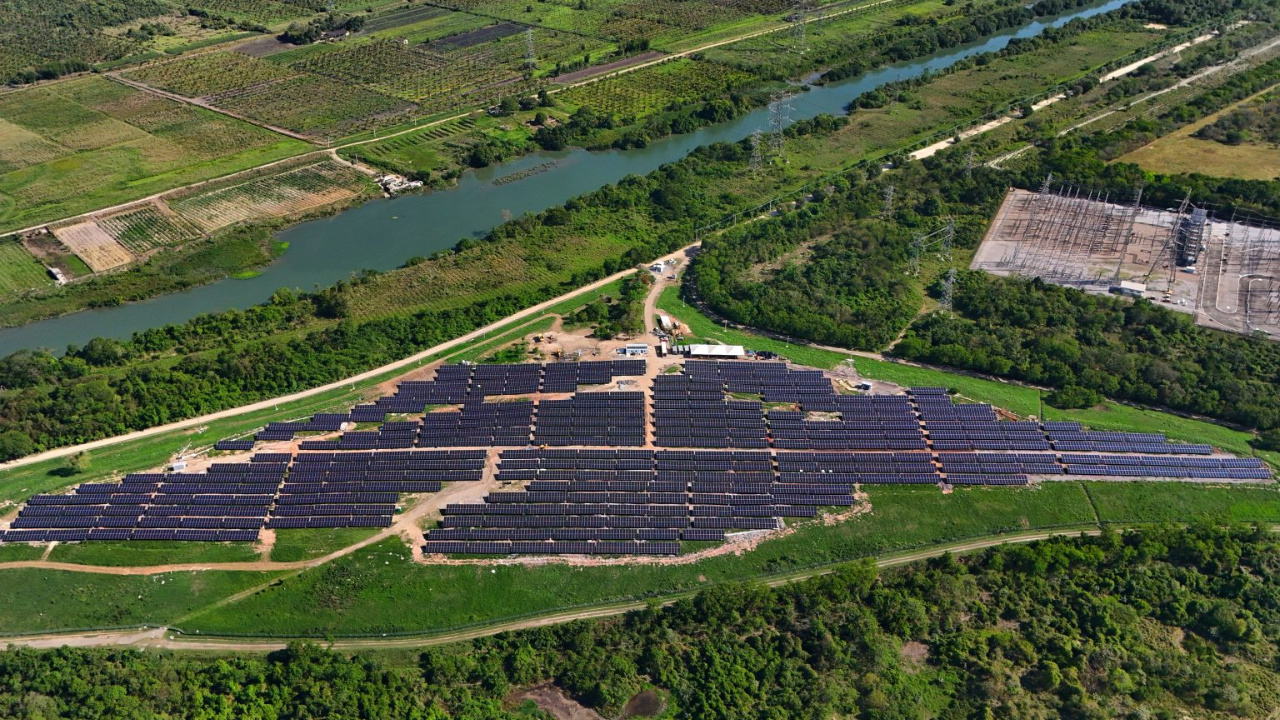

The Carioca Solar Plant, Inaugurated in Santa Cruz, Converts an Old Landfill into a 5 MW Solar Plant, with an Annual Savings of R$ 2 Million and Creation of Local Jobs.
What was once an abandoned and degraded space now represents the future of solar energy in Brazil.
The City Hall of Rio de Janeiro inaugurated the Carioca Solar Plant, a 5 megawatt photovoltaic plant installed in the Santa Cruz neighborhood, in the western zone of the city. The project is the result of a partnership between the international network C40 Cities, the German agency GIZ, and the CFF – Cities Finance Facility program, which supports sustainable climate projects in major urban centers.
With 15 hectares of area, of which 8.4 hectares are occupied by 9,240 solar panels of 700 watts, the Carioca Solar Plant is capable of providing enough energy for about 100 public schools per day.
-
Solar energy can increase property value by up to 10% and become a selling point.

-
Solar and wind energy surpass natural gas for the first time in the world and accelerate energy revolution

-
Africa has about 500,000 cell towers and most still burn diesel to operate, while companies rush to cover antennas with solar energy and avoid signal blackouts.
-
Farmers swapped diesel for solar panels in Pakistan, powered irrigation pumps almost cost-free, expanded rice fields, and now groundwater has become a red alert in the countryside.




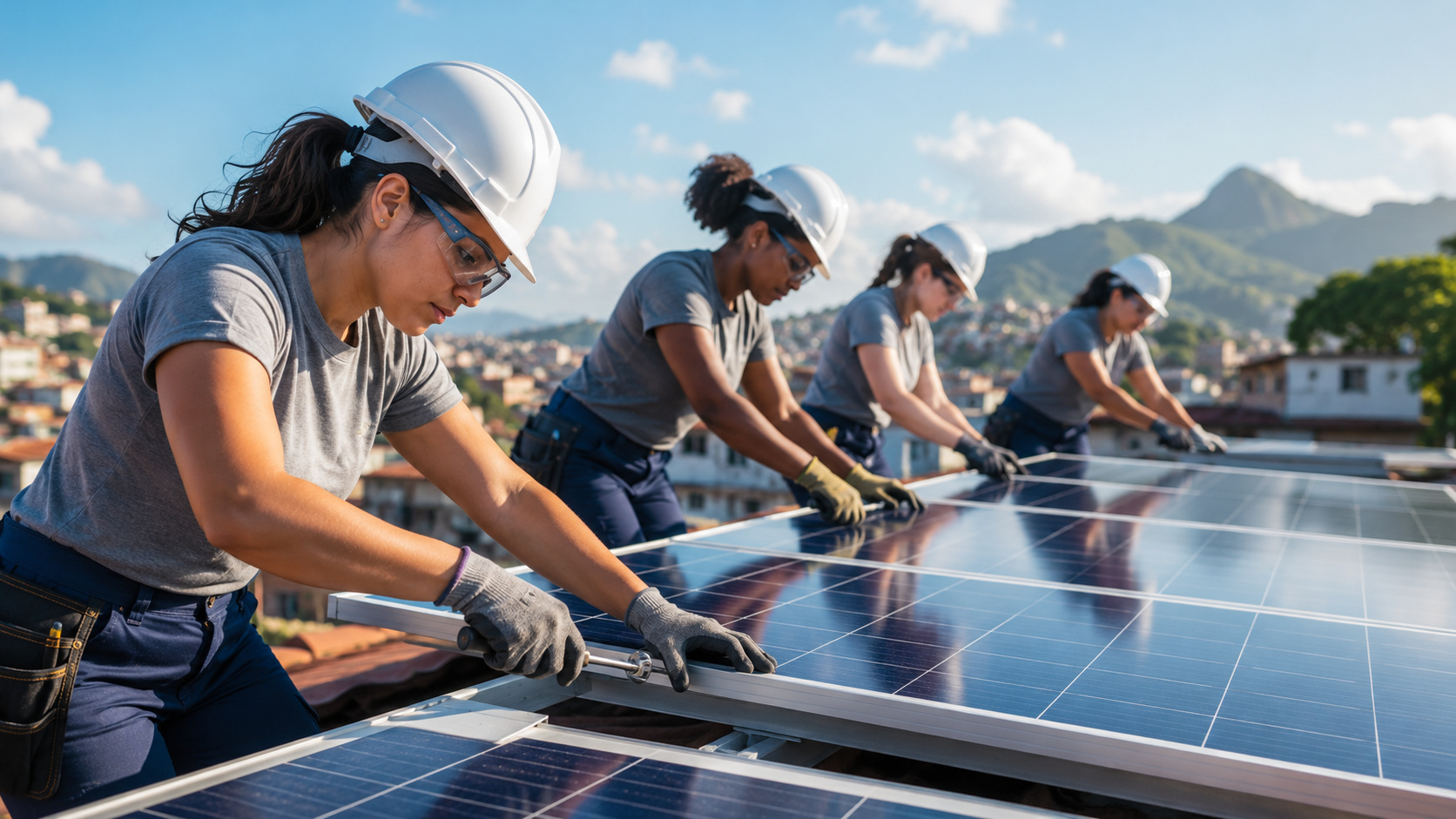
In addition to its environmental relevance, the project is also considered an economic and social achievement, generating 234 direct jobs and 60 indirect jobs, prioritizing workers from the Santa Cruz community itself.
Economy and Sustainability: Clean Energy that Reduces Public Spending
According to Mayor Eduardo Paes, the Carioca Solar Plant is a milestone in the city’s history:
“We transformed an underutilized landfill into a hub for clean energy generation. This transition to renewable energy results in a significant reduction in greenhouse gas emissions and an annual savings of over R$ 2 million for the city,” he stated.
The initiative, which is part of the municipal energy transition plan, ensures that the solar energy produced is 100% clean and 20% cheaper for the municipality.
The project was built in just five months, with a private investment of R$ 45 million from the Consórcio Rio Solar, winner of the bidding by the Carioca Company of Partnerships and Investments (CCPar). The public-private partnership (PPP) lasts for 25 years, during which the consortium will be responsible for the implementation, operation, and maintenance of the plant.
International Partnership and Global Recognition
The launch of the Carioca Solar Plant reinforces Rio de Janeiro’s role as a leading city in climate innovation.
During the inauguration ceremony, Mark Watt, executive director of C40 Cities, highlighted the global impact of the initiative:
“The Carioca Solar Plant represents an initiative whose models are being replicated in 30 cities around the world, totaling 38 distinct projects that benefit over 1.2 million people directly. It is an example of the power of public leadership combined with private partnerships.”
The project is part of an international movement that began at COP21 in Paris, when Eduardo Paes, then president of C40, launched the CFF financing mechanism (Cities Finance Facility) to bring climate action plans in major cities to life.
Today, the model is solidifying as a global reference for financing sustainable infrastructure.
The Role of International Cooperation in Solar Energy
Representatives from the British and German governments also attended the inauguration. Simon Stevens, envoy from the United Kingdom government, emphasized the economic and social impact of the adopted model:
“The Carioca Solar Plant is an inspiring example of a just transition strategy. Its impact goes beyond emission reduction. It creates opportunities, especially for youth and marginalized communities, showing how solar energy can be a driver of inclusion and prosperity.”
The consul general of Germany, Jan Freigang, and the director of GIZ in Brazil, Jochen Quinten, highlighted that the project arrives at a symbolic moment, just ahead of two major international events hosted in Rio: the COP30 Local Leaders Forum and the C40 World Mayors Summit, from November 3 to 5, at the Museum of Modern Art (MAM).
Solar Energy Where Waste Once Was: A New Chapter for Santa Cruz
For decades, the land that now houses the Carioca Solar Plant was a landfill, the destination for tons of solid waste from the city.
With the cessation of activities and the deactivation of the area, the space remained idle — until it was transformed into a hub for renewable energy.
Now, the same soil that once represented environmental degradation symbolizes renewal and sustainability.
From an environmental standpoint, the Carioca Solar Plant will avoid the emission of 40,000 tons of CO₂ per year, equivalent to removing 25,000 vehicles from the streets.
This significant reduction in greenhouse gases aligns the project with the Sustainable Development Goals (SDGs) of the UN 2030 Agenda.
The CFF Model and the Future of Energy Transition in Cities
The Cities Finance Facility (CFF) mechanism was fundamental for the project’s development. Created a decade ago, the program provides technical and financial support to cities seeking to implement green and resilient infrastructure.
In addition to Rio, the CFF already supports dozens of projects worldwide, turning climate action plans into real enterprises.
In the case of Rio, the model could be replicated in other degraded or idle areas, expanding solar energy production and promoting smart use of urban land. The City Hall is already mapping new regions with potential for similar plants, aiming to achieve 20 megawatts of installed capacity by 2028.
Direct Economic and Social Impacts
More than just savings on the electricity bill, the Carioca Solar Plant generates a significant social impact. The construction prioritized the hiring of local labor and the use of suppliers from the region, strengthening the economy of Santa Cruz.
Security, catering, transportation, and construction materials were provided by local companies, stimulating a cycle of income and community development.
The project also has an educational role. Through partnerships with schools and technical institutions, visits and workshops on solar energy, sustainability, and recycling will be promoted, encouraging new generations to understand the role of renewable energies in combating climate change.
Rio Establishes Itself as a Reference in Climate Innovation
The Carioca Solar Plant reinforces Rio de Janeiro’s strategy to lead policies for emission mitigation and climate adaptation among major Latin American cities. With the new project, the capital of Rio de Janeiro joins the global movement of green cities, aiming to reduce dependence on fossil fuels and adopt clean and decentralized energy solutions.
In addition to marking a new chapter in the municipal energy transition, the Carioca Solar Plant inspires other Brazilian metropolises to explore the potential of solar energy as a vector for economic and social transformation.
From an old landfill to the forefront of sustainability, the project symbolizes the power of public innovation combined with international cooperation to tackle the challenges of the 21st century.