Portuguese
  Spanish


In Romania, an amateur detectorist accidentally found a Bronze Age gold treasure: 121 pieces buried about 3,400 years ago in Cluj, Transylvania. Among them is a spiral ring with no known parallel in the country, now under the care of the National Museum of History of Transylvania.
A common walk with a metal detector ended in a historic discovery. In Romania, an amateur detectorist stumbled upon a gold treasure from the Bronze Age with 121 pieces buried about 3,400 years ago, near Cluj, in Transylvania, as reported by the Jerusalem Post. The find was announced on September 8, 2025.
Among the pieces is a spiral ring with no known parallel in the country, according to the Greek Reporter. Most, however, are small jewels: 116 gold links decorated with incisions, interpreted as earrings, all now under the care of the National Museum of History of Transylvania.
Experts dated the gold treasure between 1400 and 1200 BC, at the height of the Bronze Age. For the Minister of Culture, Andras Demeter, the value of the pieces “is truly priceless, considering the age and the quality of the work itself.” No figure was disclosed.
-
Italian Designer Develops Solar-Powered Terracotta Water Purifier Producing Up to 5 Liters of Drinking Water Daily Without Electricity

-
New Hydrogel Made from Algae and Shrimp Shells Absorbs 60 Times Its Weight in Water to Combat Drought in Spanish Agriculture

-
Scientists Discover Unexpected Intelligence in Solitary Octopus During Jar-Opening Challenge
-
Brazilian Public School Students Develop Biofilter Using Arapaima Bones, Earn National Honorable Mention


Next, see how the detector revealed the gold treasure, what the 121 pieces are, why the Bronze Age ring intrigues archaeologists in Romania, and what this story has to do with Brazil.
The accidental find of the detectorist in Cluj
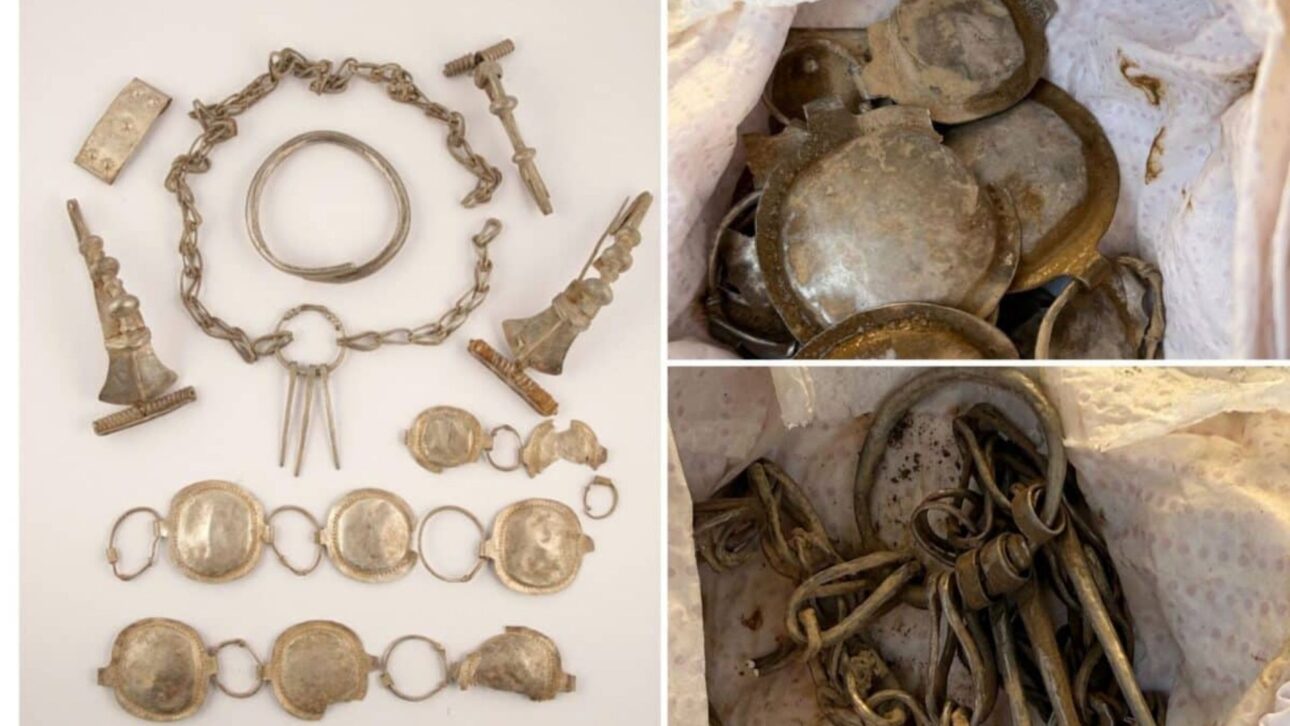
The story begins like so many others of its kind: without any grand plan. An amateur detectorist was sweeping a rural area near Cluj, in Transylvania, when the device beeped differently, indicating metal buried just below the surface.
What appeared in the ground was surprising. Instead of loose coins or scrap, the detector revealed dozens of small shiny objects, totaling 121 pieces of gold. It was a gold treasure hidden in the soil for millennia, waiting to be found.
The next step was crucial for science. Instead of keeping or selling the material, the find was taken to the authorities and handed over to the National History Museum of Transylvania, allowing the collection to be studied properly without losing valuable information.
This kind of attitude makes all the difference. When a gold treasure is removed from the site without record, much of the historical context is lost. By reporting the discovery, the detectorist ensured that the 121 pieces could tell their true story.
The fascination with the metal detector lies precisely in this. You never know if the next beep will be a bottle cap or an ancient object, and it’s this uncertainty that drives thousands of people around the world. This time, in Romania, the result was extraordinary.
The 121 Gold Pieces from the Bronze Age
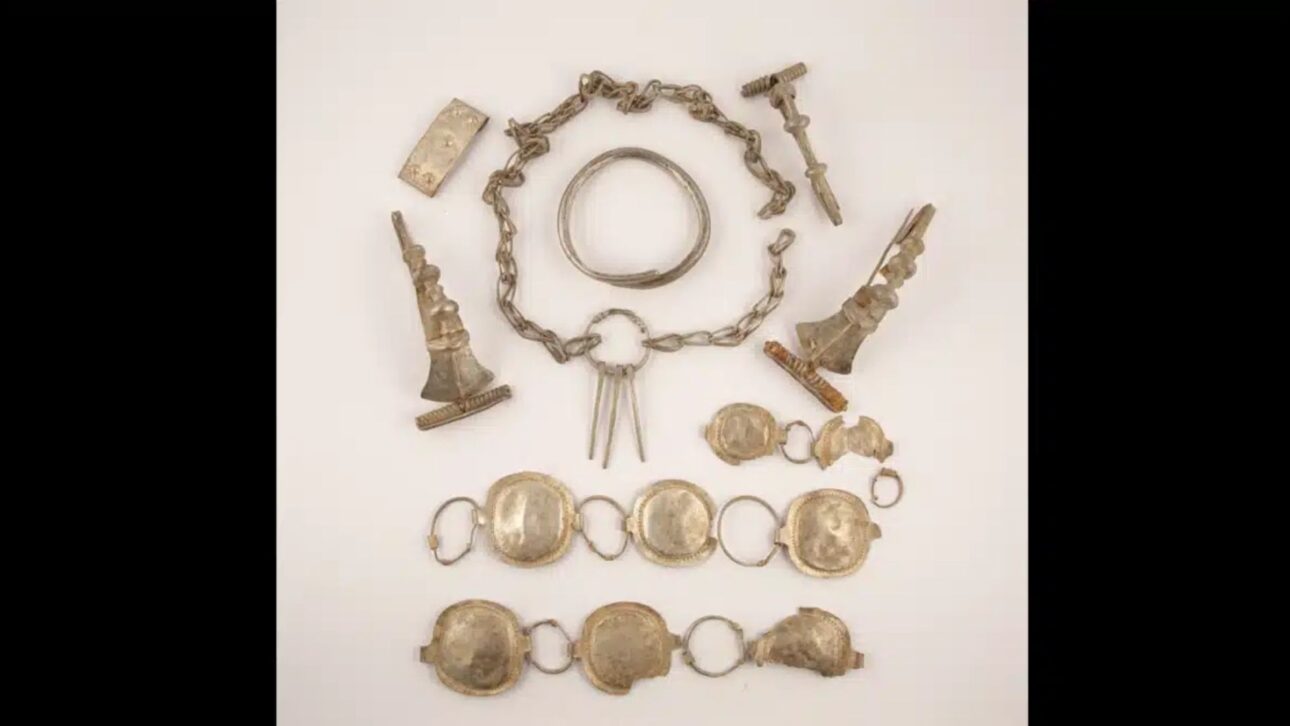
© Indian Defence Review – Detectorists find lost treasure in Transylvania — Experts say this is just the beginning of an incredible discovery!
The collection is more delicate than one might imagine. Despite the symbolic weight of a gold treasure, most of the 121 pieces are small jewels, not large ingots or coins, revealing refined craftsmanship for the time.
Most are possible earrings. According to researchers, 116 of the pieces are small gold links decorated with incisions, meaning with engraved lines on the surface, which specialists interpret as earrings used in the Bronze Age.
The dating impresses with its antiquity. The pieces were made between 1400 and 1200 B.C., giving them about 3,400 years. We are talking about a period long before the Roman Empire, when societies in the region already mastered working with gold.
Each piece is a window to the past. By analyzing the shape, the engravings, and the way the gold treasure was stored, archaeologists can gather clues about the fashion, rituals, and the value those people placed on the metal in Transylvania thousands of years ago.
It also draws attention to the quantity gathered. Collecting 121 pieces of gold in one place is uncommon, suggesting it was a valuable asset, carefully guarded by someone who lived in the region during the Bronze Age.
The Spiral Ring with No Parallel in Romania
Among all the pieces, one stands out. The great find of the collection is a gold ring with spiral ends, considered unique, something that caught the attention of experts as soon as the gold treasure arrived at the museum.
The curator herself emphasized the rarity. “This is a ring for which we still have no analogs in Romania. It is made of a thicker gold wire, with spiral ends,” said Malvinka Urak, from the National Museum of History of Transylvania, describing the piece.
Having no known parallel is rare. It means that, among everything that has been excavated in the country, archaeologists have not found another ring exactly like this, making the piece an exceptional item within the gold treasure of the Bronze Age.
This uniqueness raises interesting questions. Where did the technique used to make the ring come from? Was it a symbol of power, a ritual object, or just an adornment? These are questions that only detailed study might, hopefully, help answer.
Spiral shapes, by the way, appear frequently in the art of the time. Curves and turns were used in jewelry and objects of the Bronze Age in various cultures, making it even more intriguing to have a spiral ring with no equal cataloged in Romania.
Why is the Gold Treasure Considered Priceless?
The answer is not about money. Although it is made of gold, the real value of the treasure is not in the metal’s price, but in what it represents for history. Therefore, no figure was disclosed by the authorities of Romania.
The government itself made a point of highlighting this. For the Minister of Culture, Andras Demeter, the value of the pieces “is truly priceless, considering the age and the very quality of the work,” a way of saying that there is no price that translates the importance of the find.
What makes the gold treasure so special is the information. Each piece helps to understand how people lived during the Bronze Age, what techniques they mastered, and how they organized themselves, knowledge that no market value can replace.
There is also the rarity factor. Finding 121 gold pieces together, so ancient and well-preserved, is exceptional, and the presence of a ring with no parallel in Romania further elevates the scientific relevance of the collection, far beyond the weight in metal.
Therefore, such pieces have no sale price. They do not go to auction nor change hands among collectors, but rather become part of the public collection. It is the State that assumes the custody of the gold treasure, precisely because it is considered priceless.
It’s worth emphasizing that the gold itself is only part of the story. Even melted down, the metal would be worth a fraction of what the whole represents as a document of the past. It is the combination of age, rarity, and context that makes the gold treasure truly priceless.
What happens now with the treasure
The find doesn’t simply go straight to a display case. Before that, the 121 pieces undergo a careful process of restoration and cleaning at the National Museum of History of Transylvania, to remove the dirt accumulated over thousands of years underground.
Then comes the in-depth study. The material will be analyzed by an interdisciplinary team, including archaeologists, chemists, physicists, and geologists, who will investigate the composition of the gold, the manufacturing techniques, and the historical context of the gold treasure.
This analysis can reveal a lot. Discovering where the gold came from, how the pieces were made, and why they were buried helps to piece together the puzzle of the Bronze Age in the region, filling gaps about a distant period.
One of the most intriguing aspects is tracing the origin of the metal. With chemical analyses, scientists can try to discover which mine the gold came from, which helps to understand trade routes and contacts between peoples in the Bronze Age.
At the end of the process, the expectation is for a public exhibition. If all goes well, the gold treasure should be displayed so that anyone can see the 121 pieces up close, turning a detector find into heritage accessible to all.
How gold marked the Bronze Age in Transylvania
The discovery helps to remind us how much gold already mattered. Long before coins and banks, the metal was already a symbol of status and power, and Transylvania was a region rich in this resource during the Bronze Age.
Working with gold required skill. Transforming raw metal into fine jewelry, with engravings and shapes like the spiral ring, shows that those communities had experienced craftsmen and a refined taste for adornments, something the gold treasure makes clear.
Burying precious objects also had significance. Treasures like this may have been hidden for safety, in times of conflict, or deposited as offerings in rituals, a common practice in the Bronze Age in various parts of Europe.
Whatever the reason, the result is valuable today. A gold treasure buried 3,400 years ago and recovered almost intact functions as a time capsule, linking the present directly to the hands of those who lived in Romania millennia ago.
The Transylvania has historically had a strong connection with gold. The region housed mines that were exploited for a long time and became known for its reserves of the metal, which helps explain why so many ancient treasures emerge there, including this gold treasure.
It’s no wonder the region became the stage for so many discoveries. Over the centuries, peasants, miners, and more recently, detectorists have brought to light ancient pieces in Transylvania, each adding a piece to the history of the Bronze Age and the peoples who lived there.
Amateur detectorist and archaeology: a delicate relationship
The case shows the good side of the hobby. Armed with a metal detector, amateurs have already helped reveal important finds around the world, discovering what was hidden in fields that archaeologists might never have excavated.
But there are rules that need to be followed. An ancient gold treasure is usually considered national heritage, and the right thing to do is to report the discovery to the authorities, instead of keeping or selling the pieces, as happened in this case in Romania.
The reason is to protect history. When an object is removed from the ground without care, the context is lost, along with information about depth, position, and what was around it, data that help scientists understand the find.
That’s why the detectorist’s attitude is celebrated. By handing over the 121 pieces to the museum, he allowed the gold treasure to be studied and preserved, showing how the hobby can go hand in hand with science when done responsibly.
Worldwide, some of the greatest finds have come from amateurs. Great ancient treasures have been revealed by ordinary people with a detector, who then called in the experts. When the hobby respects the law, everyone wins: the amateur, the science, and the public who sees the result in the museum.
What this has to do with Brazil
Brazil also has a long history with gold. The so-called gold cycle, in the 17th and 18th centuries, marked regions like Minas Gerais and left a huge heritage, showing that the fascination with the precious metal is not exclusive to Romania.
The country holds a very rich archaeological heritage. From millennial indigenous sites to remnants of the colonial period, Brazil has much to preserve, and organizations like Iphan are responsible for taking care of this collection and monitoring discoveries made throughout the territory.
The use of metal detectors is also growing here. More and more people are adopting the hobby in the country, making it important to know the rules: in Brazil, archaeological sites and objects are protected by law and must be reported to the responsible authorities.
The logic of preservation is the same. Just like in Transylvania, an ancient find in Brazil does not belong to the person who finds it by chance, but to the country’s heritage, precisely so that history can be studied and told to future generations.
Sites like the sambaquis on the coast show this richness. Scattered along the coast, these mounds formed thousands of years ago hold clues about ancient peoples, reminding us that not all treasure comes in the form of gold, but every ancient find deserves the same care.
Finally, there is the reminder of value beyond price. A golden treasure is worth less for the weight of the metal and more for what it reveals, an idea that applies both to the pieces from the Bronze Age in Europe and to the remnants of the past that Brazil holds in its own soil.
And you, would you hand over a golden treasure found by chance?
The story of the detectorist from Romania shows how luck and responsibility can meet. By stumbling upon a golden treasure from the Bronze Age with 121 pieces and handing it over to the National History Museum of Transylvania, he turned a personal find into a gain for all humanity.
More than the shine of the metal, what remains is the historical value. A unique spiral ring, dozens of earrings 3,400 years old, and a government that classifies everything as priceless show that there are riches that no money can buy.
And you, would you hand over to the authorities a golden treasure found by chance with a metal detector, knowing that it would be studied and displayed instead of sold? Do you think Brazil values this type of heritage enough? Share your opinion here in the comments and share with those who love history and archaeology.