Portuguese
  Spanish


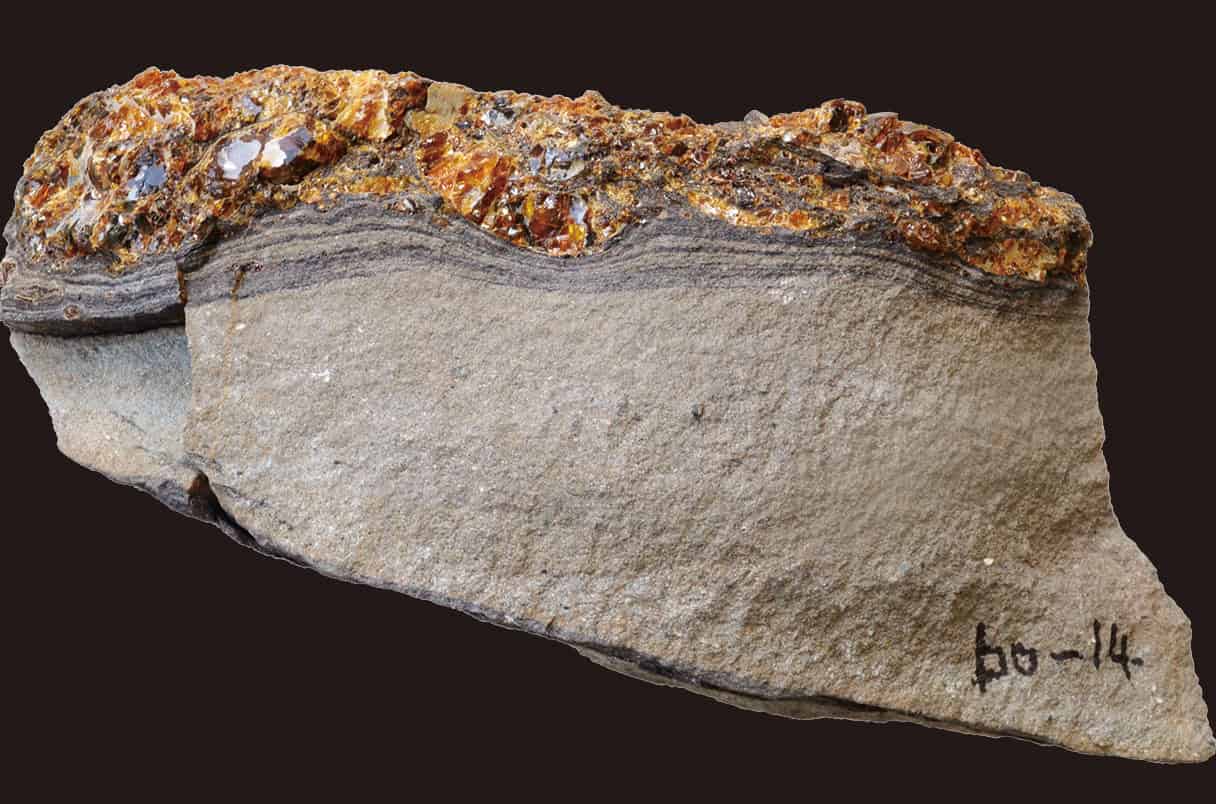

Researchers Find Layers Of Amber On The Seabed In Hokkaido, Japan, And Reveal Giant Tsunamis That Occurred 115 Million Years Ago During The Cretaceous Period.
Discovering a natural event that took place over 100 million years ago is rare. Identifying that this event was a tsunami is even more astonishing.
And that is exactly what a team of researchers found while analyzing rocks at a quarry on Hokkaido Island in Japan.
The discovery was not planned. The scientists were studying ancient sediments when they came across something unusual: thick layers of amber buried deep in a marine formation.
-
The Trap of Modern Technology: How Screen Overload and Digital Connections Can Impact Your Mental Health and Well-being

-
Wyoming Couple Grows Tropical Fruits Year-Round in -40°C Using Geothermal Greenhouse, Demonstrating Earth’s Heat Can Produce Oranges and Lemons in Snow Without Traditional Heating

-
Ship Returns from Brazilian Coast with Thirty Newly Discovered Life Forms
-
Nigerian Professor Invents Electricity-Free Refrigerator Using Clay Pots and Wet Sand, Extending Shelf Life of Vegetables to 27 Days; 7,000 Units Distributed in Energy-Deprived Villages



These fossilized resins, which usually appear in forests or coastal areas, were now more than 150 kilometers from the ancient shoreline.
An Out-Of-Place Resin
The study revealed that the amber originated as tree resin in coastal forests.
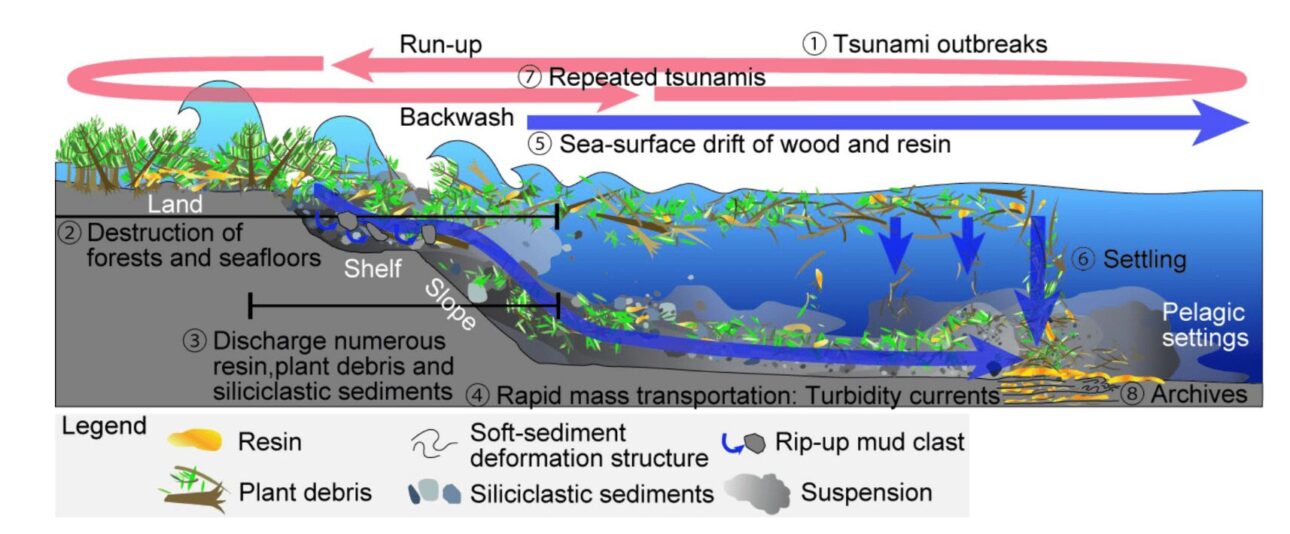
During gigantic tsunamis, entire pieces of these forests were torn away and carried out to sea, taking along resin, trees, plants, and soil.
The material ended up directly on the ocean floor, where it was later buried by marine sediments.
Tsunamis are extremely destructive phenomena. They are triggered by underwater earthquakes or landslides.
They move quickly and destroy everything in their path. Although they are well documented today, finding evidence of their occurrence in such ancient times is extremely difficult.
This is because the geological records left by tsunamis, such as sand or shells, tend to disappear over time. Moreover, they are often confused with signs left by floods or storms. But the amber brought a new possibility.
Sedimentary Sequence With A Surprise
The team investigated a sedimentary sequence from the Lower Cretaceous period. The deposits were about 150 meters thick, with a volcanic base and, above it, a thick layer of marine sediments. It was in this transition that the amber appeared, infiltrated within the deep sandstone.
In total, 30 distinct layers with amber were found. In some of them, the material represented up to 80% of the visible surface. One of the layers was so concentrated that there were even seven centimeters of amber over ten meters of marine rock. A true mystery for scientists.
More than just the quantity, what caught their attention was the condition in which the amber was found. The appearance of the resin indicated that it was still soft when it was deposited on the ocean floor.
Technique Reveals “Flames” Underwater
To analyze better, the researchers used a technique known as “fluorescence grinding tomography.” This technique allows slicing of the sample and observing it under ultraviolet light. That’s how they noticed deformations in the amber, with folds and flows resembling flames forming upward — a typical sign of wet sand when pressed.
These formations show that the amber was still fresh and soft resin when it sank. It mixed with the mud on the ocean floor and only hardened later. If it had been dry, it would have broken or been deposited differently.
According to researchers, modern resin hardens in about a week when exposed to air. But underwater, it remains soft for a longer time. This behavior was essential to understand the path that led the material to the seabed.
Sunken Trees And Removed Mud
Another important detail of the discovery was what was found alongside the amber. The layers were accompanied by floating wood, pieces of mud, and mixed sediments. Some wood fragments were over a meter long. There were also blocks of mud removed from the ocean floor itself.
These elements indicated that a high-energy event had dragged everything at once. The presence of the so-called “turbidites” — sandstones formed by underwater sediment avalanches — reinforced this theory.
The most plausible explanation: a tsunami.
An Event In Chain
The scientists’ hypothesis is that an earthquake caused by the subduction of tectonic plates generated a large tsunami.
It advanced from the sea towards the land, ravaging coastal forests, uprooting trees, and carrying away plant resin. At the same time, coastal platforms collapsed, dumping sediments and limestone onto the ocean floor.
This set of materials was deposited over time on the bottom of the pelagic basin. While sand and mud sank rapidly, resin and wood floated longer, being deposited afterward.
The repetition of layers suggests that this type of tsunami occurred several times during that geological period.
A New Role For Amber
Amber was already known as a valuable material for science. It preserves traces of ancient life, such as insects and pollen. But now it can also serve as a record of natural disasters.
This new utility transforms the understanding of amber. Instead of just a remnant of ancient forests, it also becomes a witness to dramatic events. And in a deep marine environment, where cyclones and floods do not reach, the record of tsunamis becomes easier to identify.
The research shows that amber can be used to track extreme past events, especially when other marks have disappeared. Moreover, it offers a new way to study sediment transport in marine environments.
Valuable Scientific Conclusion
The study, published in the journal Nature Scientific Reports, represents an important advance in understanding ancient tsunamis. The unique characteristics of amber, especially when associated with deep sediments, pave the way for new investigations in areas where the coastline has changed or disappeared over time.
According to the authors, resin should be seen not just as a fossil, but as part of a complete sedimentary process. It records everything from erosion to burial, providing information that was previously invisible to geologists.
This discovery reinforces the importance of detailed observation of seemingly common structures. A simple piece of amber, when properly studied, can tell a story of destruction and transformation that began over 100 million years ago.
The study was published in Nature Scientific Reports.