






 Portuguese
  Spanish
  5 min of reading
  13 comments


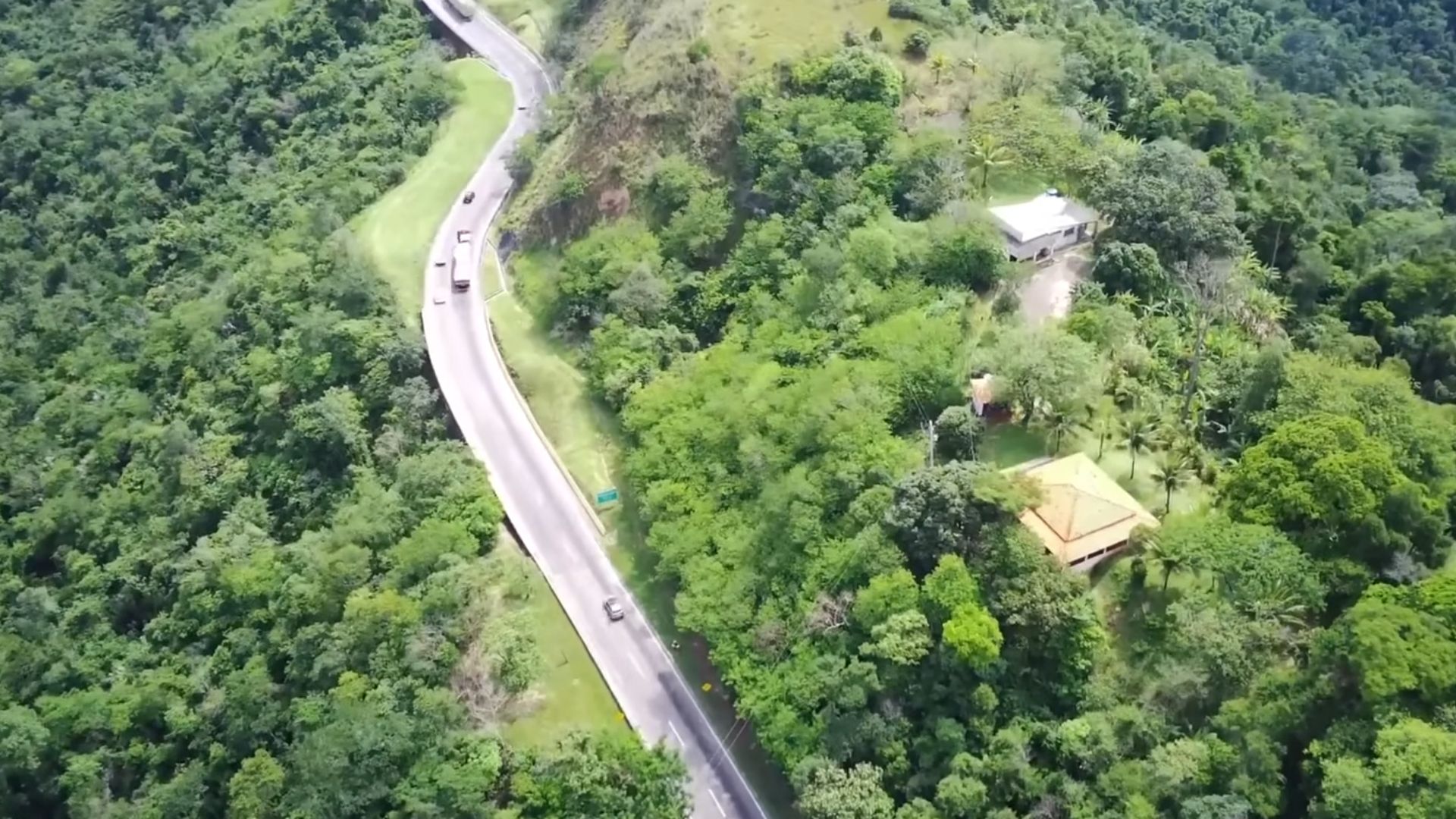


Transformation of Serra das Araras Gains Momentum and Reveals Behind-the-Scenes of One of the Most Complex Road Works in the Country, Marked by Giant Overpasses, Rock Cuts, and Ongoing Engineering Amidst the Operation of the Dutra.
Between São Paulo and Rio de Janeiro, a stretch of mountainous terrain measuring just 16 kilometers holds some of the greatest challenges in safety and logistics for the main highway connection between the two capitals.
It is at the Serra das Araras, on the Via Dutra (BR-116), between Piraí and Paracambi, in southern Rio de Janeiro, that one of the most anticipated infrastructure projects in the country is underway: the complete reconstruction of the route, featuring eight lanes, 24 overpasses, and an investment of R$ 1.5 billion.
Today, the mountain acts as a funnel.
-
Bolivian Female Construction Workers Form Association to Combat Discrimination and 38% Pay Gap in the Industry

-
Near Amsterdam, residents buy land and discover they must also build streets, manage drainage, handle waste, and grow food on half their plot.
-
Brazil’s WEG to Open New Factory in China by 2027, Expanding Production of Large Rotating Electric Machines and Low to Medium Voltage Motors in Rugao

-
Chinese Shipyard Secures $1 Billion in Orders for Low-Carbon Container Ships Amid Global Fleet Renewal Efforts


The highway needs to overcome a height difference of approximately 377 to 400 meters in just a few minutes, on a winding route with sharp curves and long descents.
The original project, from 1928, was designed for a Brazil with fewer vehicles, smaller trucks, and lower speeds.
The current traffic averages around 390 thousand vehicles per month, of which 36% are freight trucks.
Serra das Araras and the Historical Bottleneck on the Rio–São Paulo Axis
Serra das Araras is located precisely on the axis of the Dutra, connecting two of the largest metropolitan regions in the country.
The section under construction extends from km 225 to km 233, with about eight kilometers uphill and eight downhill.

Since last century, the route has operated like a classic mountain road.
The lane maintains two lanes uphill and two downhill, with sharp curves and steep descents.
In practice, articulated trucks, bitrem trucks, and buses share space with light vehicles in a design conceived for a different volume of traffic.
The impact is evident in the statistics.
In 2024, the average reported by the concessionaire indicated 22 accidents per month in the mountain.
In 2025, the Federal Highway Police reported 34 accidents and seven rollovers in just the first half of the year on the stretch near Piraí.
What the New Serra das Araras Project Envisions
With the new concession for the Dutra, administered by RioSP, the duplication and modernization of Serra das Araras has become the anchor project of the contract.
The total investment is R$ 1.5 billion, confirmed by the Ministry of Transport and the concessionaire.
The mountain will feature eight traffic lanes, four in each direction, with shoulders and safety lanes.
There will be 24 new overpasses, adding about 4.5 kilometers in length, as well as two escape ramps for trucks.
The project also includes three walkways, eight bus stops, 93 containment structures, and a side road towards São Paulo.

The redesign also envisions a new uphill lane, while the current one will be adapted to operate as a downhill lane.
Thus, each direction will have an independent and updated route.
Earthworks, Rock Removals, and Containment in the Engineering of the New Mountain
The work combines heavy earthmoving and successive rock removals.
Approximately 600 thousand cubic meters of rock will be removed, reused in embankments and pavement bases.
Each detonation requires temporary closures of the uphill lane, within controlled windows.
This process involves coordination between the Operational Control Center of RioSP and the Federal Highway Police.
Another important aspect is slope stabilization.
The project envisions nearly 70 thousand square meters of areas protected with anchored soil, tensioned curtains, gabions, and structural walls.
In the deepest valleys, the new overpasses emerge.
To erect these structures and other special works, 129 thousand cubic meters of concrete and 16.5 million kilograms of steel will be used, enough material to transform thousands of popular cars into pillars and beams.
Drainage, Environment, and Technology
In a region with rugged terrain and heavy rainfall, drainage is crucial.
The new mountain includes channels, deep ditches, catch basins, cellular drains, and containment pits for hazardous loads.

These systems prevent erosion and protect rivers and soil in case of accidents involving trucks.
The environmental project adds wildlife passages, use of rubberized asphalt and recycled asphalt, reuse of rock, and vegetation management and compensation programs.
Over all this structure, technological layers will be added.
The new roadway will feature LED lighting throughout the entire stretch, automatic incident detection cameras, variable message boards, and continuous integration with the concessionaire’s control center.
Timeline, Milestones, and Progress of Duplication
The works began in April 2024. By April 2025, progress registered was 25%.
The contract anticipates the completion of the new uphill lane in 2028 and the downhill lane in 2029.
The concessionaire indicates the possibility of an earlier completion by 2027.
A milestone occurred with the opening of the first overpass of the new mountain in May 2025, which allowed the installation of a 650-meter detour to free up space for widening and new special works.
Today, the project has dozens of simultaneous fronts operating in two shifts alongside intense traffic that includes loads representing a significant portion of Brazil’s GDP.
Impact on Fluidity, Safety, and Economy

With the completion of the new lanes, the maximum speed on the stretch will increase from 40 km/h to 80 km/h both uphill and downhill.
Studies indicate a potential reduction of up to 25% in travel time uphill and 50% downhill.
In the corridor that sees 390 thousand vehicles monthly, every minute saved represents increased productivity for industry, agribusiness, commerce, and services.
The work should directly benefit residents of the Baixada Fluminense, Sul Fluminense, the metropolitan region of Rio, and several cities in São Paulo connected to the Dutra.
Despite the progress, the stretch still registers accidents involving heavy vehicles, some leading to total closures.
The hope is that the new layout will significantly reduce these numbers.
Now, with the scale of this transformation, a natural question arises for those who use the Dutra daily: how do you assess the pace of construction on Serra das Araras between São Paulo and Rio de Janeiro?





É uma obra complexa que evitará acidentes e melhoria o tempo de viagem
Essa obra será por muito tempo um grande marco na engenharia. Curto muito subir e descer a serra das araras de moto. Agora ,será melhor ainda.
Boa noite! Por que não se faz um túnel atravessando a Serra das Araras?
Não é um túnel em.linha reta o declive é considerável, como fazer um túnel complexo sentido subindo