Portuguese
  Spanish


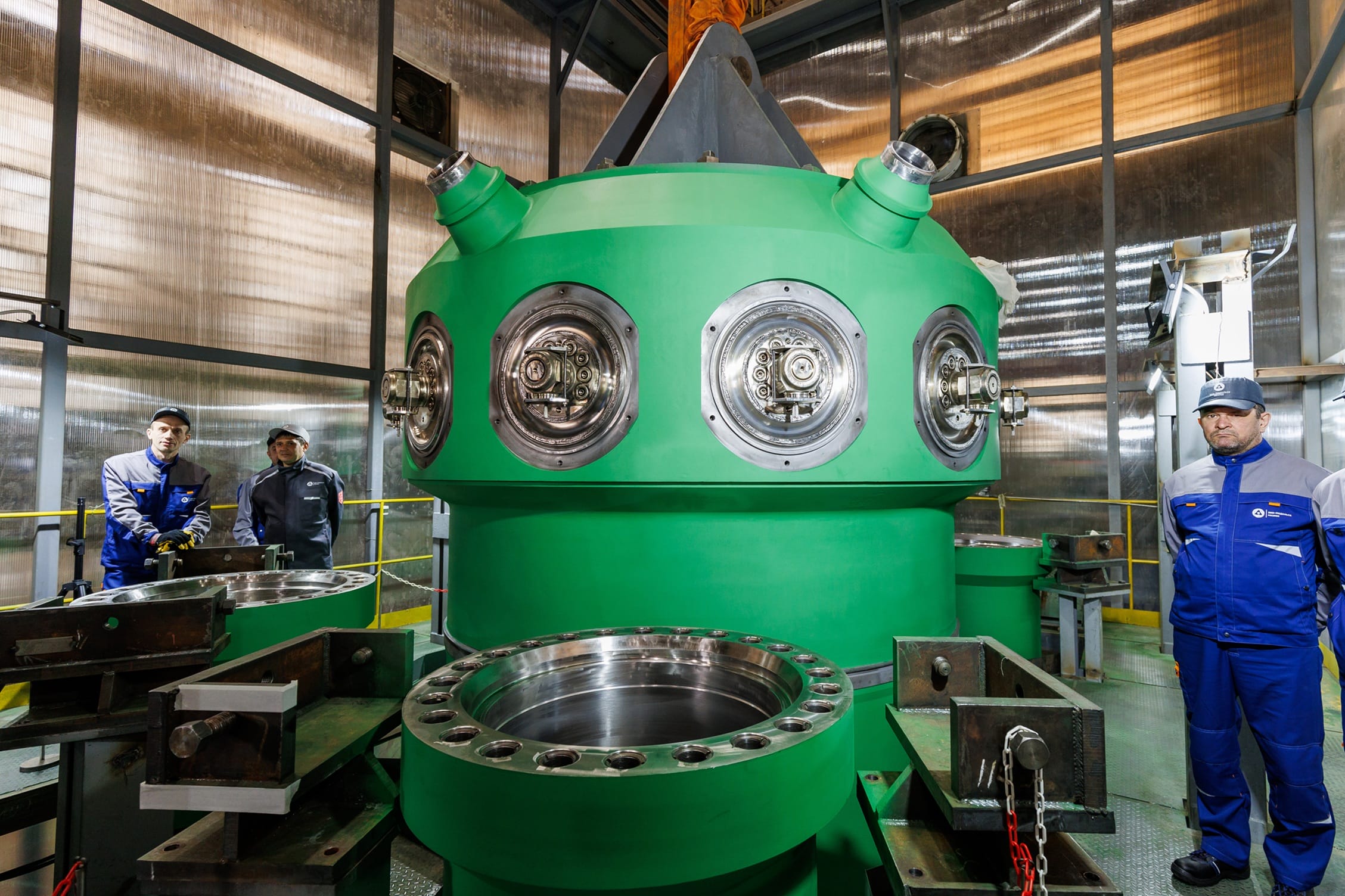

New RITM-400 Reactor, Revealed by Russia, to Equip Icebreaker Rossiya and Make It the Most Powerful in the World, Capable of Withstanding Extreme Arctic Ice.
The Russia has completed the construction of the nuclear reactor RITM-400, designed to power the icebreaker Rossiya, currently under development.
The announcement was made during an official ceremony by Rosatom, the Russian state agency responsible for nuclear energy.
The reactor, considered an enhanced version of the RITM-200, represents a significant advance in the country’s nuclear icebreaker fleet.
-
15-Year-Old American Builds Ocean Generator with PVC Pipe and 3D-Printed Propeller for $12, Wins National Prize, Presents at White House, and Makes Forbes 30 Under 30 List

-
$12 Billion Invested in AI Data Centers in Semi-Desert Mexican State, But 17 of 18 Municipalities Now Face Water Shortages, Residents Receive Water Only 3 Days a Week
-
How Much Does Starlink Satellite Internet Cost for Cars, Trucks, and RVs? Prices for Antenna, Accessories, and Plans

-
Scientists Convert Food Waste into Aviation Fuel, Successfully Test 50% Blend with Conventional Kerosene to Cut Emissions and Promote Sustainable Flights




Power and Cutting-Edge Technology
Manufactured by ZiO-Podolsk, a subsidiary of Rosatom’s Machine Construction Division, the RITM-400 delivers 315 megawatts thermal (MWt) and 120 megawatts of propulsive power. This makes it the most powerful reactor of its kind ever developed by Russia for maritime use.
Rosatom’s head, Alexey Likhachev, highlighted the importance of the project’s completion. According to him, the RITM-400 reactor is a milestone not only for the icebreaker fleet but also for the entire Russian nuclear industry.
During the ceremony, he announced that the two reactors of Rossiya will have symbolic names: Ilya Muromets and Dobrynya Nikitich, inspired by heroes from Russian folklore.
“They accomplished feats in the name of Russia, while the new reactors, named in their honor, will help the icebreaker Rossiya overcome the unique ice conditions of the Arctic,” stated Likhachev.
Preparation for 2030
Igor Kotov, head of Rosatom’s Machine Construction Division, stated that the second RITM-400 unit will be completed in the coming months. Both units will be sent to the shipyard, where they will be installed on the Rossiya vessel.
The Rossiya project is part of Project 10510. Once finished, the vessel will be the most powerful nuclear icebreaker on the planet.
With two RITM-400 reactors, the Rossiya will be able to break through ice layers up to 4.3 meters thick and open channels 50 meters wide. It is expected to enter operation in 2030.
According to Kotov, the delivery of the units will be a symbolic gift to celebrate the 80th anniversary of the Russian nuclear industry.
Strategy for the Arctic
The construction of nuclear icebreakers is part of Russia’s strategy to strengthen navigation along the Northern Sea Route. At around 5,600 kilometers, this route connects Saint Petersburg and Kaliningrad to Vladivostok. Russia claims that it reduces transit time between Murmansk and Japanese ports from 37 to 18 days, compared to the route through the Suez Canal.
Nuclear reactors offer significant advantages in the Arctic. Unlike diesel models, they do not require frequent refueling and operate more efficiently in remote and cold regions. Diesel ships face limitations in power, range, and endurance under such conditions.
In addition to Rossiya, Russia is constructing other nuclear icebreakers, such as Chukotka and Leningrado.
There are also plans for the Stalingrado vessel, under Project 22220. The expectation is that new universal icebreakers will be built to maintain constant operations in the Northern Sea Route.
With this, the country reinforces its presence in the Arctic and expands the strategic use of its nuclear technology.