Portuguese
  Spanish


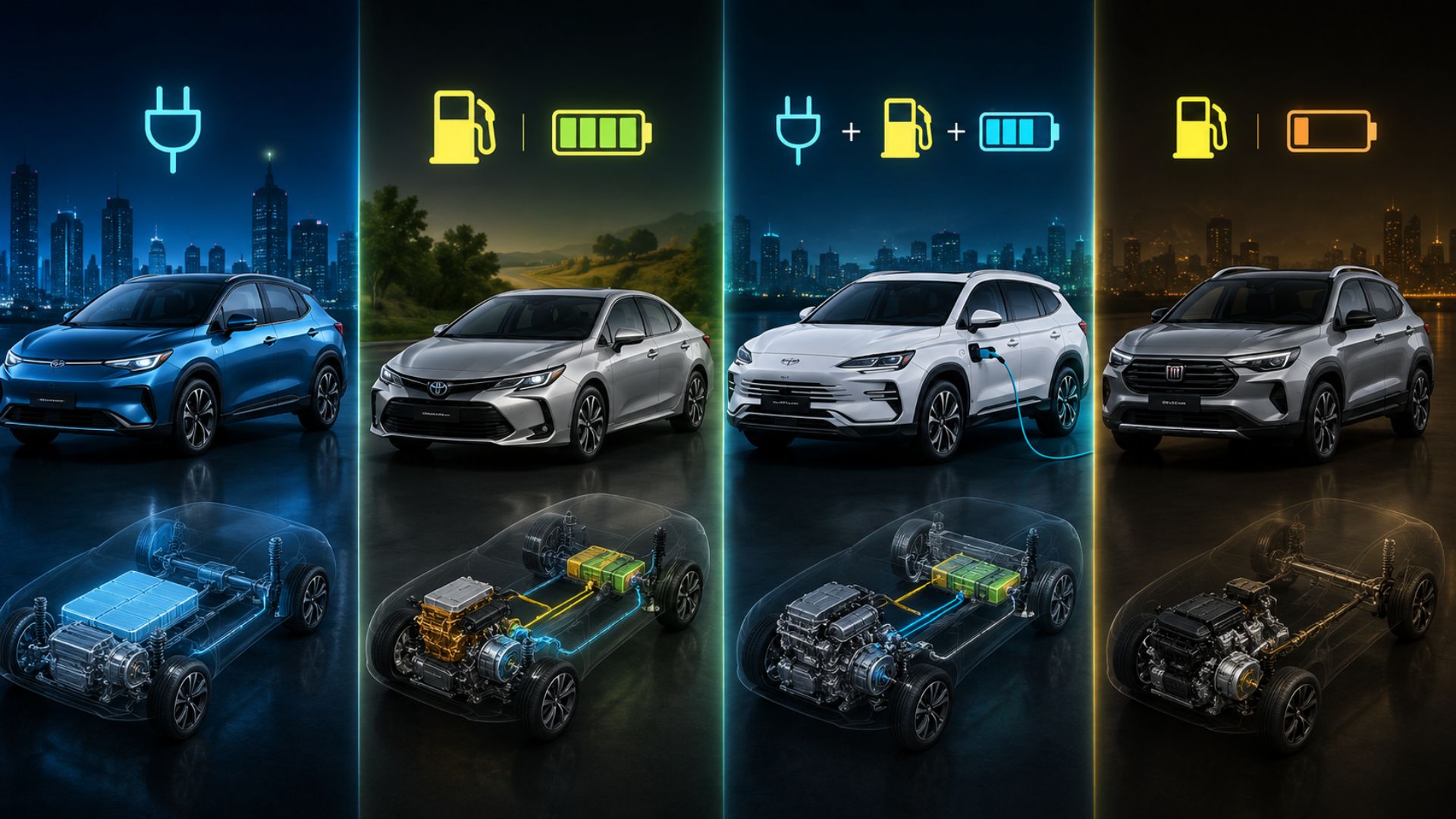

The question that separates the technologies is simple: does the electric motor move the car by itself? With it, you can distinguish the pure electric, the conventional hybrid, the plug-in, and the mild hybrid. ABVE and Inmetro maintain their own classifications, and the confusion often costs dearly at the time of purchase.
Not every car with a battery is truly electric: some hybrids never run solely in electric mode, and the names that have taken the spotlight, like electric, hybrid, plug-in, mild hybrid, HEV, PHEV, BEV, and MHEV, form a real alphabet soup. The simplest way to separate all this is with a single question: can the electric motor move the car by itself?
This difference is not just technical, it affects the wallet and the official classification. Since January 2025, the ABVE, an association in the electric vehicle sector, stopped considering mild hybrids as electrified for monitoring electromobility in Brazil. The entity classifies the categories of electric and hybrid cars, while Inmetro gathers data on consumption, range, and emissions in the Brazilian Vehicle Labeling Program, whose 2026 table already exceeds 760 models and versions, and understanding all this changes the decision at the time of purchase.
The question that separates the cars: does the electric motor move by itself?
The automotive showcase has changed and become more confusing. Where once it was enough to choose between gasoline, ethanol, flex, or diesel, now names like electric, hybrid, plug-in, mild hybrid, and a line of English acronyms appear, which seem to point to the same future but do not work the same way.
-
End of an era in Brazil: beloved sedan by Brazilians is discontinued despite having a 2.0 engine with 151 hp, CVT transmission, 466-liter trunk, and up to 650 km of range.

-
New Law Proposal in Brazil Could Heavily Penalize Drivers: Dangerous Overtaking May Become a Serious Offense with Fines Increased Tenfold and a 12-Month License Suspension; Update on 2026 Progress

-
Electric Revolution: Watts W125 Motorcycle Offers 160 km Range, 90 km/h Speed, and Affordable Price Starting at $3,000
-
General Motors Replaces Over a Thousand Workers with 50 Cobots at Electric Vehicle Plant, UAW Union Criticizes Move Amid Industry’s Automation Push



Before looking at the acronym, there is a question that organizes everything. Can the electric motor move the car by itself? The confusion is understandable because there are cars with batteries that do not need a plug, cars with plugs that also use gasoline, and models called hybrids that do not even run solely in electric mode. This single question separates much of the technologies sold today in Brazil.
The pure electric (BEV) is the easiest to understand
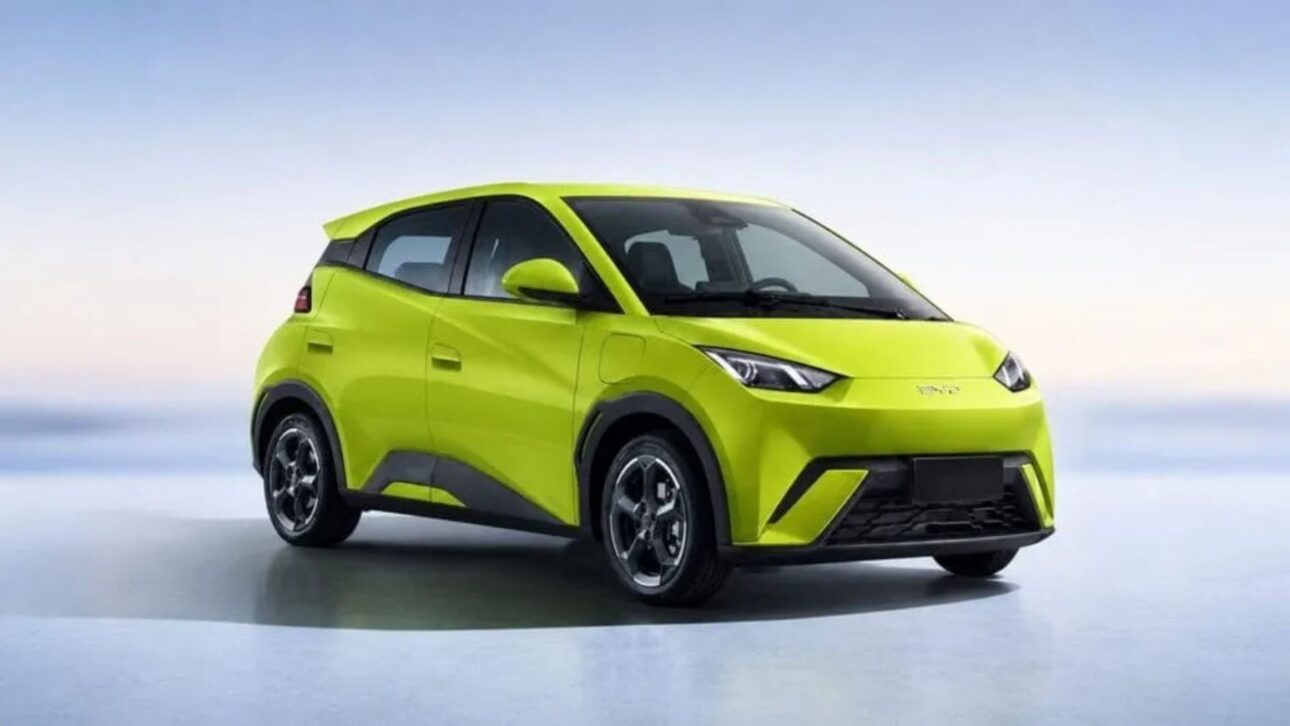
The 100% electric is the most straightforward of all. This type of car does not have a combustion engine and does not use gasoline, ethanol, or diesel to move. Instead of a tank, there is a larger battery, recharged at a residential outlet, a wallbox, or a public charger.
This is the group that ABVE classifies as BEV. The acronym in English means battery electric vehicle, and the association uses it to identify fully electric vehicles in its classification of electrified vehicles. In this type of car, the driver needs to think about the charging routine, but in return, there is no exhaust or oil change for the combustion engine, precisely because this engine does not exist. A well-known example sold in Brazil is the BYD Dolphin Mini.
The conventional hybrid (HEV) does not use an outlet
The conventional hybrid, or HEV, mixes two engines. It combines a combustion engine and an electric motor, and the difference from a pure electric is that it still has a fuel tank. The battery is smaller and does not need to be plugged into an outlet.
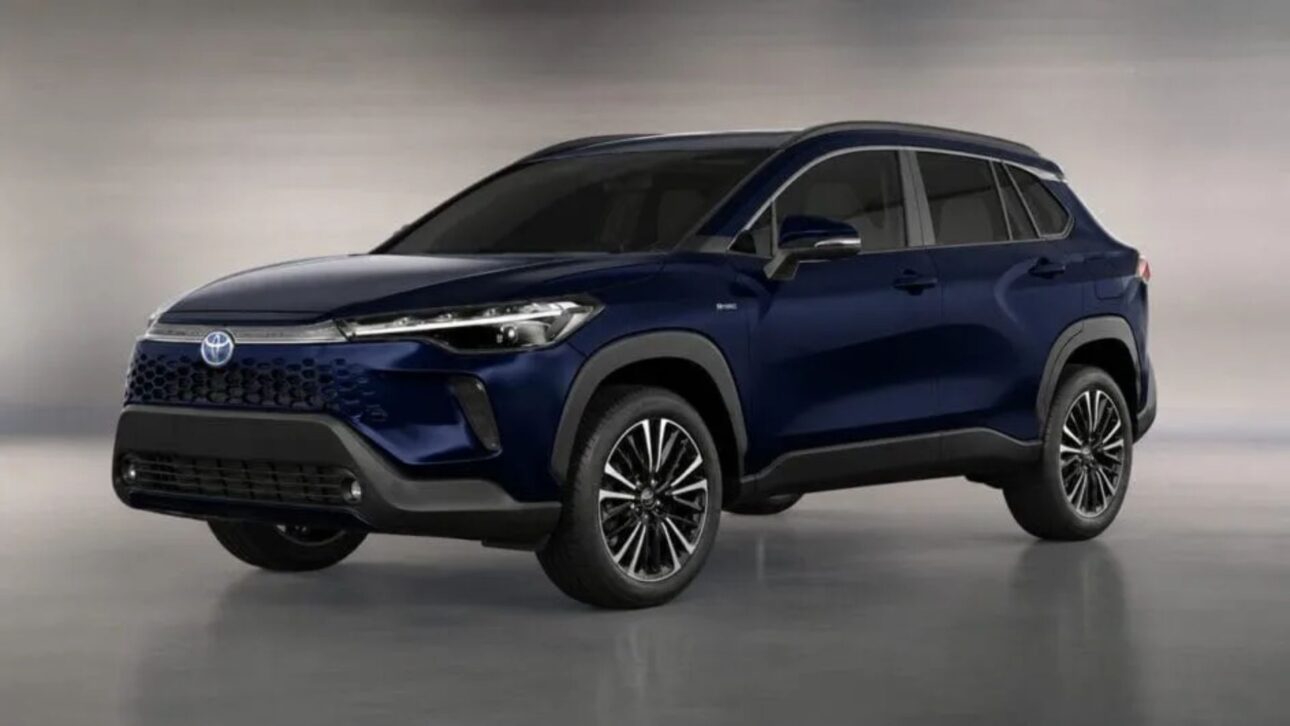
The recharge happens automatically, with the vehicle’s own use. The battery is replenished by the car’s operation, especially during deceleration and braking, and at low speeds or maneuvers, some hybrids move for short periods only with electricity. This includes well-known models in Brazil, such as the Corolla Hybrid and the Corolla Cross Hybrid, and in the case of flex hybrids, the combustion engine can still be fueled with ethanol or gasoline. ABVE separates hybrids without external recharge into HEV and HEV Flex.
The plug-in hybrid (PHEV) uses an outlet and fuel
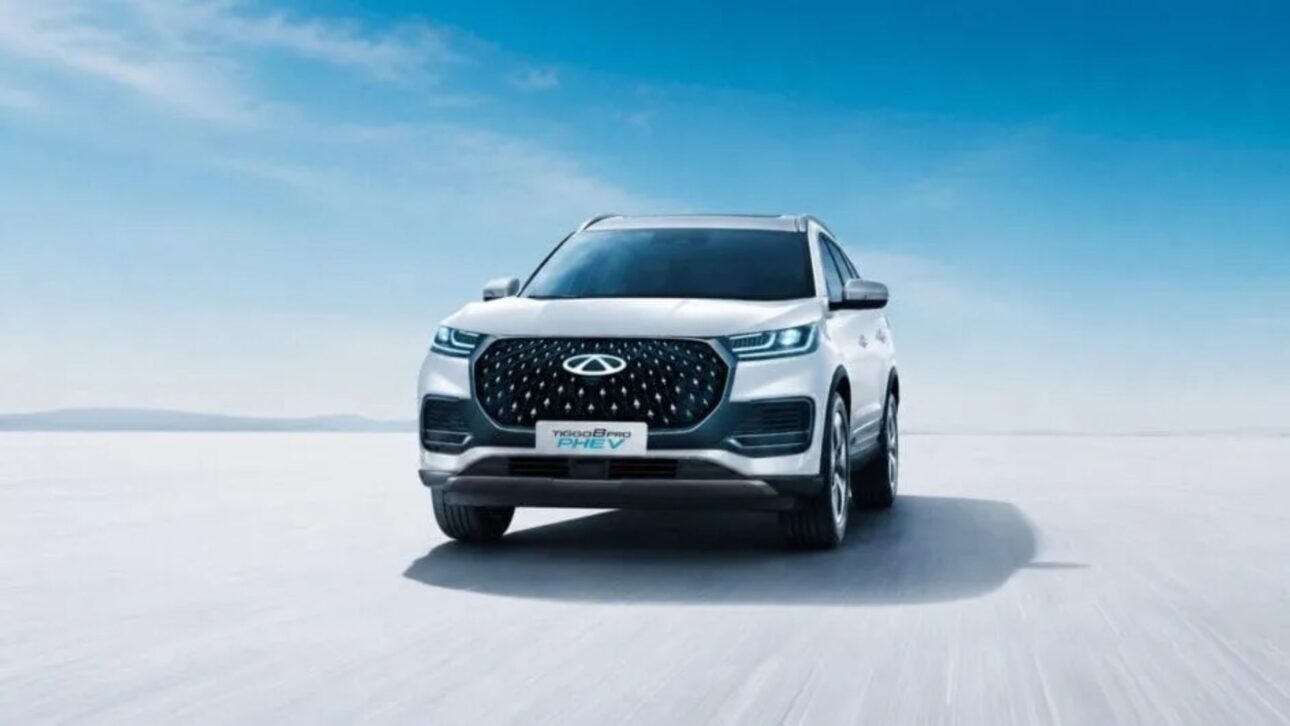
The plug-in hybrid, or PHEV, is the most striking intermediate option. It is a hybrid that can also be charged at the outlet, with a combustion engine, electric motor, and a larger battery than a conventional hybrid.
Therefore, the car can travel further in electric mode only. When the battery runs out or when more performance is needed, the combustion engine kicks in. It is a technology that can make sense for those who travel short urban stretches during the week but still want the security of traveling without relying solely on chargers. According to ABVE, PHEVs combine combustion and electric engines, have external charging, and can travel dozens of kilometers in electric mode, depending on the model, like the CAOA Chery Tiggo 8 Pro PHEV.
The mild hybrid (MHEV) and the ABVE change in 2025
The mild hybrid, or MHEV, is the one that generates the most doubt. It has some level of electrification, but the electric system usually acts as support for the combustion engine, helping in starts, recoveries, automatic engine shutdowns at stops, and energy recovery during braking. The decisive detail is that this car does not move solely with the electric motor, as happens in the Fiat Pulse Hybrid.
This difference led ABVE to change its classification. Since January 2025, MHEVs are no longer considered electrified vehicles by the entity for the purpose of monitoring electromobility in Brazil and are now accounted for in separate charts.
The term electrified, in turn, became a broad label that can include pure electric, plug-in hybrids, conventional hybrids, and, depending on the criteria, even mild hybrids, which is why Inmetro monitors consumption, range, emissions, and efficiency in the Brazilian Vehicle Labeling Program, whose 2026 table includes more than 760 models and versions.
In the end, the key to differentiating cars is less about the acronyms and more about one question: does the electric motor move the car alone?
This separates the pure electric, which only uses electricity and needs recharging, the plug-in hybrid, which uses electricity and fuel but also goes to the outlet, the conventional hybrid, which uses both but does not go to the outlet, and the mild hybrid, in which the combustion engine remains the protagonist.
With the reclassification of mild hybrids by ABVE in 2025 and Inmetro’s labeling gathering more than 760 models, understanding these differences before closing a deal avoids the frustration of discovering, only after purchase, that the car was not quite what it seemed.
And you, which of these technologies makes more sense for your routine? Did you already know how to differentiate between electric, hybrid, plug-in, and mild hybrid? Share your opinion and exchange ideas with other readers about cars and electrification, with respect for different opinions.