






 Portuguese
  Spanish
  3 min of reading
  79 comments


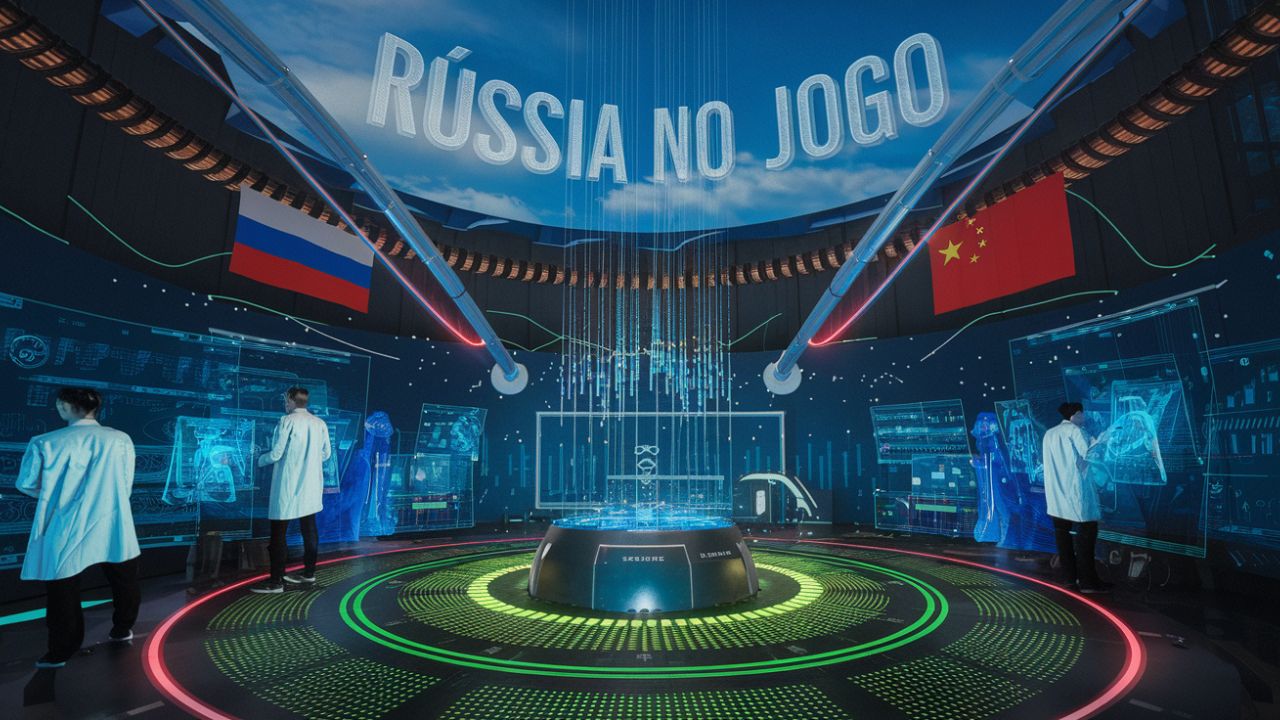


With an Investment of €700 Million and a Strategic Partnership with China, Russia Reaches a Historic Milestone with Its First 50-Qubit Quantum Computer, Using Neutral Rubidium Atom Technology and Aiming for a Future of 100 Qubits.
A world where computers solve problems in seconds, which today would take millions of years? That is the goal of the quantum race. And now, Russia, with its first 50-qubit quantum computer, shows that it is not just participating in the game, but playing to win.
But what does this advancement mean and why is it so important? Let’s explore how Russia positions itself in this competitive global landscape.
Global Context: What Is the Quantum Race?
The quantum race is the new competition among global powers, such as the US, China, and now, Russia. Countries are investing billions in research to achieve more powerful quantum computers capable of transforming areas such as cryptography, artificial intelligence, and scientific research.
-
Helicopter Drops 180 Tons of Sand and Gravel on Swedish River to Revive Ecosystem Damaged by Decades of Exploitation

-
Brazilian Company Launches Retro Smartphone with 48 MP Camera, T9 Keyboard, and Privacy Features for Social Media-Free Use

-
Self-Taught Chinese Farmer Builds 5-Ton Submarine from Scrap, Launches It in Anhui River
-
Invisible Induction Technology Enables Wireless Power for Blenders, Coffee Makers, and Air Fryers, Reducing Countertop Cables





Despite starting later, Russia is showing its potential. In 2020, the government invested €700 million in quantum technologies and created the National Quantum Laboratory, bringing together scientists, universities, and large companies. This investment has already begun to bear fruit.
The Landmark of the 50-Qubit Quantum Computer: What This Means for Russia

Since 2020, Russia has steadily advanced. In 2023, it developed a 16-qubit computer. Just one year later, it reached the milestone of 50 qubits, surpassing its own expectations.
This progress is even more significant considering the use of neutral rubidium atom technology, which allows for greater precision and stability.
Think of qubits as delicate pieces of a puzzle. Russia uses neutral rubidium atoms, manipulated by lasers, to create these qubits. This technique reduces the “noise” in the system, ensuring more precise results. Each atom is controlled individually, as if each piece is placed with a pair of tweezers.
Strategic Partnerships: Russia and China United in Innovation
In addition to the quantum computer, the partnership between Russia and China began in 2020 and has already brought remarkable results. One of the milestones was the use of the Micius satellite to transmit encrypted messages 3,800 km away, an achievement that exceeded expectations.
This collaboration goes beyond technology. Russia and China are challenging US leadership, showing that innovation can come from different parts of the world. By combining resources and knowledge, these nations are building a solid foundation for the quantum future.
Next Steps: The Future of Russian Quantum Technology
Russia’s current goal is clear: to achieve 100 qubits soon. While modest compared to IBM’s 1,121-qubit processor, these advancements show Russia’s determination to continue growing.
Russia faces challenges, such as a lack of funding compared to the US and China. However, its solid scientific base and strategic partnerships may be the differentiators that elevate the country to new heights.
With its first 50-qubit quantum computer, Russia is not only entering the quantum race but proving that it can compete on equal footing. This advancement is a sign that the future is being written now.
The quantum world is constantly changing, and Russia has made it clear that it will not fall behind. The question remains: how far will they go?





Excelente el conocimiento y el aporte científico que la ciencia y la tecnología de esa gran civilización tanto en el pasado como en el presente, han realizado a la humanidad.
Um bando de hipocritas comentando guerras passadas , mira o futuro da humanidade , pega um pouco do dinheiro q vcs tem e doa para universidades, centro de pesquisas, para ver se melhora o cérebro dos humanos, tudo no Brasil nos foi encinado errado de acordo com as benesses dos capitão do mato vamos falar do Brasil p mudar a mentalidades destes filhote da ditaduras e do nazismo q estava escondido ,e agora acordou, passado e passado já era o futuro da humanidade q devemos pensar e discutir.
Quem dominar essas tecnologias primeiro, certamente dominará o mundo em diversos aspectos