Portuguese
  Spanish


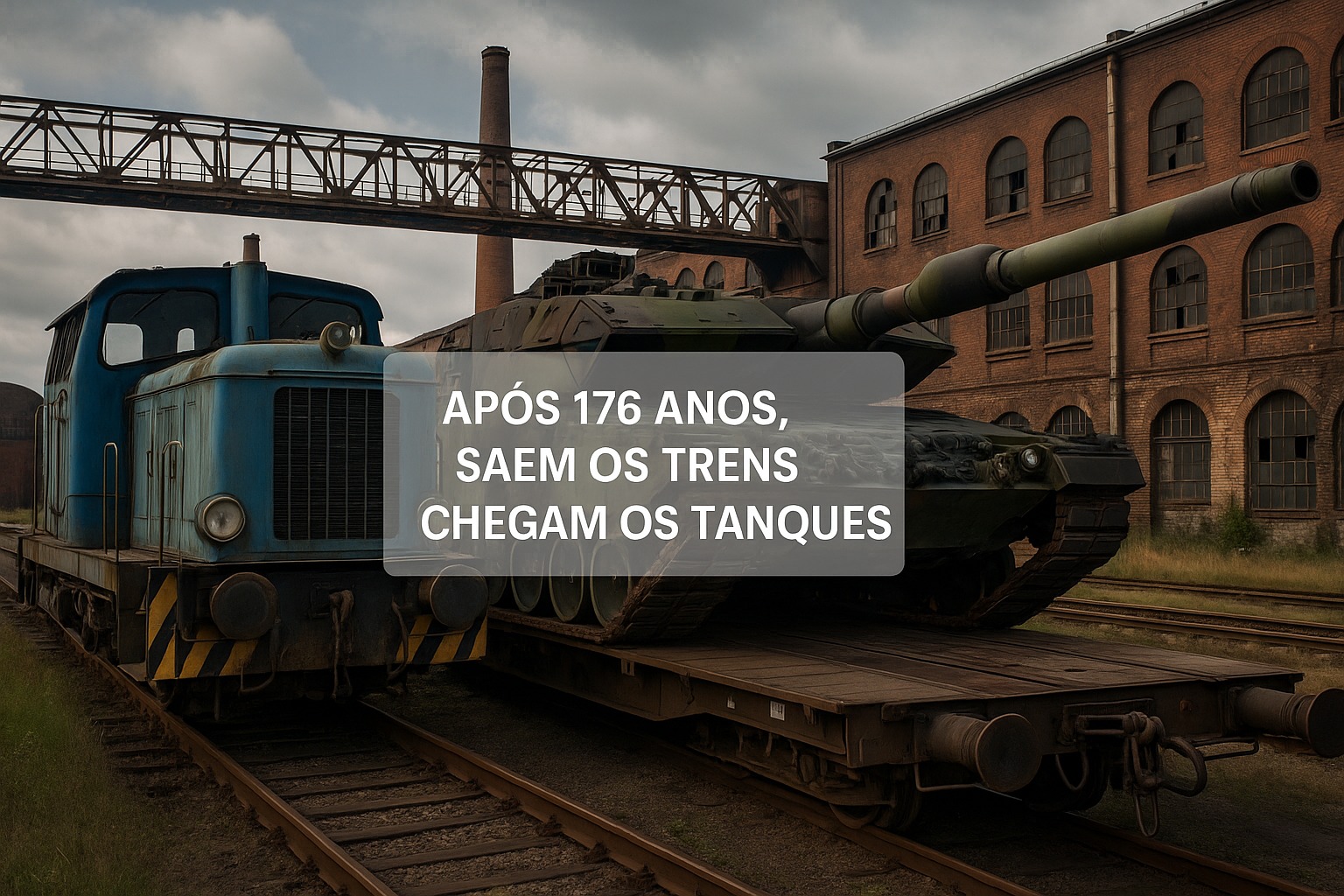


After 176 Years Of Railway Production, The Historic Factory In Görlitz, On Germany’s Eastern Border, Will Be Reconverted By KNDS To Manufacture Leopard II Tanks — Symbol Of The Country’s Industrial And Military Turnaround
For more than a century and a half, Görlitz lived to the sound of trains crossing the eastern border of Germany. The city prospered with its factories of wagons and locomotives, which defined the working-class identity of the region.
Now, this era has come to an end. After 176 years, the historic industrial complex of Alstom will be converted by the arms consortium KNDS to manufacture components for Leopard II tanks and Puma armored vehicles.
What once symbolized civil mobility and reconstruction is now transforming into a cog of the German military machine.
-
Cameroon’s Wealthiest Billionaire to Invest Nearly Entire Fortune in $900 Million Airline to Boost Central African Connectivity

-
China Transforms South China Sea Landscape by Dredging Sand to Build Artificial Islands with Runways, Hangars, Radars, and Ports on Contested Reefs
-
Brazil to Phase Out Gasoline Subsidy, Fuel Prices Set to Rise Amid National Debate

-
Brazil Aims to Boost Critical Mineral Production to 12.2% of Global Output, Targeting Battery and Tech Industries



This change does not happen by chance: it reflects the country’s strategic turn towards rearmament, driven by the Russian invasion of Ukraine, the fear of a retreat in U.S. security guarantees, and an economy looking for new sources of employment.
Between Pacifism And Necessity
In Görlitz, the industrial reconversion divides opinions. According to the New York Times, the aging population, battered by deindustrialization since reunification, sees tank production as a necessary evil.
In the region where the far-right AfD party — openly pro-Russia and against sending aid to Ukraine — gathers almost half of the votes, even local leaders have accepted the change with resignation.
“It is not a cause for celebration, but we cannot oppose job creation,” they acknowledge. The loss of work would be even more devastating than the moral dilemma of manufacturing weapons.
The factory once employed more than 2,000 people but had only 700 before the sale. KNDS promised to retain half of them and plans to increase the number in the coming years.
In fact, the unions, led by IG Metall, were the ones who advocated for the reorientation of the plant towards the defense sector as a way to avoid a permanent shutdown.
In a region marked by youth exodus and economic frustration, the arms industry has ended up offering something akin to a second chance.
Military Reindustrialization Of Germany
The case of Görlitz is part of a broader phenomenon: German rearmament is becoming a driving force for a new industrial reconversion.
Since 2020, defense spending has increased by about 80%, surpassing 90 billion euros, and the demand for skilled workers has risen rapidly.
Companies like Rheinmetall, Diehl Defence, Thyssenkrupp Marine Systems, and MBDA have already hired more than 16,000 people since the onset of the war in Ukraine and plan to recruit another 12,000 by 2026.
Sector profits are growing to the extent that their executives are increasing dividends while considering purchasing declining automotive factories, such as Volkswagen’s in Osnabrück.
CEO Armin Papperger summarizes the new economic logic: if taxpayers’ money funds national security, jobs must stay in Germany.
In this context, reconverting factories like Görlitz is seen as an industrial policy with a dual purpose — sustaining production and strengthening the country’s strategic autonomy.
Despite the economic relief brought by the resurgence of the defense sector, a deep tension persists between the pacifism inherited from the post-war period and the necessity to ensure European security.
A Moral And Economic Dilemma
For many East Germans, who already faced the first wave of deindustrialization after the fall of the Wall and are now losing jobs in energy and manufacturing, tank production is a bitter form of survival.
Some fear that the weapons produced will end up being used directly in Ukraine. Others believe that the growth of the sector depends on the continuation of the war.
“Will it be sustainable to manufacture tanks? Hopefully not. Hopefully, wars will end soon,” said a union representative to the Financial Times.
Nevertheless, the reality of the market and geopolitics points in another direction. Defense has become the new axis of the European economy, and Germany, due to its history, technology, and allies’ pressure, is leading this transition.
The End Of An Era Of Railways
The former Görlitz factory, with its warehouses darkened by decades of metalworking, symbolizes the transformation of an era.
Where once passenger wagons were welded, now steel armor for combat vehicles will be assembled.
What began as an attempt to save jobs threatens to redefine the German industrial soul. The country is shifting from civil engineering to military power — from steel that connected continents to what now protects them.
Between Trains And Tanks
At its core, this is the great paradox of contemporary Germany. In a fragmented political landscape, where the fear of war coexists with the pursuit of prosperity, Eastern workers are once again becoming involuntary protagonists of history.
Their fate, divided between nostalgia for trains and the pragmatic acceptance of tanks, represents the dilemma of a nation trying to reconcile its pacifist past with a present that pushes it back to arms manufacturing — this time, in the name of a secure future.
With information from Xataka.