






 Portuguese
  Spanish
  5 min of reading
  0 comments


Floating platform with modular nuclear technology draws attention for combining low operational emissions, high power, and application in locations where large-scale construction is unfeasible.
South Korea has just taken a bold step in an energy race that could change how the world produces electricity: a floating nuclear platform, installed at sea, equipped with two small SMART100 modular reactors and designed to generate power far from the coast.
The project, developed by Samsung Heavy Industries in partnership with the Korea Atomic Energy Research Institute (KAERI), received an Approval in Principle from the American Bureau of Shipping (ABS) for a maritime structure known as FSMR, capable of housing two compact nuclear reactors. The information was disclosed by World Nuclear News.
In practice, this does not mean the platform will be built immediately. But it indicates that the concept has passed an initial stage of technical validation, a decisive step to attract partners, advance regulatory studies, and show that the idea of a nuclear power plant in the ocean no longer belongs solely to science fiction.
-
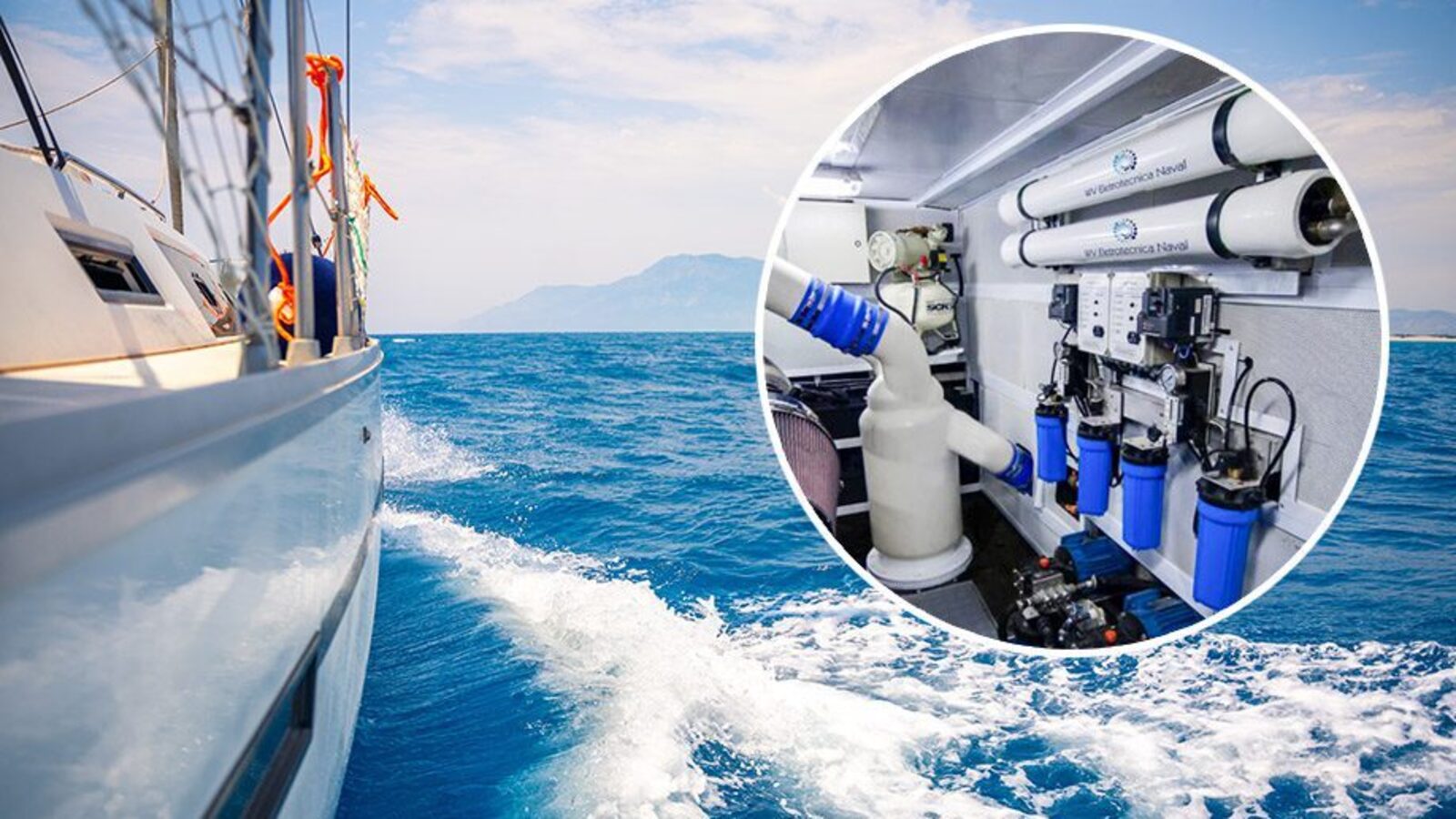
Brazilian family creates machine that transforms seawater into fresh water, produces up to 130 liters per hour, facilitates routine on vessels, and boosts family business along the country’s coast.

-
A doctor from Minas Gerais warns that sleeping with the fan pointed at the body all night is not as harmless as you think; it dries out the respiratory tract, causes mucus buildup, spreads dust mites, and can even irritate the cornea of the eyes.

-
Ecuadorian volcano at 6,268 meters is more than 2,000 meters closer to space than Everest, which is 8,848 meters, because the Earth is wider at the equator.
-
Public school students in the hinterlands of Maranhão create a bioinsecticide with neem and castor to protect corn crops, transform rural waste into biogas and biofertilizer, and bring sustainable technology to producers at ExpoSertão.



The nuclear power plant that trades concrete for the ocean

Unlike traditional nuclear power plants, which require large plots of land, complex civil works, and years of construction on solid ground, the South Korean proposal bets on a floating structure. The idea is to bring power generation to the sea, using a platform capable of integrating small modular reactors, safety systems, and electrical generation equipment.
This type of solution can be especially attractive for coastal regions, islands, ports, industrial hubs, and remote areas that need firm energy but face difficulties in building large power plants on land. Instead of transporting fossil fuel over long distances, electricity could be generated directly at a maritime facility.
The strength of the project lies precisely in the combination of modular nuclear technology and South Korean naval engineering. Samsung Heavy Industries is one of the global giants in shipbuilding, while KAERI has decades of experience in developing nuclear reactors.
Two SMART100 reactors at the heart of the platform
The core of the project is the SMART100, an integrated small modular reactor developed by KAERI. Unlike giant nuclear reactors, SMRs are designed to operate on a smaller scale, with more compact components, the possibility of standardization, and greater application flexibility.
The platform approved in principle was designed to accommodate two SMART100 reactors. This detail increases the concept’s impact, as it transforms a floating structure into a true offshore nuclear power generation plant, capable of producing continuous energy without relying on coal, diesel, or natural gas.
SMRs have gained traction in the global energy debate because they promise to deliver stable electricity, with low carbon emissions during operation, in locations where large power plants would be expensive, time-consuming, or unfeasible. In the South Korean case, the differentiator is bringing this technology to the maritime environment.
Compartmentalized design can accelerate construction
One of the most important aspects of the concept is the so-called compartmentalized design. The proposal organizes the platform’s systems by function, separating the reactor area, generation equipment, and safety elements into specific modules.
This model can facilitate future adaptations. Instead of redesigning the entire platform, it would be possible to alter only the compartment designated for the reactor, making room for different SMR models in the future. It’s a bet on a versatile maritime structure, rather than a solution limited to a single type of technology.
Another relevant point is the modularization of safety systems within a single containment. The promise is to allow for onshore testing before onboard installation, which could reduce technical risks and shorten construction phases.
Why a floating nuclear power plant draws so much attention
The image is powerful: an ocean platform, with two compact nuclear reactors, producing energy without burning fossil fuels. For countries with islands, isolated coastal areas, or fragile electricity grids, this type of solution can seem extremely attractive.
It could also serve energy-intensive industrial projects, such as seawater desalination, mining, ports, hydrogen production, and offshore complexes. In regions where diesel still supports part of the electricity generation, a nuclear platform could reduce logistical costs and import dependence.
Furthermore, nuclear energy has an advantage that solar and wind alone cannot deliver: constant production. While solar panels depend on the sun and wind turbines depend on the wind, a nuclear reactor can operate continuously, offering baseload power for critical systems.
The advance still faces enormous obstacles
Despite its potential, the project is still far from commercial operation. An Approval in Principle is not equivalent to a definitive authorization for construction or operation. It indicates that the concept was considered technically promising at a preliminary stage.
Before any real deployment, environmental studies, nuclear licenses, specific maritime rules, emergency plans, collision protection, storm resistance, radiological safety, and acceptance from the countries where such a platform could operate would be necessary.
The maritime environment is aggressive. Salt, waves, extreme winds, and constant movement increase the level of technical demand. When this is added to the complexity of a nuclear system, the regulatory barrier becomes even greater.
South Korea aims for leadership in maritime nuclear energy
Even with the challenges, the South Korean movement shows a clear trend: the nuclear industry is trying to move away from traditional models and enter a new phase, more modular, flexible, and integrated with other sectors.
South Korea is already recognized for its capabilities in shipbuilding, heavy engineering, and nuclear technology. By uniting these three fronts in a floating nuclear platform, the country is trying to position itself at the forefront of a nascent market that could attract billions in investments.
If the project advances, the ocean may cease to be just a space for ships, oil, gas, and wind turbines. It could also host compact nuclear power plants, capable of supplying electricity to regions that currently depend on expensive, polluting, or unstable solutions.
The question now is simple: will South Korea’s floating nuclear platform be just an ambitious concept or the first step of a new generation of offshore power plants?


-

1 person reacted to this.