






 Portuguese
  Spanish
  6 min of reading
  0 comments


Virgin Galactic’s space tourism advanced with the VSS Unity in a glide flight over Spaceport America, New Mexico. The mission trained pilots and ground crews for tests of the commercial spacecraft that the company intends to put into suborbital operations with passengers in the fourth quarter of 2026.
Virgin Galactic’s space tourism returned to the spotlight on May 27, 2026, when the company announced that the VSS Unity returned to the skies over Spaceport America, New Mexico, United States, to perform a glide flight after almost two years out of aerial operations.
According to the portal Olhar Digital, the mission did not represent the immediate resumption of suborbital trips with customers. The goal was to prepare pilots, ground crews, maintenance, and mission control for tests of the company’s new commercial spacecraft, whose entry into operation is scheduled for the fourth quarter of 2026.
VSS Unity returns to flight after ending its commercial phase in 2024

The VSS Unity was used by Virgin Galactic in its first stage of commercial suborbital operations. Its last commercial flight occurred on June 8, 2024, in the Galactic 07 mission, which transported a researcher and three private astronauts before the company focused resources on developing next-generation vehicles.
-
Space technology used to search for water on Mars is now hunting for invisible leaks under the streets of São Paulo, using satellites, AI, and chlorine signals to help Sabesp recover up to 6.7 billion liters of water.

-
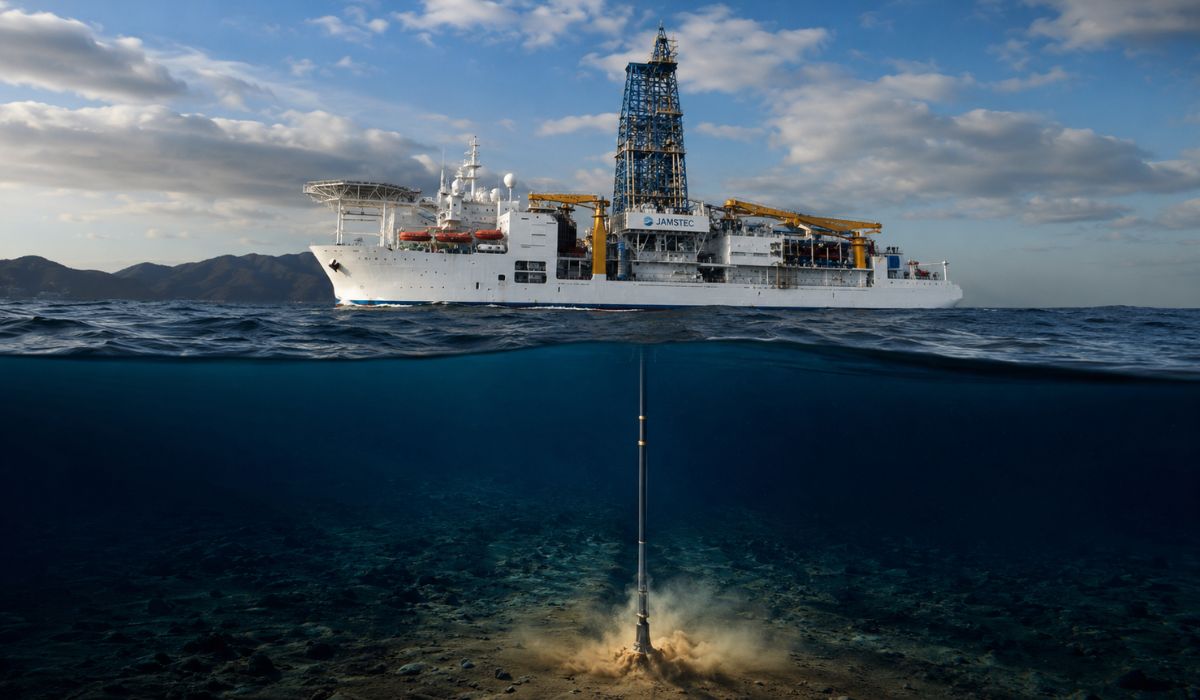
Japan sends ship to extract mud rich in rare earths at nearly 6,000 meters deep in the Pacific, attempts to lift 350 tons per day from the seabed, and transforms sediments near Minamitori Island into a strategic weapon to reduce dependence on China.
-
Venus Aerospace promises a rotating detonation hypersonic engine that takes the Stargazer to Mach 9 and crosses oceans in 1 hour, but the flight that made history barely surpassed the speed of sound.

-
Brazilian student creates a cheap formula that makes plants grow up to 90% faster and wins an award in a global scientific competition.




Now, the spacecraft reappeared in a different role. Carried to high altitude by the mothership VMS Eve, the Unity was released to perform a glide flight to the runway at Spaceport America. The return does not indicate an immediate reopening of flights for customers, but a training stage for the commercial spacecraft.
Glide flight allows training in real conditions
The decision to reuse the VSS Unity is linked to the need to put teams in contact with real operations, without relying exclusively on digital simulations. During a glide flight, pilots need to manage speed, energy, descent trajectory, approach, and landing in conditions similar to those encountered by a spacecraft after the suborbital stage.
According to Mike Moses, president of the space operations division at Virgin Galactic, the flight characteristics of the Unity offer a practical reference for the future spacecraft. The company understands that the experience in the cabin and on the runway can reduce uncertainties before the start of tests on the new vehicle.
The training also involves professionals who are not inside the spacecraft. Maintenance teams, ground operations, and mission control need to execute coordinated procedures, monitor data, and respond to operational situations in real-time, rebuilding a routine that has been interrupted since 2024.
Space tourism now depends on Virgin Galactic’s new spacecraft

The resumption of the company’s space tourism will not occur with the VSS Unity. The plan released by Virgin Galactic is to use the veteran spacecraft as a preparation platform while advancing with the first unit of its new generation of commercial spacecraft.
According to the schedule presented by the company, the first glide flights of the new spacecraft are expected in the third quarter of 2026. Test flights with propulsion towards space are scheduled for the fourth quarter of the same year, a period in which Virgin Galactic also expects to start commercial operations.
These stages still depend on the vehicle’s technical performance, ground and flight tests, operational preparation, and necessary authorizations. Therefore, the return of passengers to space remains a goal announced by the company, not a confirmed operation.
Last commercial mission took researchers and passengers to space
Before interrupting its operations with the Unity, Virgin Galactic conducted seven commercial missions between 2023 and 2024. These flights transported private customers, researchers, and scientific experiments on suborbital trajectories, in which the spacecraft reaches a high altitude before gliding back to land on a runway.
The Galactic 07 mission concluded this phase in June 2024. On that occasion, the VSS Unity transported the researcher astronaut Tuva Cihangir Atasever, associated with the Turkish Space Agency, along with three private passengers. The flight also carried scientific experiments related to microgravity and human behavior in space environments.
From there, the company suspended the spacecraft’s commercial flights to direct teams and investments to the new program. The strategy indicates that Virgin Galactic considers the next generation of vehicles essential to make flights more frequent and economically sustainable.
New generation designed to increase flight frequency

Virgin Galactic claims that its new spacecraft have been designed to perform up to two flights per week and accumulate more than 500 missions over the estimated lifespan of each vehicle. This capacity, if proven in operation, would represent a significant change compared to the pace achieved by the VSS Unity.
In the space tourism market, the frequency of missions is a central point. The operation involves passenger training, carrier aircraft, suborbital spacecraft, specialized teams, maintenance, and ground infrastructure. The more limited the number of flights, the greater the difficulty in expanding access and sustaining the business model tends to be.
The company also reported that the first commercial spacecraft has already been transferred from the assembly area to the test and launch hangar, where it is undergoing ground evaluations. The progress comes as the company attempts to demonstrate that it can turn years of development into a more predictable commercial routine.
Factory in Arizona enters preparation for resumption
In addition to tests with the VSS Unity, Virgin Galactic reported that it has begun constructing a production line for rocket engines at its spacecraft factory in Arizona. The structure is part of the industrial plan necessary to support the new vehicles.
The facility is relevant because hybrid engines are part of the stage where the spacecraft accelerates after being released by the mothership. Without a production and preparation chain compatible with the promised frequency, the expansion of commercial flights would face technical and logistical limitations.
The challenge for Virgin Galactic, therefore, is not just about getting a new spacecraft in the air. The company needs to demonstrate the ability to manufacture, test, maintain, and operate its vehicles regularly, in addition to meeting safety requirements in a sector where each mission receives worldwide attention.
Unity’s return rekindles expectations but does not eliminate risks


The glide flight of VSS Unity holds symbolic value for Virgin Galactic because it puts one of its spacecraft back in action after nearly two years. At the same time, the test has a practical function: allowing professionals to return to work under real conditions before the new spacecraft arrives for flight tests.
For the public interested in space travel, the movement represents another step in the attempt to reactivate a still restricted market. However, aerospace schedules are subject to revisions, especially when they involve new vehicles, propulsion tests, operational procedures, and regulatory approval.
If the disclosed milestones are met, Virgin Galactic may be able to take people to space again by the end of 2026. Until then, the company’s space tourism will continue to depend less on Unity’s history and more on the commercial spacecraft’s ability to prove safety, repeatability, and operational viability.
Can a veteran spacecraft pave the way for a new phase?
The VSS Unity has not returned to immediately repeat the commercial missions it conducted in the past. Its new role is to serve as a bridge between a phase that ended in 2024 and Virgin Galactic’s attempt to start more frequent operations with next-generation spacecraft.
The company has already shown that it can take customers and research on suborbital flights. Now, it needs to prove that it can do this regularly with its new system. Do you believe that space tourism will be able to stop being a rare experience and become a more accessible operation in the coming years? Share your opinion.


Be the first to react!