






 Portuguese
  Spanish


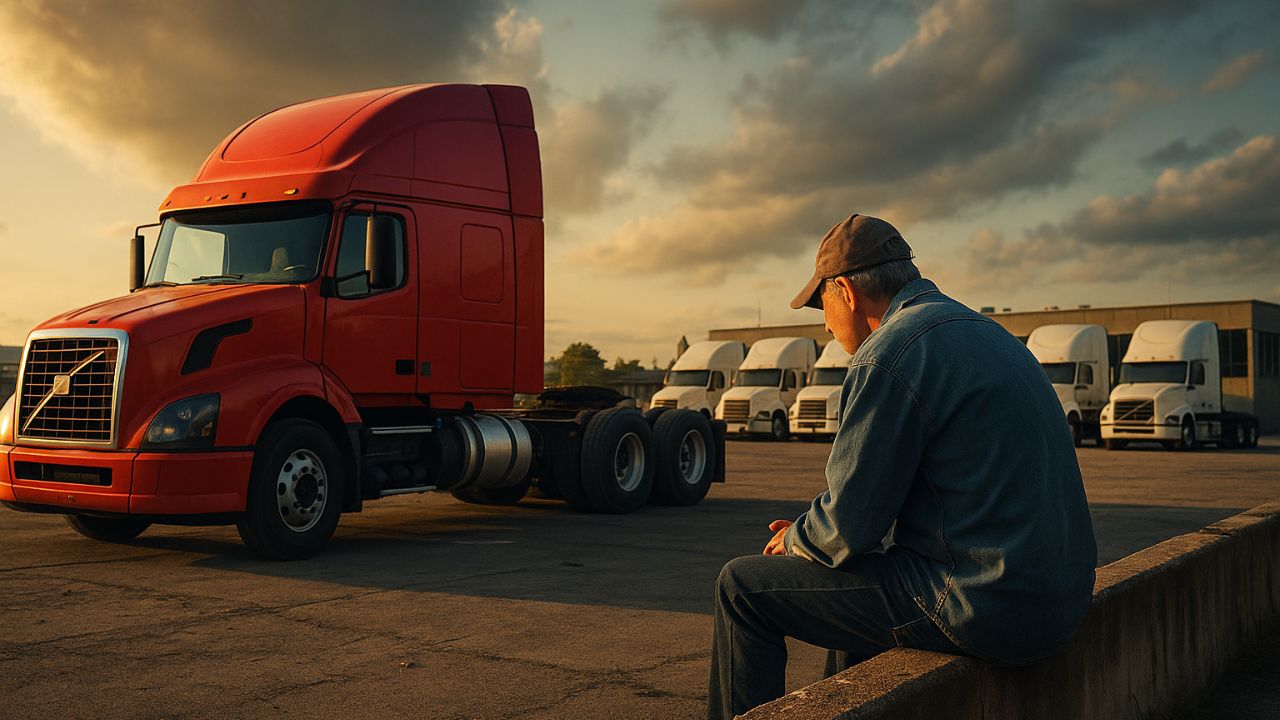


Truck Driver Shortage Grows with 15,000 Open Positions, Lack of Drivers, Unsafe Roads, and Nearly Nonexistent Rest and Safety Support
The truck driver shortage in Santa Catarina has shifted from a warning to a daily reality in transportation. With 15,000 open positions, companies see trucks ready to roll remain idle, while the lack of drivers pressures deadlines, increases costs, and threatens the flow of goods in various regions.
At the heart of this truck driver shortage is a combination that drives away professionals and terrifies those considering entering the sector: unsafe roads, exhausting hours, and a lack of minimal infrastructure. The result is an essential profession that is increasingly less attractive to new generations.
What Is Behind the Truck Driver Shortage
The truck driver shortage does not arise from a single factor. It occurs when working on the road becomes a set of daily obstacles. Many drivers report that, in addition to driving, they must “drive for others,” anticipating recklessness and risky situations to avoid accidents.
-
Brazil’s 2026 Tax Refund: Record 9.58 Million Filers in Largest Payout Ever, But a Key Detail on Priority Recipients Draws Nationwide Attention

-
Itaú Alters Hybrid Work Model, Increasing Office Days from 2028, Prompting Employees to Adjust to New Routine
-
Facing Labor Shortage, Japan Plans to Invest $34 Million to Attract Foreign Workers in Construction, Healthcare, Industry, and Commerce

-
Brazilian City Makes Remarkable Leap, Becomes 4th Wealthiest in the Country with GDP of R$ 134.1 Billion




In this scenario, insecurity on the roads becomes a trigger for giving up. Fear, disrespect on the road, and poor treatment at loading and unloading points are not just details. For those spending days away from home, this weighs as heavily as salary.
15,000 Open Positions and the Fleet That Cannot Operate


When a state accumulates 15,000 open positions, the effect goes beyond the HR departments of transport companies. The truck driver shortage begins to affect the entire cycle: collection, delivery, stock rotation, replenishment of companies, and even the predictability of those who depend on road transport to produce and sell.
Santa Catarina has a significant fleet of heavy vehicles, but the lack of drivers turns trucks into idle assets. A fully equipped truck is costly to remain inactive, causing direct losses and increasing the pressure for productivity on the professionals who remain on the road.
Lack of Drivers and a Shrinking Category
The lack of drivers grows when the sector loses experienced individuals and is unable to replenish them at the same pace. There are reports of many retired professionals leaving the transportation sector, while the entry of new drivers does not keep up with those leaving the field.
This imbalance sustains the truck driver shortage and opens the door for a domino effect: more overload, longer routes, less rest, and ultimately, more abandonment of the profession.
Unsafe Roads and the Fear That Changes Decisions
Unsafe roads are cited as a recurring reason for giving up. It is not just about robbery or violence. It also includes recklessness, lack of structure, constant stress, and risk of accidents. When a driver understands that each trip can lead to a problem, the profession starts to be viewed as a permanent sacrifice.
And when insecurity on the roads combines with fatigue, the risk increases. The road requires full attention, and the lack of adequate rest conditions heightens the likelihood of human error.
Rest Area: Mandatory Rest, Insufficient Structure
Legislation provides for minimum rest during long trips, but the support point for parking and resting is a central bottleneck. Without a rest point, the driver arrives and finds nowhere to stop safely, cannot fulfill rest requirements peacefully, and remains exposed to risks in makeshift locations.
In the truck driver shortage, the support point ceases to be a “convenience” and becomes critical infrastructure. Without a support point, there is no sustainable routine on the road.
The Cabin as Home and the Invisible Cost of the Profession
For many, the truck is literally a tin house. The seat becomes a bed, the refrigerator is downsized, and life happens alongside the steering wheel. This intense routine transforms longing into a part of the job. The truck driver shortage is also social: families adjust to long periods of absence, and the profession exacts an emotional toll.
Even those who love the road admit the burden of daily life. The distance turns visits into events, and reunions become special occasions. It is the reality of those who keep the economy running but pay with time away from home.
Paths to Reduce the Truck Driver Shortage
To tackle the truck driver shortage, the sector is trying to act on two fronts: attracting and training new professionals and providing better conditions for those already on the road. Training programs and category changes help open doors, including initiatives that place newly qualified individuals directly into the market.
But the problem cannot be solved with courses alone. To genuinely reduce the lack of drivers, it is necessary to address what drives professionals away the most: unsafe roads, rest structures, and respect in the workplace. Without adequate support points and without safety, the replenishment of drivers remains fragile.
What Changes If the Truck Driver Shortage Worsens
If the truck driver shortage escalates, the consequences may be felt everywhere: missed deadlines, more expensive logistics, idle fleet, lack of predictability, and pressure on production chains. Road transport is a territorial backbone, and the lack of drivers puts this axis at risk.
With 15,000 open positions, the message is clear. The question now is whether the system can react before the scarcity turns into a complete halt.
And you, what do you think weighs more in this truck driver shortage: insecurity on the roads, lack of drivers, or insufficient support points?








Sou mais um q tô saindo fora fé em Deus
Salário e a base de tudo
Trabalho ha 25 anos nessa área e estou a quatro anos trabalhando com caminhão toco dentro da cidade
Salário baixíssimo de 2,800.00 mas sempre estou em casa
Entro às 5:00 no serviço,termino minhas entregas chego em casa às 15:00 e faço Uber até meia noite( ganho mais no Uber )
Recentemente fui fazer uma entrevista em uma grande empresa e chegando lá tinha um monte de motorista aguardando para serem entrevistados
Todos faziam entrevista e iam embora reclamando
Como eu estava de férias,aguardei
A moça do RH pediu minha carteira de trabalho,olhou e disse que por ela eu estava aprovado,somente restando o **** de volante
A empresa pedia 2 anos de experiência no mínimo com caminhão e se não dirigisse carreta,eles colocavam um motorista junto o tempo necessário para aprender
Vamos ao salário;
Ofereceram em torno de 7.000.00 ( brutos)
Sendo que
Salário 1,900.00
900.00 prêmio
Os demais comissões
Sendo que deste valor ****,já estava incluso,almoço,jantar,pagar para pernoitar,banho,etc
Salário este para ficar em media 45 dias longe de casa
Obs: no passado,o salário era no mínimo 15 a 20 mil reais que um cegonheiro ganhava
Vao se f# de# empresas miseraveis
Falta de segurança é o pior,pontos de apoio também é um agravante