Portuguese
  Spanish



Chinese automakers accelerate landings in Brazil before the import tax rises to 35%, with operations from BYD, Geely, and other brands pressured by heated demand, quotas nearing the end, and mobilized ports
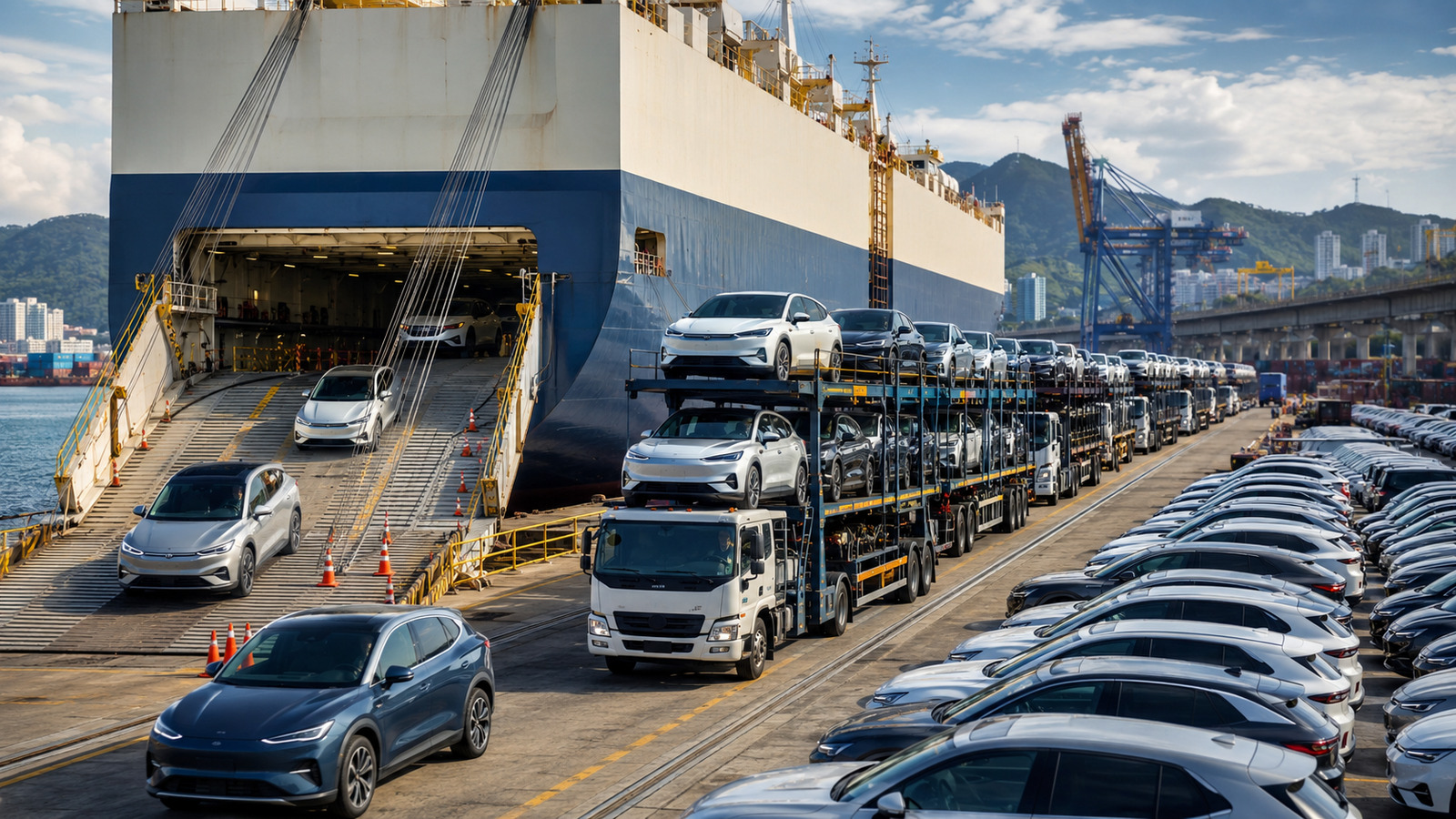
The race of Chinese automakers for electric cars in Brazil accelerated landings at national ports before the import tax rises to 35% in July 2026. In Itajaí, BYD mobilized 150 workers and 90 car carrier trucks to remove 4,500 vehicles in 24 hours. This article includes data published in a UOL article.


Itajaí becomes the stage for BYD’s rush
The operation in Itajaí, Santa Catarina, took place at the end of last month and required a special logistical plan to handle the BYD ship. The city had to close streets and create an access route for trucks from the BR-101.
The landing involved 90 car carrier trucks and 150 workers. The scale shows how Brazilian ports have become a central part of the competition among Chinese automakers trying to supply the market before the tax change.
-
1983 Chevrolet Runs Over 100,000 km Without Gasoline, Powered by Wood Chips, Reaches 125 km/h in Airport Test

-
Workshop Converts Giant Tractor Tire Tricycle into a Three-Wheel Drive Hybrid with 36,000-Watt Electric Motor Capable of Climbing Hills

-
Sales of Brazil’s Cheapest Electric Car Halted Before First Deliveries: E-Motors Suspends Emova Easy Due to Import Tax Increase and Rising Freight Costs

-
Nissan Discontinues Qashqai SUV Amid Cost-Cutting, Chinese Competition, and Product Line Review



BYD itself is already preparing a larger operation. The following month, another ship from the manufacturer is expected to arrive in Brazil with 7,200 electric cars, a volume higher than recorded in the Itajaí operation.
Geely and other Chinese brands also increase imports
The movement does not involve only BYD. Geely, pointed out in the material as the brand’s biggest rival, also recently broke an import record for Brazil. Other Chinese manufacturers follow the same path.
In March, the ship Tong Hong arrived at the port of Paranaguá, Paraná, with 3,370 units of the Geely EX2 and EX5 models. The operation occurred after the first batch of the EX2 sold out earlier than expected.
As Ro-Ro ship routes have little flexibility, the lack of units affected the brand’s deliveries. To avoid another demand limitation, Geely reinforced the shipment of vehicles to the country.
On May 5, the vessel Saic Anji Harmony brought 5,101 cars from various Chinese brands. By the end of July, the number of cars landed could reach 20,000 units, including an extra batch from Geely.
Tax Explains the Automakers’ Race
The increase in landings occurs before the main stage of the schedule defined by the federal government for imported hybrid and electric cars.
In July 2026, electric, plug-in hybrid, and conventional hybrid cars will start paying a 35% import tax.
Currently, the rate is 25% for electric cars, 28% for plug-in hybrids, and 30% for conventional hybrids.
In 2024, these percentages were lower: 10% for electric cars, 12% for plug-in hybrids, and 0% for conventional hybrids.
The end of quotas also pressures companies. Until June 30, 2026, automakers can still import tax-free up to certain amounts: US$ 43 million for hybrids, US$ 75 million for plug-in hybrids, and US$ 141 million for electric cars.
Heated Market Increases Competition
The automakers’ race is also driven by demand. According to the Brazilian Electric Vehicle Association, 83,497 electrified vehicles were registered in Brazil in the first quarter of 2026.
In the second half, the scenario is expected to change. The expectation is for a decrease in the volume shipped from China, with more CKD and SKD kits and fewer ready vehicles.
Anfavea has already acknowledged that the start of operations by BYD in Camaçari, Bahia, and GWM in Iracemápolis, São Paulo, has an impact on this performance.
Even so, Brazil is still expected to receive significant batches via Ro-Ro ships after the 35% rate. The difference is that these arrivals tend to be more punctual, linked to models without national production.
This article was prepared based on information from UOL Carros, the Brazilian Electric Vehicle Association, and Anfavea, with data, numbers, and statements preserved as per the consulted material.