Portuguese
  Spanish


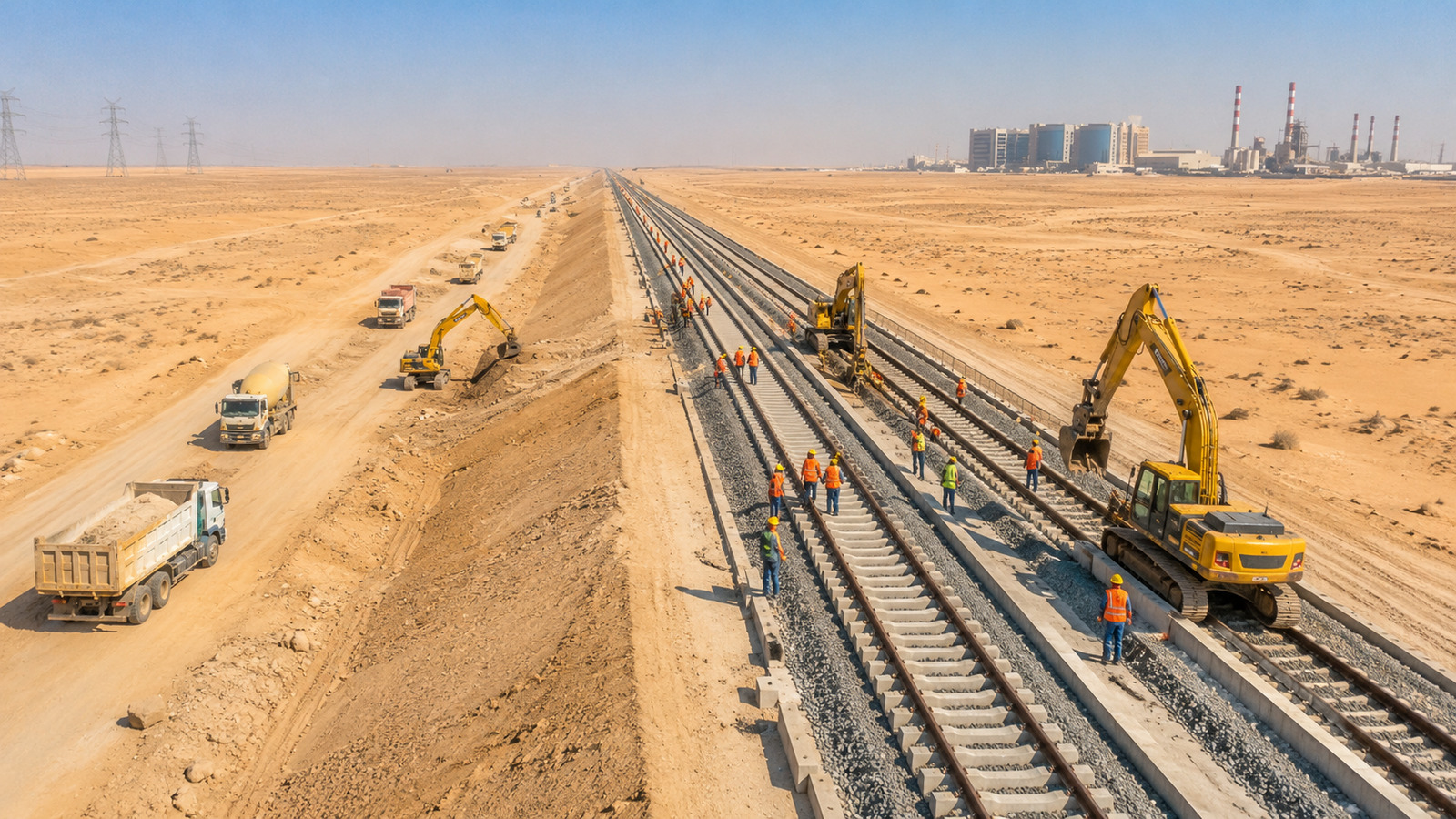

Saudi Arabia Railways tender foresees consultancy to transform preliminary project into a completed work within a 2,186 km railway corridor that will connect six Gulf countries and transport passengers and cargo more efficiently
The GCC railway gained a new stage in Saudi Arabia with the tender launched by Saudi Arabia Railways to hire project consultancy for the 672 km section within the Kingdom. The line will connect Al-Khafji, near Kuwait, to Al-Batha, on the border with the United Arab Emirates.
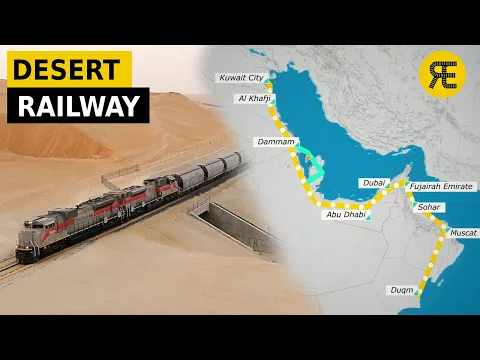

Tender marks a new phase of the Saudi section of the GCC railway
Saudi Arabia Railways launched the tender on May 7. The deadline for submitting proposals was set for June 30, within a contract aimed at project consultancy services.
The scope includes conceptual design, preliminary design, and ready-for-construction design, known by the acronym IFC.
-
Polish Billionaire to Invest £35 Billion in Building 14 Small Nuclear Reactors Across the UK for Over 60 Years of Energy Production

-
White Martins CEO Plans $200 Million Investment by 2026, Boosts Focus on Industrial Gases and Green Hydrogen in Brazil

-
$1.5 Billion Project to Deploy 2,000 LNG Trucks and Establish Brazil’s Largest Gas-Powered Heavy Transport Network
-
Major Appliance Manufacturer Closes Factory in Argentina, Shifts Production to Brazil, and Restructures in Latin America with Mexico Closure, Investing Up to $165 Million




The selected consultant will also have to review, update, and complete the existing preliminary railway project.
The Saudi section will start in Al-Khafji, in the Eastern Province, near the border with Kuwait. The route will head south to Al-Batha, on the border with the United Arab Emirates.
With approximately 672 km within Saudi Arabia, the segment will be one of the largest national sections of the future regional railway network of the Gulf Cooperation Council.

Regional corridor will be 2,186 km and will connect six Gulf countries
The Gulf Cooperation Council railway project foresees a unified corridor of 2,186 km. The proposal is to connect the six member states by a single network, aimed at transporting passengers and cargo.
The line will start in Kuwait and pass through Dammam, Saudi Arabia. Then, it will head towards Bahrain via a proposed bridge, with connections also to Qatar, the United Arab Emirates, and Muscat, passing through Sohar, in Oman.
The distribution of the sections shows the scale of the project. The United Arab Emirates will have 684 km, while Saudi Arabia will have 672 km.
Oman will have 306 km, Qatar will have 283 km, Kuwait will have 145 km, and Bahrain will have 36 km. The sum of these sections forms the planned network to integrate the region.
Kuwait and Qatar also advance with railway
The Saudi advance occurs amid the resumption of regional cooperation in infrastructure. The project gained new momentum after the Al-Ula Declaration, signed by the GCC member states in January 2021.
Since then, governments in the region have accelerated cooperation in transportation and resumed infrastructure projects that were delayed. The Saudi railway will have a direct connection with the Kuwait National Railroad project, the KNRR.
On the Kuwaiti side, the KNRR project contract was awarded last year to the Turkish company Proyapi Muhendislik ve Musavirlik Anonim Sirketi.
Qatar has also advanced in its commitments. In October last year, the Qatari cabinet approved a draft agreement to support a railway link between Qatar and Saudi Arabia as part of the GCC network.
These movements show that the Saudi section is part of a broader reorganization of regional transport, with different countries preparing their connections for the same railway network.
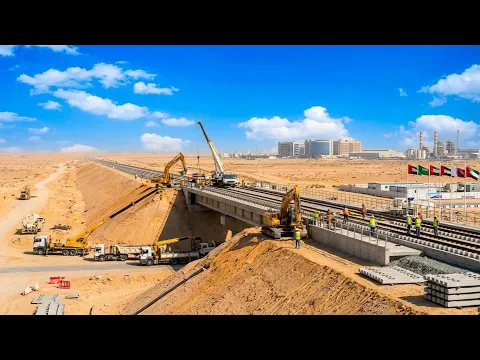
Passenger trains could reach 220 km/h
The GCC railway was planned to serve passengers and cargo. Passenger trains could reach speeds of up to 220 km/h, while freight trains are expected to operate between 80 km/h and 120 km/h.
For regional transport, the expectation is to reduce cargo transit times. Logistics companies expect gains in the supply chain between ports, industrial cities, and inland logistics zones.
The project could also help reduce congestion on highways by transferring part of the cargo transport to the rails. In practice, the network seeks to make movement between Gulf countries faster and more efficient.
Besides logistics, the railway could improve tourism and labor mobility. Travelers could, in the future, move between Kuwait City, Dammam, Doha, Abu Dhabi, Dubai, and Muscat via an integrated railway system.
Project connects to Saudi modernization strategy
Saudi Arabia considers the railway a strategic component of Vision 2030. The Kingdom has been investing in railway infrastructure to strengthen non-oil economic growth and expand regional trade connectivity.
The project also complements ongoing transportation modernization initiatives in Riyadh, including the King Abdulaziz Public Transport Project.
Both are aligned with Saudi Vision 2030, focusing on expanding connectivity, improving public mobility, and strengthening a more integrated transportation infrastructure in the Kingdom.
This article was prepared based on information from the material provided about Saudi Arabia Railways, the Gulf Cooperation Council railway, and regional advancements related to the project, with data, numbers, and statements preserved as per the consulted material.