Portuguese
  Spanish


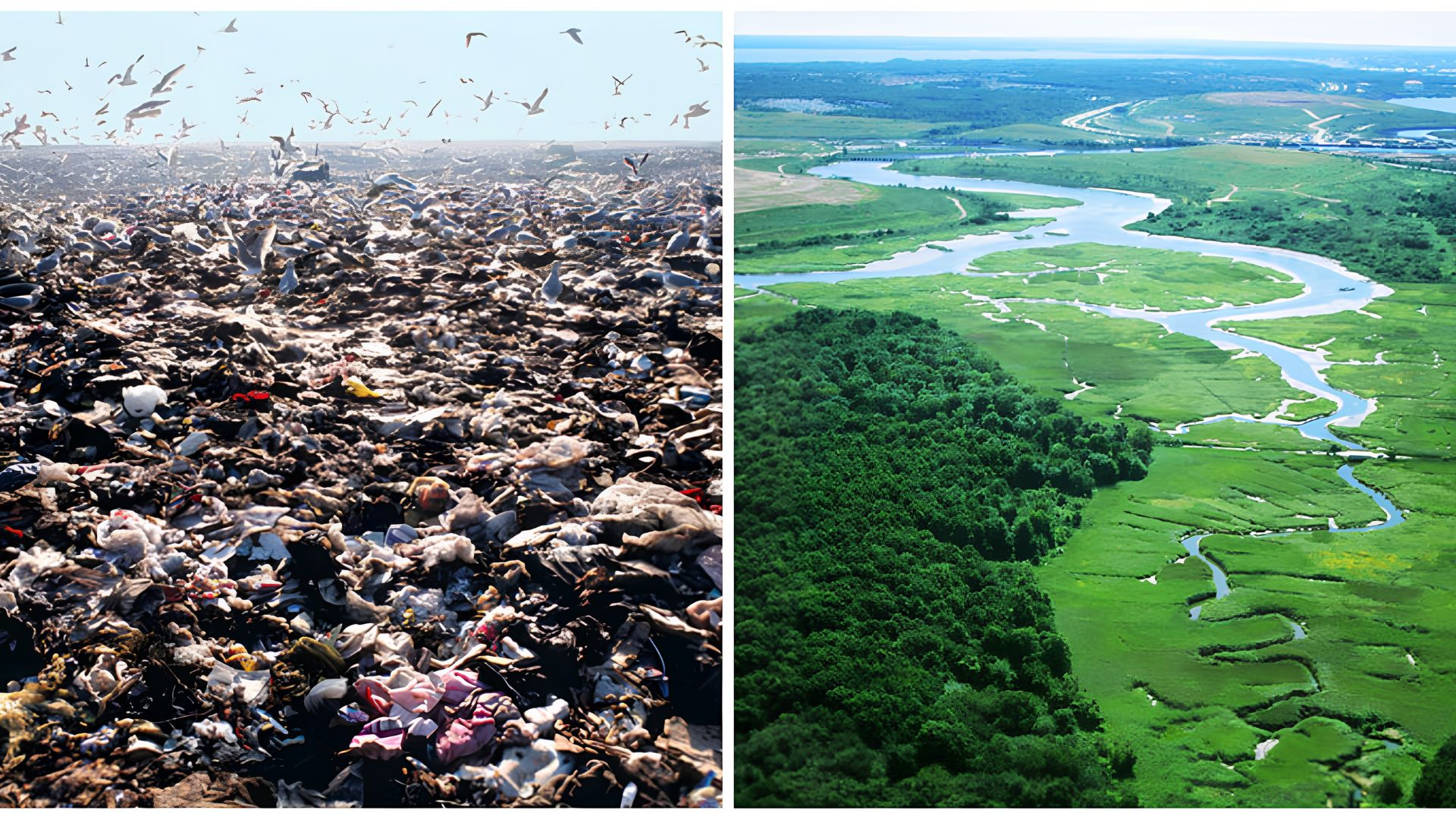

New York converts an old landfill with 150 million tons of waste into a park three times larger than Central Park.
For more than half a century, barges loaded with trash arrived daily at Staten Island, dumping tons of waste into an ever-growing landscape. The site would become so large that it would end up being recognized as the largest landfill in operation in the world during part of the 20th century. Today, this same space is being converted into a gigantic urban park. The former Fresh Kills Landfill, which received the city’s trash between 1948 and 2001, is being transformed into Freshkills Park, an environmental recovery project that aims to erase one of the biggest marks of modern consumption and convert it into green areas, trails, lakes, and habitats for wildlife.
Four artificial mountains hide about 150 million tons of waste accumulated over more than five decades
According to the New York City Department of Parks (NYC Parks), the four large mounds on the site store approximately 150 million tons of municipal solid waste. This amount is so large that it completely transformed the original geography of the region.
For decades, the landfill received virtually all the trash produced by the city. At the height of operations, the site received about 20 barges per day, each carrying approximately 650 tons of waste, according to historical records of the project.
-
Experts Share 5 Practical Ways to Detect Hidden Wiring in Walls Before Drilling, Using Simple Techniques and Affordable Devices to Prevent Electrical Damage and Unexpected Costs

-
Brazilian Architect Wins International Award for Empowering Ugandan Women to Build Their Own Homes
-
Singapore Constructs Massive Waste Island with 7 km Dike to Combat Space Shortage
-
Australia’s Massive 5.5 km Iron Mine Visible from Space Fuels Global Industry with Giant Trains


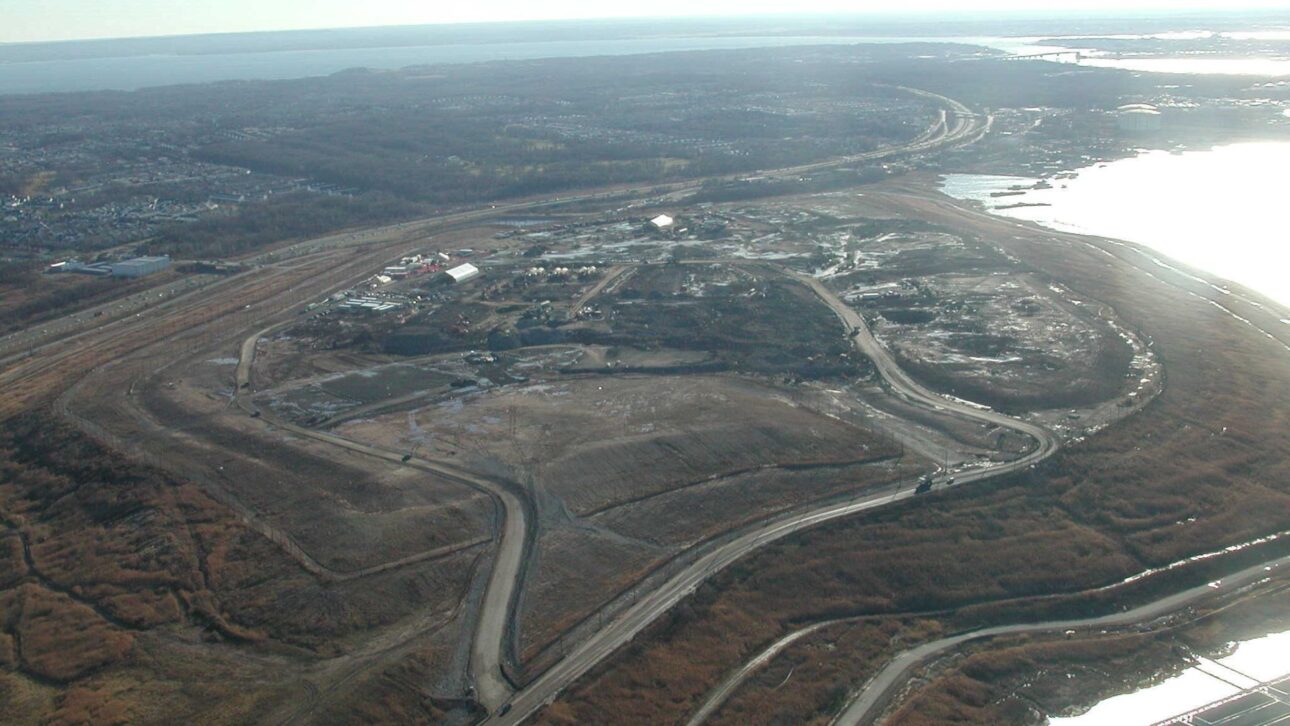
By the mid-1950s, Fresh Kills was already considered the largest landfill on the planet. In 1996, one of its artificial mountains reached approximately 53 meters in height, surpassing the height of the Statue of Liberty itself, according to historical information compiled by Freshkills Park.
The old landfill is being converted into a park almost three times larger than Central Park
According to Freshkills Park, the total area of the project reaches approximately 2,200 acres, equivalent to about 890 hectares.
This means that, when fully completed, the park will be almost three times larger than Central Park, becoming the largest park built in New York in over a century.


The transformation officially began after the landfill’s activities were definitively closed in 2001. The environmental recovery plan was initiated in 2008 and is expected to continue until approximately 2036, according to the schedule released by the New York City government.
Impermeable layers, artificial soil, and gas capture systems attempt to contain decades of underground decomposition
Recovering a landfill of this scale requires monumental level engineering. According to Freshkills Park, the waste mountains were sealed with multilayer systems composed of impermeable membranes, clay, draining materials, and thick layers of topsoil.
The goal is to prevent water infiltration, reduce leachate production, and control the emission of gases from the decomposition of waste.
Experts explain that the methane generated by the waste continues to be captured and directed for energy use, preventing large volumes of the gas from escaping into the atmosphere.
Under the seemingly natural vegetation, decades of urban consumption, packaging, household waste, discarded objects, and materials accumulated over entire generations of New Yorkers remain buried.
Foxes, deer, and hundreds of bird species have returned to occupy an area that for decades was a symbol of environmental degradation
One of the most surprising aspects of the transformation is the gradual return of biodiversity. According to Freshkills Park, more than 200 bird species have already been recorded at the site, including hawks, ospreys, falcons, and state-threatened species in New York.
Ecological research conducted in the park has also identified the reappearance of mammals such as red foxes, white-tailed deer, turtles, bats, and small mammals, demonstrating how highly degraded areas can recover some of their ecological functions over time.
Today, where there once were exposed mountains of garbage, there are now extensive lawns, restored wetlands, trails, and areas designated for wildlife observation.
The world’s largest landfill is turning into a laboratory for the future of cities
Freshkills Park represents much more than an urban park. It has become a global experiment on how highly urbanized societies can deal with the legacy left by decades of mass disposal.
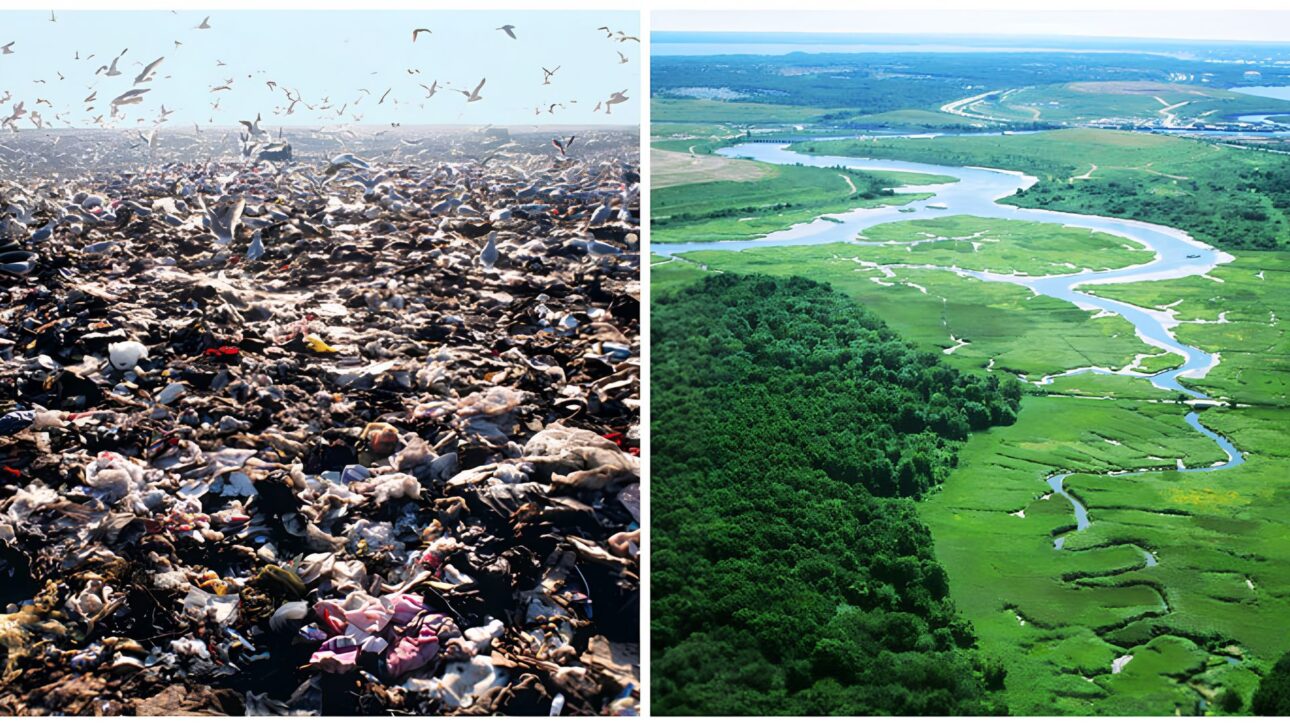
While many cities are still looking for space to store waste, New York decided to do something even more ambitious: cover 150 million tons of garbage with vegetation, science, engineering, and time.
But the question remains. If one of the largest cities on the planet needed to create a gigantic park to hide its own history of consumption, how many other invisible mountains of waste are still growing around the world?