Portuguese
  Spanish


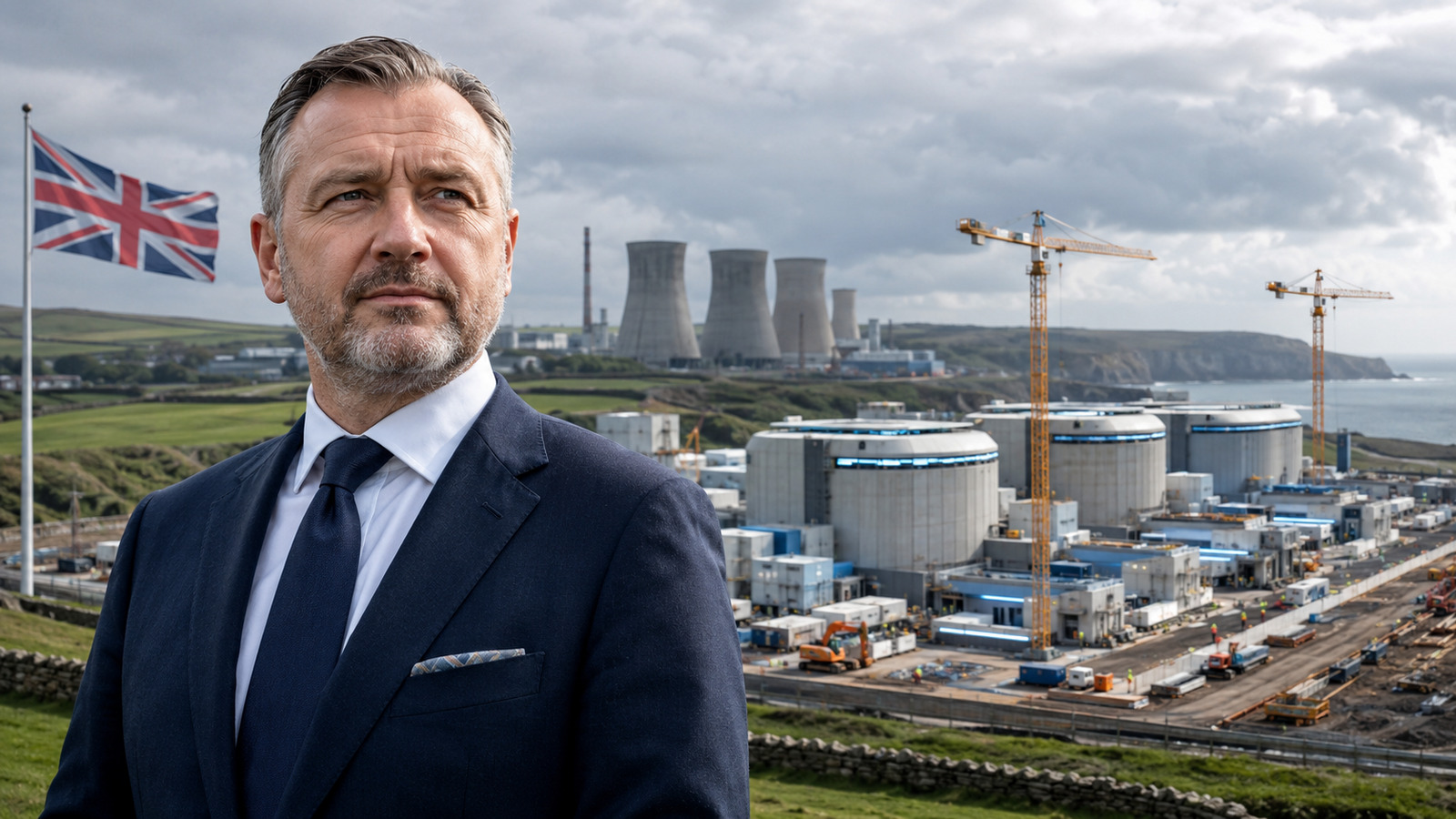

Consortium led by Michał Sołowow wants to install 14 BWRX-300 reactors in three UK locations, including Oldbury, to supply millions of homes and possibly support data centers linked to Google Cloud
A consortium led by industrial billionaire Michał Sołowow announced a £35 billion plan to build 14 small modular reactors in three locations in the UK, with the capacity to supply the equivalent of 8 million homes for over 60 years and start generation in 2034.


Project foresees 14 reactors in three areas of the UK
The initiative will be conducted by SGE, Sołowow’s nuclear development company, through the SGE SMR consortium. The plan involves deploying BWRX-300 reactors, technology developed by GE Vernova Hitachi.
Each unit will have 300 megawatts of capacity. The company estimates an investment between £2.2 billion and £2.5 billion per reactor, within a total private package announced at £35 billion.
-
White Martins CEO Plans $200 Million Investment by 2026, Boosts Focus on Industrial Gases and Green Hydrogen in Brazil

-
$1.5 Billion Project to Deploy 2,000 LNG Trucks and Establish Brazil’s Largest Gas-Powered Heavy Transport Network
-
Major Appliance Manufacturer Closes Factory in Argentina, Shifts Production to Brazil, and Restructures in Latin America with Mexico Closure, Investing Up to $165 Million

-
China to Revive $3.6 Billion Mega-Dam Project in Myanmar, Stalled Since 2011, Promising 6 GW Capacity and Completion in Eight Years



The consortium intends to secure three locations for the projects by the same period next year. One of the sites mentioned is the former nuclear site of Oldbury, in South Gloucestershire.
The Guardian reported that SGE has submitted a request to use the Oldbury area, which had been designated for the development of small modular reactors within the government’s advanced nuclear program.
Energy can supply millions of homes and data centers
According to the disclosed plans, the 14 reactors would be sufficient to supply the equivalent of 8 million homes in the UK for over 60 years.
Besides electricity supply, the project is also linked to the growing demand for energy in data centers. The joint venture signed in London includes Google Cloud.
Sołowow expects a partnership that could involve up to £4.5 billion in investments in data centers to use the nuclear energy generated by the reactors. This proposal, however, is seen as complementary and is not part of the initial request.
The context provided by the sources is the search for firm energy for artificial intelligence structures, which require high electrical consumption.
The British government has also been encouraging technology companies to work on nuclear projects.
Consortium seeks support similar to Hinkley Point C
SGE SMR hopes to obtain a government support contract that guarantees a competitive price for electricity when the reactors start generating power, expected in 2034.
The consortium seeks an agreement similar to the one offered to the Hinkley Point C nuclear project. The choice was for the contracts for difference regime.
In this model, the project receives a fixed rate on energy bills once it starts generating electricity. SGE avoided the model used in Sizewell C, where payments occur during construction.
The difference is relevant because, according to the consulted material, the Sizewell C model can transfer to consumers the risk of higher costs in case of construction delays.
Competition with Rolls-Royce marks British nuclear race
The plans put SGE in competition with Rolls-Royce, which won a government competition earlier this year to advance the deployment of small and medium-sized plants in the UK.
The British company could start generating energy as early as 2032, two years before the SGE SMR’s forecast, if the indicated timelines are met.
Sołowow stated that the structure created by the government paved a clear path for the nuclear market in the UK. He also highlighted the experience of the British nuclear workforce and the importance of the local supply chain.
Tom Greatrex, executive director of the nuclear industry association, stated that SGE’s plans show that the government’s nuclear framework has revitalized interest in nuclear projects led by private initiative.
This article was prepared based on information from The Guardian and the provided base material, with data, numbers, and statements preserved as per the consulted material.