Portuguese
  Spanish


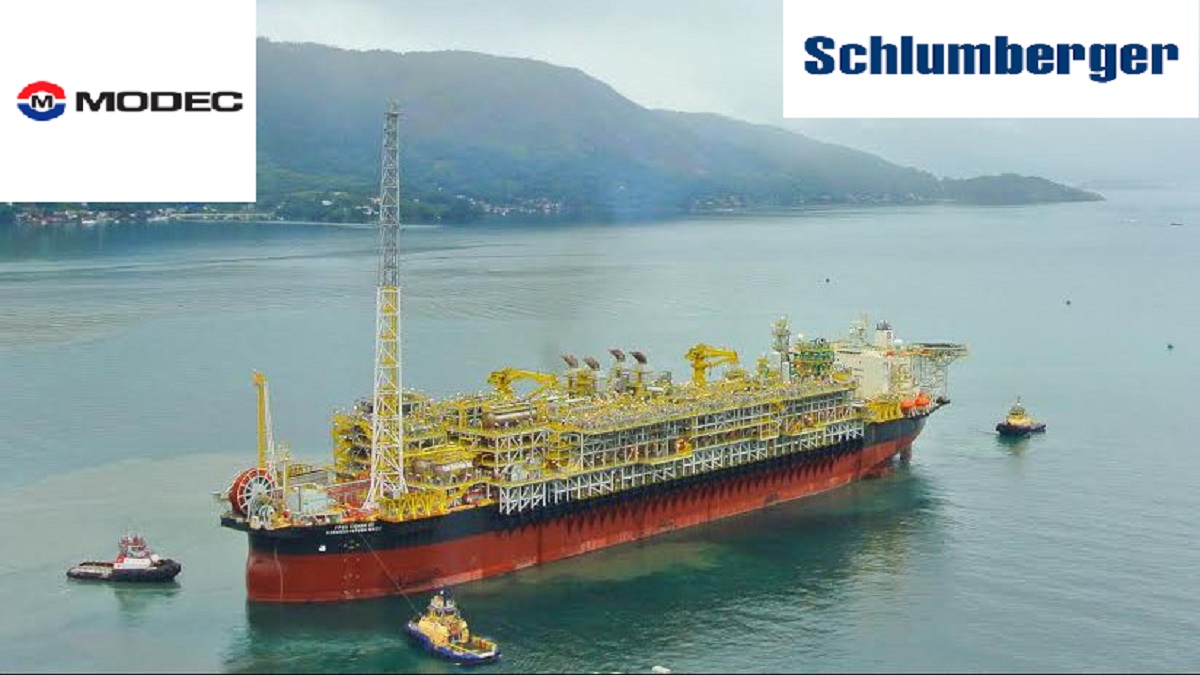

Contracts Aim to Support Modec’s FPSOs in the Supply of Equipment to Vessels Chartered by Petrobras in the Pre-salt
Another major partnership has been finalized at the beginning of this year, as Schlumberger published in its most recent financial report, on Thursday (4/18), the signing of two contracts with the Japanese company Modec.
The contracts are for the supply of oil separation and treatment equipment and CO2 processing for use in FPSOs that Modec will maintain under contract with Petrobras.
Modec is currently building two FPSOs for Petrobras, the FPSO Guanabara, which will operate in the Mero 1 field in the Libra area, and the FPSO Carioca, which will operate in Sépia, in the onerous assignment, both in the Pre-salt of the Santos Basin.
The outlook is even better for Modec, as the company is still competing in Petrobras’ tenders to build the FPSO of Búzios V and is participating in the tender for two more FPSOs for the Marlim field.
-
Over 2,000 Tons of Discarded Fishing Nets Since 2020 Repurposed into Durable Caps, Fins, and Parts

-
Seals and Sea Lions Lose Habitat and Food as Climate Change Advances, Impacting Ice, Prey, and Coastal Communities

-
Brazilian Innovator Uses 3D-Printed Device to Cool Two Rooms with One Air Conditioner
-
China Uses 432 Robots to Move a 7,500-Ton Historic Building in Shanghai, Preserving Architecture While Creating Space for Underground Center


Schlumberger’s Perspective
The company has an expectation of growth in investments in Exploration and Production (E&P) of around 7% to 8% in 2019, largely due to the increasing number of rigs operating in the Brazilian offshore and the projects that are yet to come.
Schlumberger’s optimism is due not only to the increase in demand for offshore equipment but also to the production cuts that OPEC and Russia have been making and the slowdown in shale production in North America.
Despite registering a 4% decline this quarter compared to the last quarter of 2018, the company saw a 1% increase in the annual comparison, recording revenue of US$ 7.9 billion.
In total, the company’s profit fell 21% compared to the last quarter of last year and 19% compared to the same period in 2018, but nonetheless, profit was US$ 421 million in the first three months of the year.