Portuguese
  Spanish




Study points to an unprecedented warming ring in the Tropical Pacific in 2026 and indicates a risk of super El Niño between 2026 and 2027, impacting Brazil.
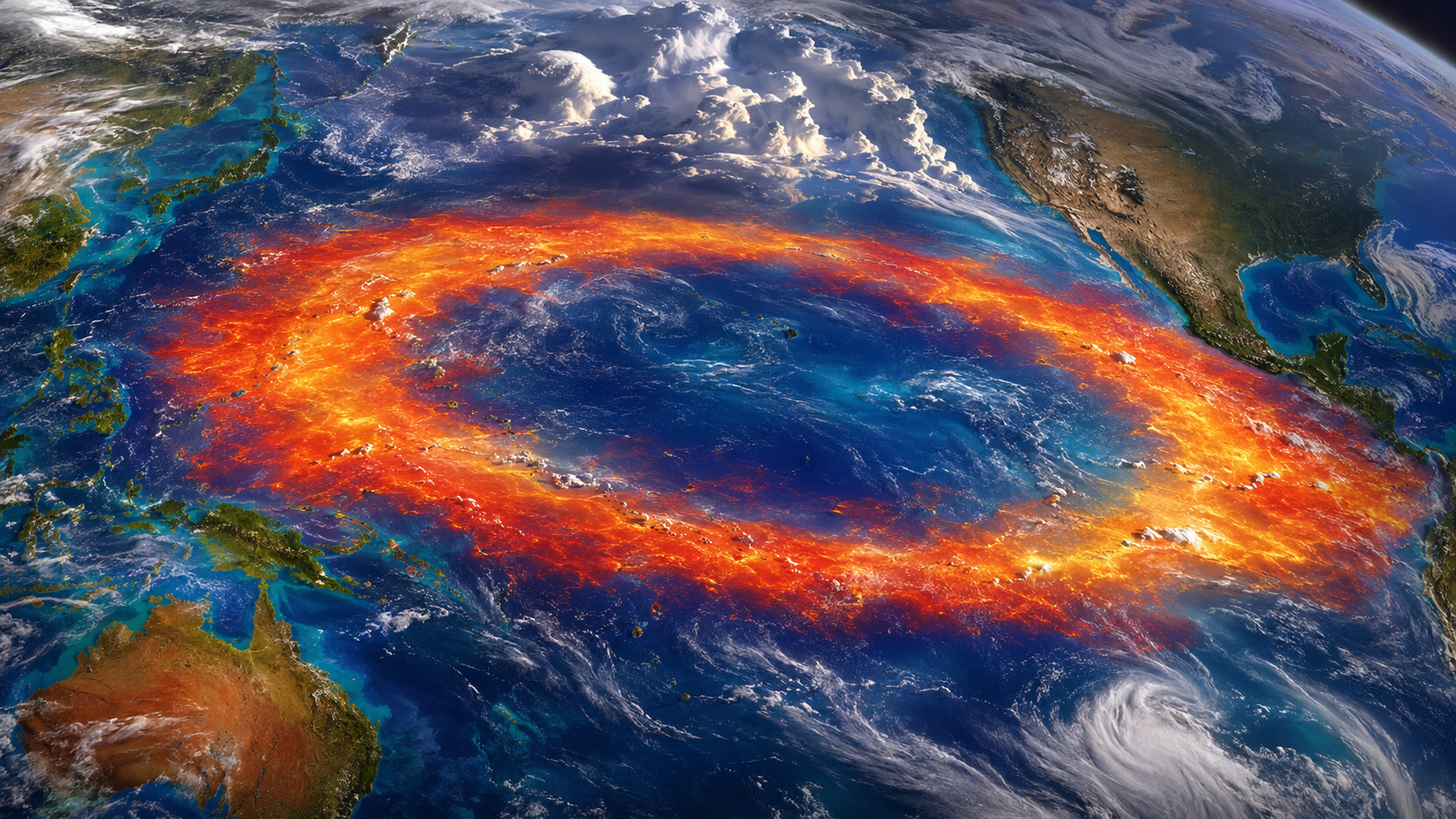
According to EurekAlert, a study published in April 2026 in the journal Ocean-Land-Atmosphere Research by Professor Tao Lian and senior researcher Dake Chen identified an unprecedented anomaly in the Tropical Pacific in the records of the last 40 years. The pattern is a warming ring around the equator that is storing more heat than it releases to the atmosphere.
The team ran simulations to test the behavior of the El Niño 2026-2027 with and without this pattern. In all main simulations, the event reached the typical intensity of a super El Niño. When the warming ring was removed from the models, the intensity dropped from a super event to a moderate event, with a loss of almost 1°C at the predicted peak.
Warming ring in the Tropical Pacific explains why El Niño 2026 may be extreme
The Tropical Pacific does not warm uniformly. Scientists monitor areas such as Niño 1+2, Niño 3, Niño 3.4, and Niño 4 because each influences the behavior of El Niño differently, depending on where and when the warming appears.
-
A newly discovered caterpillar in Hawaii wears the remains of its prey that it devoured as a macabre armor, stitching bones and insect shells to its own back for camouflage.

-
She heard for decades that space was not a place for women, became a pioneer in aviation, was part of the Mercury 13, and at 82, finally traveled with Jeff Bezos before dying at 87.
-
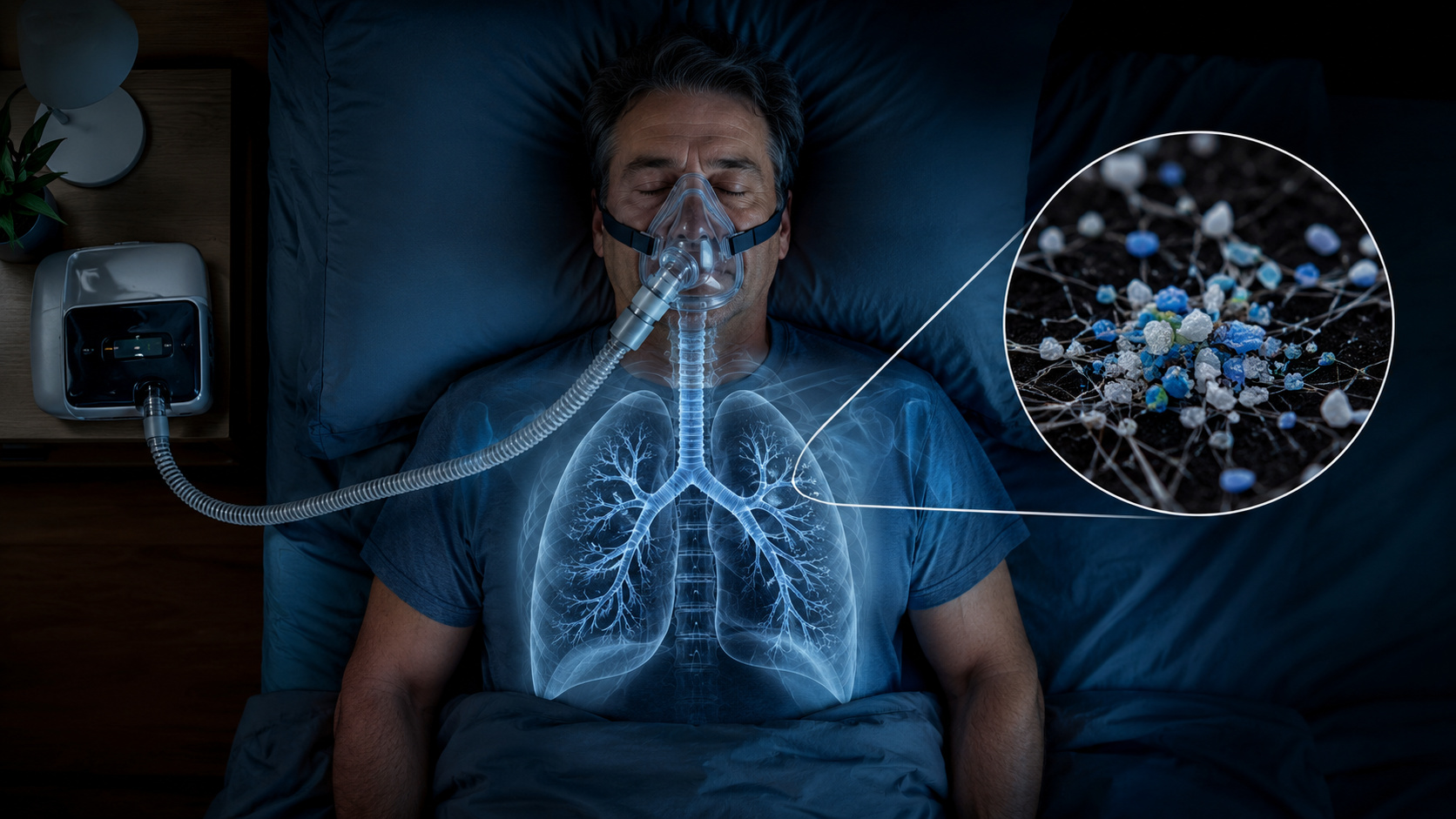
Scientists investigate microplastics in the airways of patients with sleep apnea and reveal a new focus for research on environmental pollution, human exposure, and possible impacts on breathing quality.
-
For the first time, scientists have seen the ocean floor open up in real-time—plates moving apart by two meters in a few days and 160 million cubic meters of lava emerging on the seafloor.



What makes the 2026 pattern unusual is not just the heat, but the way it is distributed. Instead of concentrated warming in one region, the study identified a ring of warm water circulating around the equator in an approximately symmetrical manner, with the equatorial center relatively cooler.
According to the authors, this pattern had never been observed with this magnitude in the last 40 years.


The team concluded that this annular warming acts as a climate amplifier. Each warm sector of the ring influences the system on its own, but when all regions warm simultaneously in a circular configuration, the effects add up in a non-linear way. The result is an amplification of El Niño greater than the sum of the isolated parts.
Super El Niño 2026-2027 may gain almost 1°C extra due to the warming ring
In the context of El Niño, an increase of 1°C is enormous. The study states that the warming ring added almost 1 degree Celsius to the predicted peak, which completely changes the scale of the event and raises the risk of a super El Niño.

The authors recall that the El Niño of 2015-2016 reached about 2.6°C in the Niño 3.4 region, while the 1997-1998 event reached 2.3°C.
Episodes above 2°C are associated with severe global impacts, including droughts, extreme rainfall, weakened monsoons, and heatwaves in various parts of the planet.
If the El Niño 2026-2027 follows the trajectory predicted by the study, starting from an exceptional annular warming and reinforced by recent atmospheric disturbances, the event may enter the same category as the strongest ever observed. This is why the study treats this pattern as a centerpiece of the climate dynamics of this cycle.
Westerly winds and Kelvin wave reinforce risk of super El Niño in the Pacific
In March 2026, researchers observed a strong westerly wind disturbance, that is, an episode of westerly winds in the Tropical Pacific. According to Dake Chen, this event further increased the probability of forming a super El Niño.
These winds are important because they help generate Kelvin waves, heat pulses that move from west to east below the ocean surface.
When these waves emerge, they reinforce surface warming along the equator in the Central and Eastern Pacific, fueling the evolution of El Niño.
The researcher also mentions that in May 2026, Severe Weather Europe pointed out the presence of a massive subsurface Kelvin wave emerging in the Eastern Pacific. The combination of surface warming ring and Kelvin wave is described in the study as the push capable of transforming a moderate event into a super event.
Model experiments show that the warming ring is decisive for El Niño
The strength of the study lies not only in the forecast but in the tests conducted to separate causes and effects. The team progressively removed external influences from the model, such as other oceans and part of the atmospheric noise, to isolate the role of the Tropical Pacific and the warming ring.

When the annular ring was removed from the simulations, the predicted El Niño dropped from a super event to a moderate event. Almost 1°C of intensity disappeared. This indicates that the pattern is not just a statistical detail but a central component of the projected strength for the phenomenon between 2026 and 2027.
The tests also showed that each warm part of the ring contributes differently. The northeast and southeast of the Tropical Pacific help push heat to the equator through feedback mechanisms between temperature, wind, and evaporation.
The western Pacific affects more the distribution of heat below the surface. Together, these areas generate a combined effect much greater than the individual sum.
Impacts of the super El Niño 2026-2027 in Brazil may include drought in the Northeast and more fires in the Amazon
The study highlights that Brazil is among the countries most affected by El Niño, and a super event would have different consequences depending on the region. In the Northeast, the phenomenon is historically associated with reduced rainfall and intensified droughts, affecting water supply, agriculture, and hydroelectric generation.
The text recalls that the drought of 2015-2016, coinciding with the last super El Niño, was one of the most severe in recent decades in the region.

If the event of 2026-2027 reaches similar or greater intensity, the second half of 2026 may open an especially adverse phase for areas that have not yet fully recovered from recent impacts.
In the Amazon, El Niño reduces rainfall in the east and south of the forest and increases the risk of fires. The text relates this danger to the recent history and states that a super El Niño would amplify water stress and fire risk in a forest that is already approaching critical degradation points.
What scientists still don’t know about El Niño 2026 and why there is still uncertainty
Although the results are consistent, the authors themselves state that there is still a significant source of uncertainty.
The prediction of a super El Niño was described as insensitive to the initial conditions of the models, which increases confidence in the simulations but does not eliminate the impact of short-term atmospheric disturbances.
These high-frequency fluctuations include storms, rapid wind changes, and localized events that can alter the final trajectory of El Niño in ways that are difficult to capture in large-scale climate models. The wind disturbance of March 2026 itself is cited as an example of this type of factor.
Therefore, the team states that they will refine the forecast throughout 2026 as new data arrives. In other words, the study presents a strong physical basis for a super El Niño 2026-2027, but the definitive answer will still depend on what the ocean and atmosphere themselves will show in the coming months.