Portuguese
  Spanish


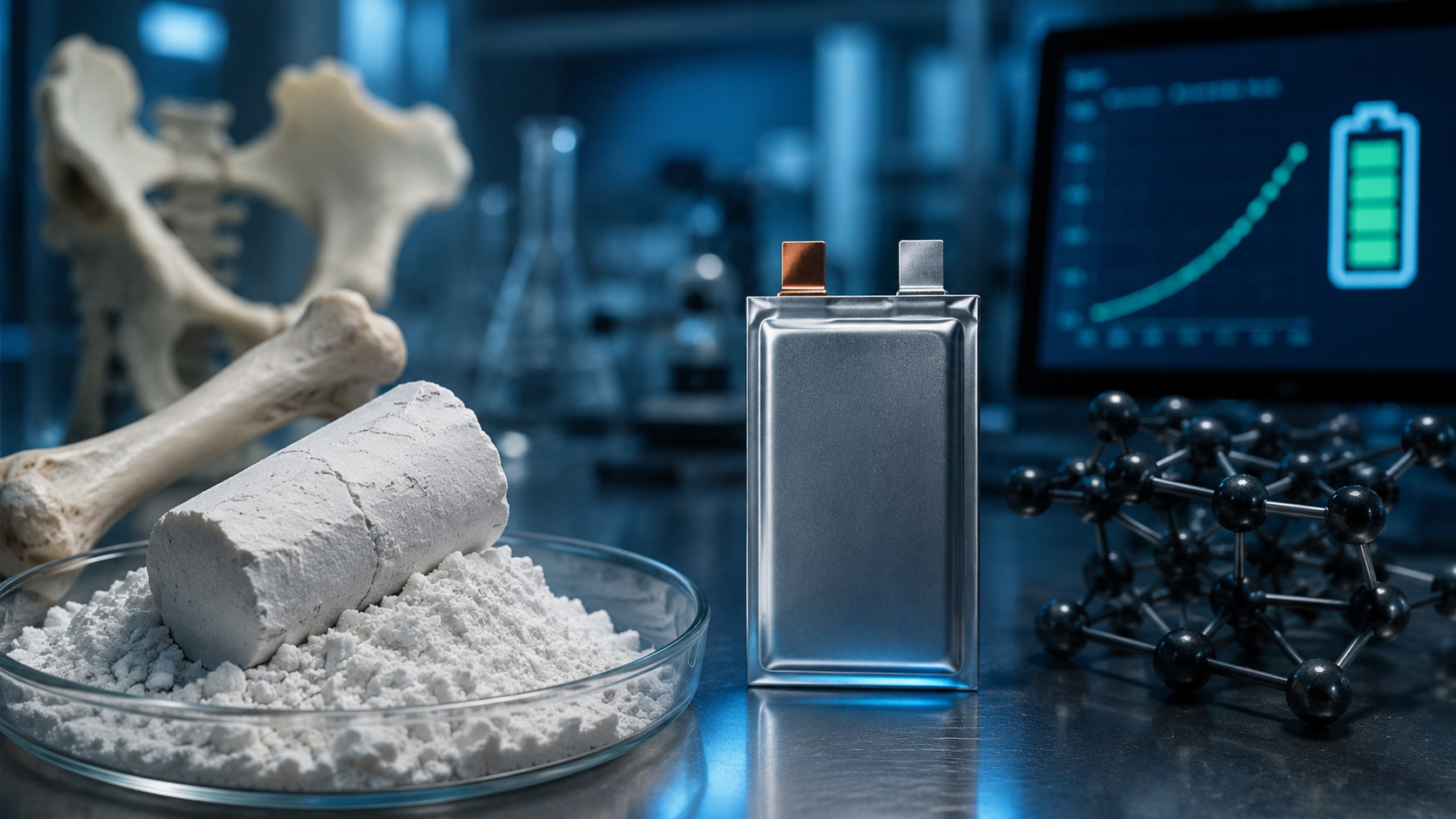

Scientists in Hong Kong have developed a calcium-ion battery that withstood a thousand recharges and could become a cheaper and more sustainable alternative to lithium.
The future of batteries may not rely solely on lithium. Researchers in Hong Kong have announced a significant breakthrough in a technology that uses calcium — one of the Earth’s most abundant elements and the same mineral found in bones, teeth, eggshells, and limestone. The team developed a calcium-ion battery capable of overcoming some of the biggest obstacles that prevented this technology from competing with current batteries, bringing closer a cheaper, more abundant, and potentially more sustainable alternative for electric vehicles and energy storage systems.
According to the Hong Kong University of Science and Technology (HKUST), the study presents a new battery architecture based on a quasi-solid electrolyte that significantly improves the transport of calcium ions, allowing stable performance over hundreds of charge and discharge cycles. Although still in the laboratory phase, the discovery is considered one of the most important advances ever achieved in this area.
The world is looking for an alternative to lithium
Lithium-ion batteries have revolutionized electronics, electric cars, and renewable energy storage. However, the growing global demand is exposing some limitations of this technology. According to the portal Interesting Engineering, lithium has reserves concentrated in a few countries, presents high costs, and faces a supply chain increasingly pressured by the expansion of the electric vehicle market. Moreover, experts find it increasingly difficult to achieve large leaps in the energy density of current batteries using only incremental improvements in lithium chemistry.
-
Super-Earth Twice the Size of Our Planet Discovered Nearby, Offering Clues About Life Beyond the Solar System

-
Teen Invents Promising AI Device to Detect Eye Misalignment Using 3D-Printed Visor and Small Cameras for $300

-
Bosch Unveils Series 8 Dishwasher with Zeolith Drying, Voice Control, and Energy-Efficient Features

-
Brazilian Students Develop “Reminder Robot” to Help Seniors with Medication Management Using Arduino Technology




It is precisely in this scenario that calcium sparks interest. Besides being much more abundant, it is cheap, widely distributed in the Earth’s crust, and has electrochemical characteristics that make it a promising candidate for future high-performance batteries.
The biggest obstacle was never finding calcium
For years, the problem with calcium-ion batteries was never the lack of raw material. The real challenge has always been in the battery’s chemistry itself. According to HKUST, calcium ions have a double charge, which makes it difficult for them to move within conventional electrolytes. Instead of circulating freely during charge and discharge processes, they interact strongly with the battery’s internal materials, making transport slow and causing accelerated system degradation.
In practice, this caused the batteries to lose capacity quickly and exhibit low efficiency, preventing their commercial use. This behavior was the main factor that kept calcium-ion batteries restricted to laboratories for years, despite the enormous economic and environmental potential of the technology.
The solution came from a kind of molecular highway
The HKUST team decided to tackle this exact problem. The researchers developed a new quasi-solid electrolyte formed by highly organized organic structures rich in carbonyl groups. Instead of allowing ions to move in a disordered manner, the material creates internal pathways that guide their movement much more efficiently.
According to the university, these molecular channels facilitate the transport of calcium ions between the electrodes, reducing energy losses and significantly increasing battery stability. The result was the construction of a complete calcium-ion battery cell capable of operating at room temperature with performance far superior to that observed in previous attempts.
The battery withstood a thousand recharge cycles
The results obtained by the team drew attention precisely because they went beyond theory. According to HKUST, the battery showed a reversible specific capacity of 155.9 milliamp-hours per gram and maintained more than 74.6% of this capacity after 1,000 complete charge and discharge cycles.
According to Interesting Engineering, this level of stability represents an important advancement for a technology that, until recently, suffered rapid degradation precisely because of the difficulty in moving calcium ions.
In battery research, durability is often one of the most important indicators of technological viability. A battery can store a lot of energy, but it loses value if its capacity diminishes quickly after successive recharges. The results obtained by the team show that this obstacle is beginning to be overcome.
Still not a substitute for lithium
Despite the promising numbers, the researchers themselves emphasize that the technology is still far from the market. According to HKUST, it is an experimental demonstration conducted in the laboratory. Years of research will still be needed to scale up manufacturing, reduce industrial costs, validate safety, and prove performance in commercial applications.
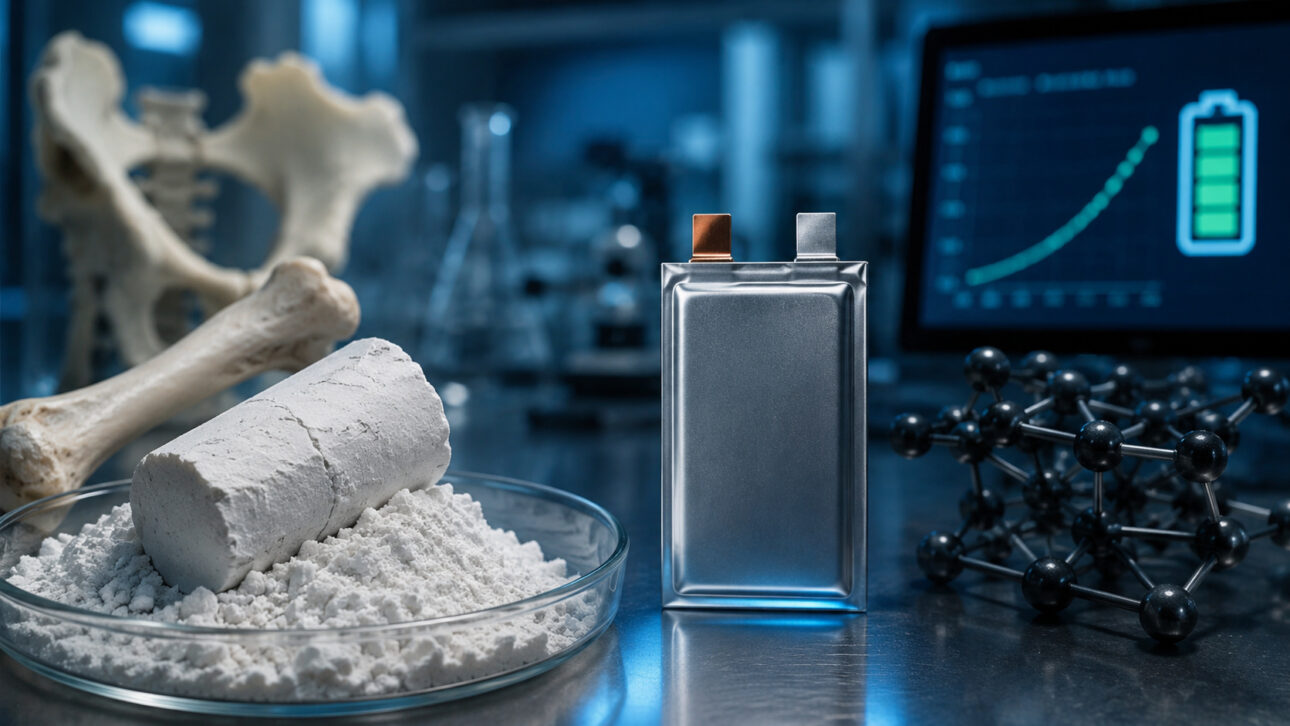
According to Interesting Engineering, transforming an experimental cell into a battery used in electric cars or energy storage systems requires numerous additional stages of development, testing, and certifications. This means that the discovery does not represent an immediate replacement for lithium-ion batteries, but an important step in the search for technologies less dependent on scarce materials.
A cheaper future may lie in one of the Earth’s most common elements
The advancement achieved by the Hong Kong team shows that some of the most promising alternatives for energy storage may not lie in rare elements, but precisely in extremely common materials. According to HKUST, the new electrolyte demonstrates that it is possible to significantly improve the performance of calcium-ion batteries using a molecular architecture capable of facilitating ion transport without compromising cell stability.
Interesting Engineering highlights that, if future research confirms these results on an industrial scale, calcium could reduce the world’s dependence on lithium and pave the way for potentially more accessible, sustainable, and abundant batteries.
There is still a long way between the laboratory and mass production. But the fact that a battery based on an element present in our bones, eggshells, and much of the Earth’s rocks has already withstood a thousand recharges shows that one of the next revolutions in energy storage may indeed arise from the most common material of all.