






 Portuguese
  Spanish


Exoplanet GJ 3378b is 25 light-years away, located in the habitable zone of its star, and still intrigues scientists about a possible atmosphere
An astronomical discovery has placed GJ 3378b among the most interesting planets in the search for life beyond Earth.
The exoplanet, located about 25 light-years from the Solar System, is approximately twice the size of Earth and orbits a star in the Milky Way.
According to a study published on June 30, 2026 in The Astrophysical Journal, the planet may have characteristics compatible with an environment favorable to liquid water.
-
Scientists Develop Battery Using Mineral Found in Bones and Chalk, Surviving 1,000 Charges While Retaining 75% Capacity, Paving the Way for a Lithium-Free Future

-
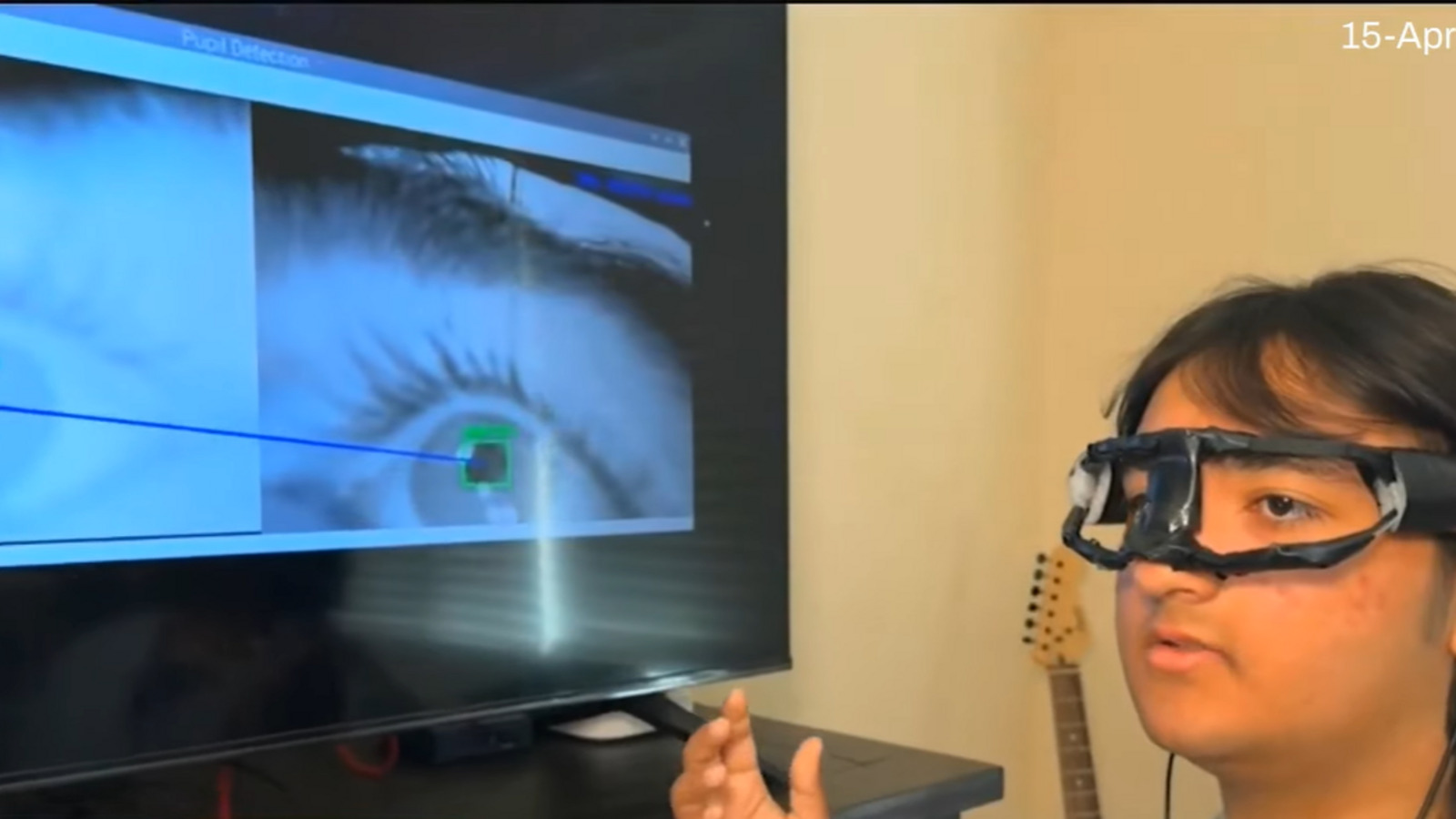
Teen Invents Promising AI Device to Detect Eye Misalignment Using 3D-Printed Visor and Small Cameras for $300

-
Bosch Unveils Series 8 Dishwasher with Zeolith Drying, Voice Control, and Energy-Efficient Features

-
Brazilian Students Develop “Reminder Robot” to Help Seniors with Medication Management Using Arduino Technology




The research was led by astronomers from the University of California Irvine, in the United States. The group also included collaborators from the University of Texas at Austin, the McDonald Observatory, Schmidt Sciences, and Pennsylvania State University.
Nearby planet enters the list of promising worlds
The GJ 3378b is classified as a super-Earth, a term used for rocky planets larger than ours.
According to the researchers, this type of planet can be large enough to maintain an atmosphere.
At the same time, it would not necessarily be massive enough to form a crushing gas layer.
This detail has made the planet even more relevant for studies on habitability.
According to NASA, an exoplanet is any planet located outside the Solar System, usually orbiting a star other than the Sun.
Habitable zone increases scientific interest
The GJ 3378b is located within the so-called habitable zone of its host star.
This region is also known as the “Goldilocks” area.
In it, the planet receives radiation in an amount considered suitable to allow liquid water on the surface.
According to Paul Robertson, from UC Irvine, the planet receives about 90% of the radiation that Earth receives from the Sun.
This data does not confirm life.
Even so, it places GJ 3378b in a special position for future observations.

Atmosphere is still the big question
The main question remains open: does the planet have an atmosphere?
As astronomers explain, GJ 3378b is close to the so-called “cosmic shoreline”.
This region helps indicate if the star’s radiation can strip a planet’s atmosphere.
Mars is cited as an example within the Solar System.
The red planet is believed to have had, in the past, an atmosphere more similar to Earth’s.
Later, this protection would have been weakened by solar radiation.
Upcoming observatories may provide answers
Currently, scientists still cannot confirm if GJ 3378b has an atmosphere.
Therefore, new observations will be necessary in the coming years.
The expectation lies in the Habitable Worlds Observatory, a NASA project planned for the mid-2040s.
This future observatory may capture images of planets similar to GJ 3378b.
With this, astronomers will be able to look for signs of atmosphere and better assess their conditions.
Until then, the planet remains one of the most promising cosmic neighbors ever identified.
After all, at just 25 light-years from Earth, GJ 3378b may help science better understand where to look for life outside the Solar System.
Do you believe that nearby planets like GJ 3378b could be the most promising path to finding life beyond Earth? Share your opinion!


