






 Portuguese
  Spanish


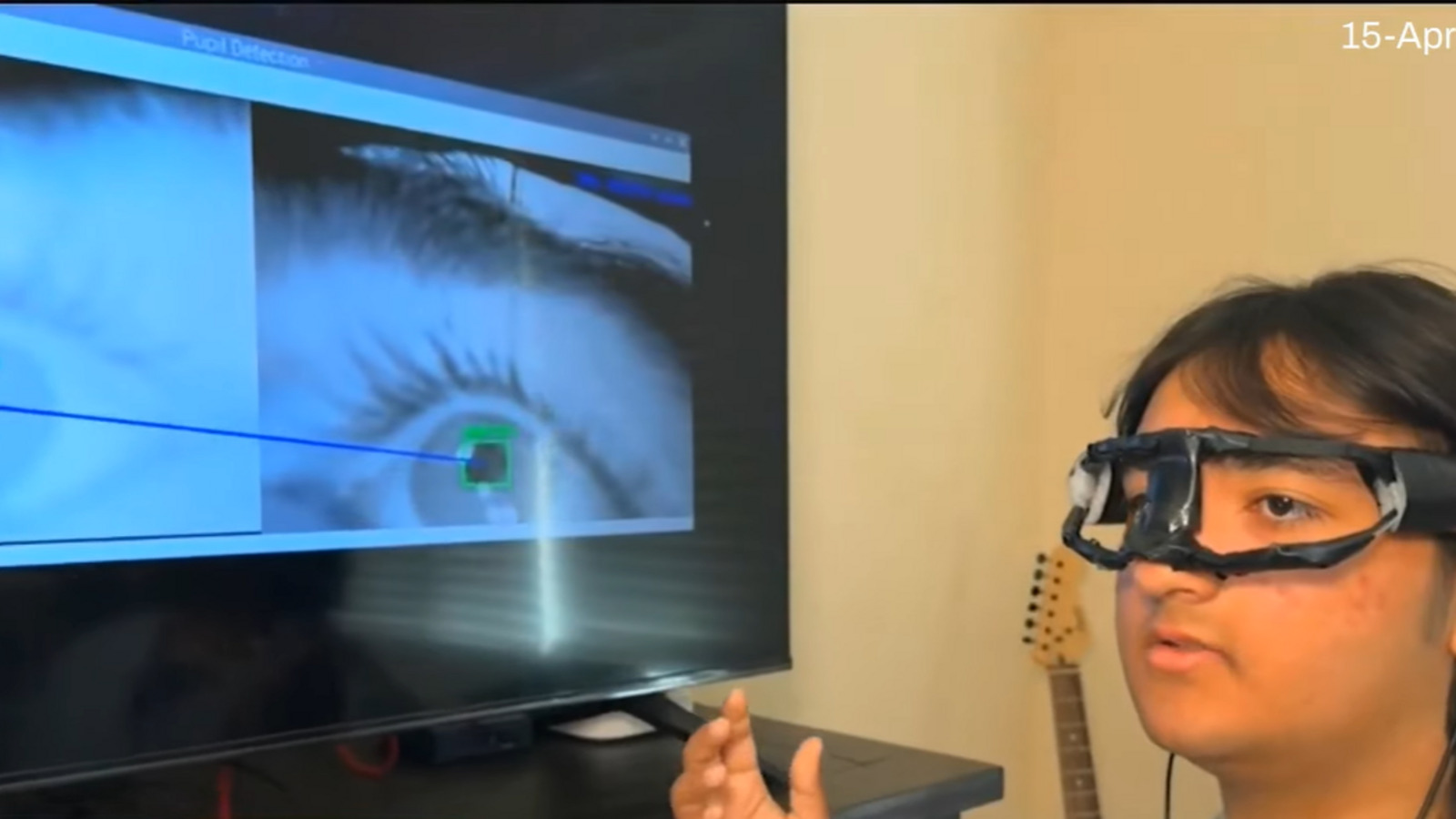

Aaryan Balani developed EYEVA after living with strabismus since childhood. The device uses a 3D printed visor, cameras, and artificial intelligence to alert the user about eye misalignment
A 14-year-old student from Cerritos created a wearable device with artificial intelligence to help people with strabismus, a condition known as crossed eyes. Developed after his own experience with the problem, EYEVA detects eye misalignment in real-time and alerts the user when the eyes start to separate.


Device was born from personal experience with strabismus
Aaryan Balani, an eighth-grade student, developed EYEVA after living with strabismus since childhood. According to him, the condition started at the age of five, after a fall that caused a concussion.
Balani recounted hitting his head on the edge of the bathroom sink. After the accident, his eyes began to drift. The problem affected not only his vision but also his social interactions.
-
Bosch Unveils Series 8 Dishwasher with Zeolith Drying, Voice Control, and Energy-Efficient Features

-
Brazilian Students Develop “Reminder Robot” to Help Seniors with Medication Management Using Arduino Technology

-
Canada Makes Historic Decision to Purchase New German Submarines in $70 Billion Defense Program, Replacing Aging Victoria-Class Fleet by 2033
-
4,000-Year-Old Stone Circle Discovered Near Belfast, Unveiling Prehistoric Ritual Complex in Irish Countryside



He recalled comments he heard from others, such as “you have a broken eye.” The experience helped motivate the creation of a solution that would increase the user’s awareness of eye misalignment.
Balani’s mother explained that when her son is aware of the problem, he can correct the position of his eyes. However, when he does not notice, the misalignment remains.
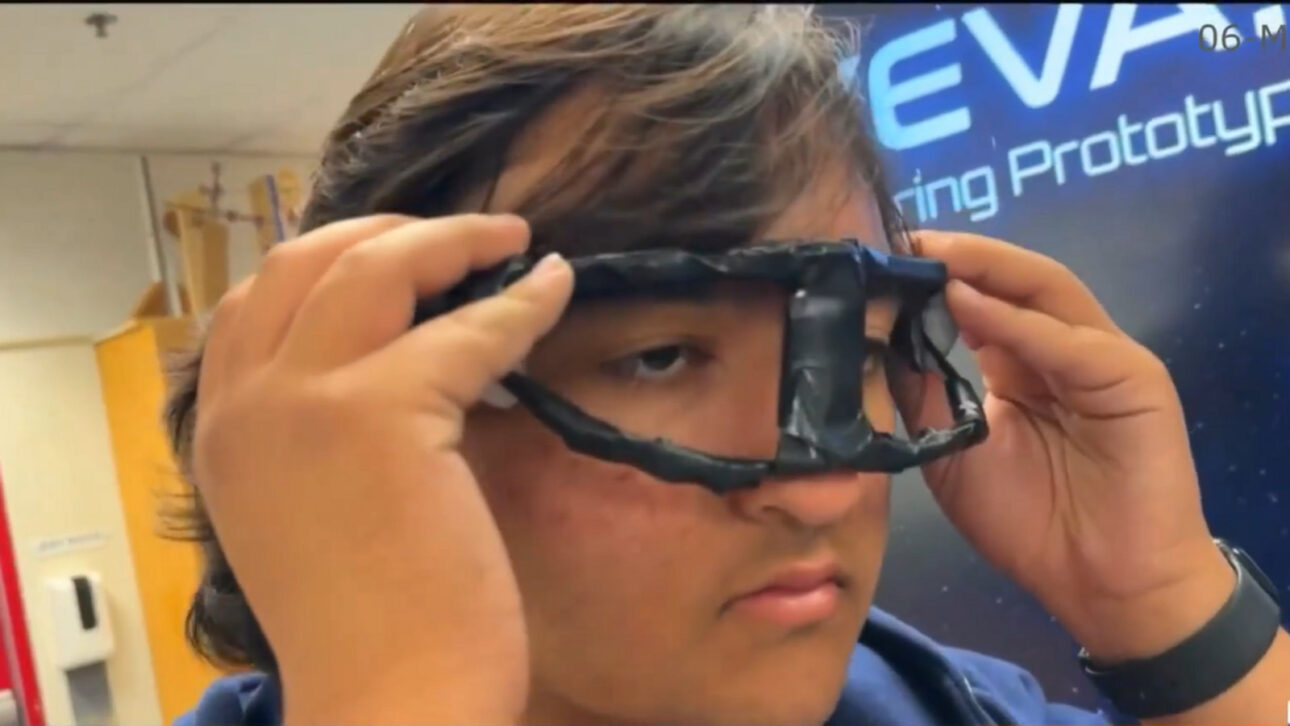
How EYEVA works
EYEVA is a visor-shaped device, made with 3D printing, small cameras, and artificial intelligence. The system’s function is to identify when the eyes start to separate and issue an alert.
According to Balani, much of what appears on the equipment are accessories. The main functionality lies in the combination of cameras, wearable structure, and software trained to detect eye misalignment.
When misalignment is identified, the device issues a warning with sound and light. The idea is to draw the user’s attention so that they notice the eye movement and try to correct the position.
Balani explained that the alert makes the person think they need to pay attention to their own face. The goal, therefore, is to provide an immediate response to the misalignment, without relying on surgical correction.
Project went through five prototypes and cost about US$ 300
The device went through five prototypes over four months to reach the current version. Balani invested about US$ 300 in parts and dedicated months to testing, adjustments, and calculations.
The student’s previous experience with artificial intelligence helped in the development. In seventh grade, he had created a system to detect debris on the streets in real-time, using drone images and proprietary software.
This project was conceived after he observed street sweepers cleaning roads that seemed already clean. The system trained by Balani could transmit information to sanitation departments.
His mother summarized the connection between the two projects by saying that if the technology could detect leaves, it could also detect eyes. The same logic was adapted for EYEVA.
Technology targets clinical trials and undergoes patenting
Balani states that the potential impact of EYEVA goes beyond his own experience. According to him, strabismus does not affect just a few hundred people, but about 100 million worldwide.
The project received first place at the science fair. Robin Van Vorhis, from the Orange County Science and Engineering Fair, stated that Balani’s work combines science, engineering, and computing.
The student said that experienced industry professionals encouraged him to continue developing the idea, stating that the product is viable and works well.
Now, Balani is working with doctors to explore clinical trials that could verify if the continuous use of the device helps patients correct strabismus over time.
Implementing a clinical trial requires regulatory steps, including interaction with the FDA, compliance with strict guidelines, and participant recruitment. EYEVA is also in the process of patenting.
Despite the challenges, Balani says his age was not an obstacle. For others interested in innovation, he states that the first step is to start working on the idea, test its viability, and continue developing the project.
This article was prepared based on the information provided in the source material about Aaryan Balani and the EYEVA device, with data, numbers, and statements preserved as per the consulted material.


