Portuguese
  Spanish


Research conducted over the past decades reveals that a black fungus found inside the old Chernobyl nuclear power plant can survive — and even thrive — in one of the most radioactive environments on the planet, fueling a scientific hypothesis that could transform everything from biology to future space missions.
Almost four decades after the largest nuclear accident in history, which occurred on April 26, 1986, the Chernobyl exclusion zone remains one of the most dangerous places on the planet for humans. Nevertheless, while human presence remains extremely limited, different forms of life have found surprising ways to occupy this hostile environment.
Among them is an organism that challenges practically everything science imagined about the effects of ionizing radiation.
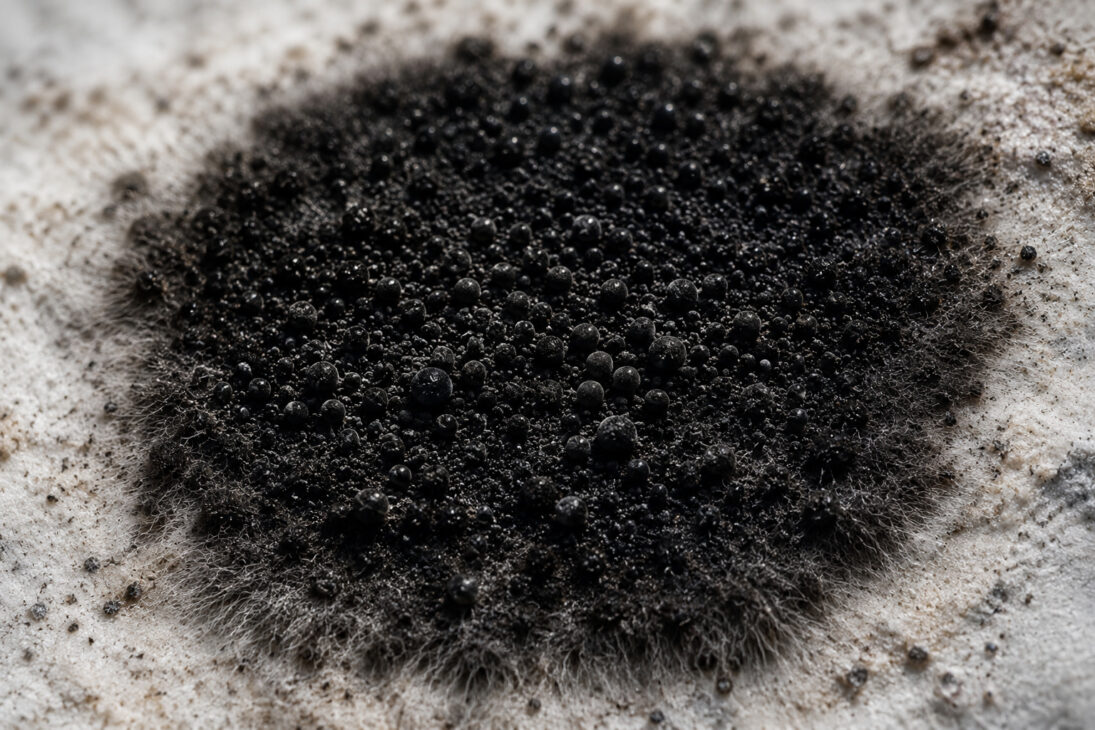
According to a report published by ScienceAlert, based on scientific studies developed since the late 1990s and subsequent research conducted by institutions in Ukraine, the United States, and other countries, a microscopic fungus called Cladosporium sphaerospermum seems not only to resist the high levels of radiation present in the old nuclear power plant but to grow even more efficiently in this extreme environment.
-
Antarctica’s Blood Falls: Scientists Uncover a 1.5-Million-Year-Old Isolated Ecosystem, Shedding Light on Potential Ice Changes

-
Mati Carbon Wins $50 Million Prize for Boosting Harvests and Capturing Carbon by Distributing Free Basalt Dust to Small Farmers in India and Africa

-
Human Waste in Kenya is Solar-Treated and Turned into Fuel Briquettes, Tackling Open Sewage, Charcoal Use, and Deforestation

-
Bolivian Teen Builds Functional Robots from Scrap Materials in High-Altitude Rural Town



Although many aspects of this behavior remain without a definitive explanation, the discovery has sparked enormous interest among microbiologists, physicists, nuclear energy specialists, and space researchers.
The fungus that turned Chernobyl into a natural laboratory
After the explosion of reactor number 4 of the Chernobyl Nuclear Power Plant, located in the north of present-day Ukraine, a vast region was isolated due to intense radioactive contamination.
Over the years, scientists noticed that despite the radiation, plants, animals, bacteria, and fungi slowly began to reoccupy the area.
However, a specific group of fungi drew attention for having an unusual characteristic: almost all had dark coloring, ranging from deep brown to black.
This pigmentation is caused by the high concentration of melanin, the same pigment responsible for the coloring of human skin, hair, and eyes.
At the end of the 1990s, a team led by microbiologist Nelli Zhdanova from the National Academy of Sciences of Ukraine began an extensive investigation within the structures surrounding the destroyed reactor.
The researchers cataloged 37 different species of fungi living in an environment considered extremely radioactive.
Among all of them, one species quickly stood out.
Cladosporium sphaerospermum dominated much of the collected samples and showed some of the highest levels of radioactive contamination ever recorded among organisms found in the region.
Most curiously, this extreme level of radiation apparently did not hinder its development.
The theory that resembles photosynthesis
The discovery raised a question that continues to intrigue science to this day.
How can an organism thrive precisely in an environment where radiation destroys molecules, damages proteins, and breaks the DNA of most living beings?
Years later, researchers led by radiopharmacologist Ekaterina Dadachova and immunologist Arturo Casadevall, both affiliated with the Albert Einstein College of Medicine in the United States, decided to investigate this behavior more deeply.
The experiments showed that the fungus not only resisted ionizing radiation.
Under certain conditions, its growth seemed to be even more accelerated when exposed to this type of energy.
Ionizing radiation is composed of particles or electromagnetic waves sufficiently energetic to remove electrons from atoms, causing ionization.
In living organisms, this process usually causes severe cellular damage, potentially breaking DNA chains, altering biochemical reactions, and causing mutations.
It is precisely this principle that allows, for example, the destruction of cancer cells during certain cancer treatments.
However, with Cladosporium sphaerospermum, the opposite seemed to occur.
Instead of suffering evident damage, the fungus continued to grow.
The scientists then began to suspect that the melanin present in large quantities in the organism could perform a much more complex function than simply protecting it from radiation.


The “radiosynthesis” hypothesis still divides the scientific community
In 2008, Dadachova and Casadevall presented a hypothesis that quickly gained prominence among researchers from different fields.
According to this theory, known as radiosynthesis, melanin could play a role similar to that of chlorophyll in plants.
While plants use sunlight to produce energy during photosynthesis, the fungus could harness part of the energy from ionizing radiation to support its metabolism.
At the same time, melanin would function as a biological shield, reducing the more destructive effects of the radiation itself.
The idea seems straight out of a science fiction novel.
However, various experiments conducted over the past few years have provided evidence that keeps this hypothesis alive, although still without definitive proof.
To date, no study has been able to conclusively demonstrate that the fungus truly converts radiation into metabolic energy.
Researchers have not yet identified a biochemical mechanism capable of proving radiation-driven carbon fixation nor a clear energy pathway responsible for this phenomenon.
Even so, the results remain sufficiently intriguing to motivate new research in different laboratories around the world.
Experiments on the International Space Station further expanded the mystery
If the studies conducted within Chernobyl were already enough to spark the curiosity of the scientific community, an experiment conducted outside Earth elevated this interest to a new level.
In 2022, researchers decided to test the behavior of Cladosporium sphaerospermum in an even more extreme environment: space.
The fungus was taken to the exterior of the International Space Station (ISS), where it remained directly exposed to intense cosmic radiation. The main objective of the experiment was not to prove the radiosynthesis theory, but to evaluate if the organism could function as a natural biological shield against radiation, one of the greatest challenges faced by astronauts during long-duration missions.
The results drew attention.
Sensors positioned under the culture plate demonstrated that a smaller amount of radiation passed through the layer formed by the fungus compared to the material used as a control, composed only of agar.
Although the study did not confirm that the organism uses radiation to produce energy, it demonstrated that the high concentration of melanin can offer additional protection against highly energetic particles.
This discovery paved the way for a new line of research aimed at developing biological materials capable of protecting equipment and crews during future missions to the Moon, Mars, and other destinations in the Solar System.
A mystery that science is still trying to explain
Despite the advances made in recent decades, researchers acknowledge that there are still numerous unanswered questions.
So far, no experiment has definitively proven that the fungus converts ionizing radiation into chemical energy, as occurs in plant photosynthesis.
In a study published in 2022, led by engineer Nils Averesch from Stanford University, the authors highlight that radiosynthesis remains a promising scientific hypothesis, but still lacks conclusive biochemical evidence.
Scientists state that a metabolic pathway capable of directly transforming ionizing radiation into energy gain has not yet been demonstrated, nor a carbon fixation process driven by this type of energy.
In other words, the extraordinary behavior of Cladosporium sphaerospermum remains one of the great enigmas of modern microbiology.
Not all fungi respond the same way to radiation
Another important aspect observed by researchers is that this behavior does not seem to be universal among melanin-rich fungi.
Species like the black yeast Wangiella dermatitidis also showed favored growth in radioactive environments.
On the other hand, the fungus Cladosporium cladosporioides only demonstrated an increase in melanin production when exposed to gamma and ultraviolet radiation, without recording accelerated growth.
These differences suggest that each species has developed its own strategies for adapting to extreme environments, making the study of these organisms even more complex.
Understanding these adaptations could contribute to the development of new biomaterials, radiation protection technologies, and even solutions for decontaminating areas affected by nuclear accidents.
Chernobyl continues to reveal secrets almost 40 years after the accident
Far beyond representing one of the greatest environmental disasters in history, Chernobyl has become a gigantic natural laboratory for understanding how life responds to the most extreme conditions imaginable.
The small black fungus found on the walls of one of the most radioactive buildings on the planet has become a symbol of this extraordinary capacity for adaptation.
If the theory of radiosynthesis is proven in the future, it could modify part of the current knowledge about metabolism, evolution, and survival of organisms in hostile environments.
Even if this never happens, one conclusion already seems inevitable.
Nature continues to find surprising ways to thrive where human presence would be practically impossible, showing that there are still numerous biological mechanisms awaiting explanation.
The report was published by ScienceAlert, based on scientific studies conducted by researchers from the National Academy of Sciences of Ukraine, the Albert Einstein College of Medicine, Stanford University, and other international institutions.