






 Portuguese
  Spanish



Helioseismic data from BiSON indicate that the Sun’s magnetic activity may be concentrating in surface layers, with strong signals in solar cycle 25 and impact on space weather study
Solar activity has shown a mysterious change over the last 40 years, according to scientists analyzing sound waves inside the Sun through helioseismology. The study, published on May 28 in the Monthly Notices of the Royal Astronomical Society, indicates changes below the solar surface between 1987 and 2025.
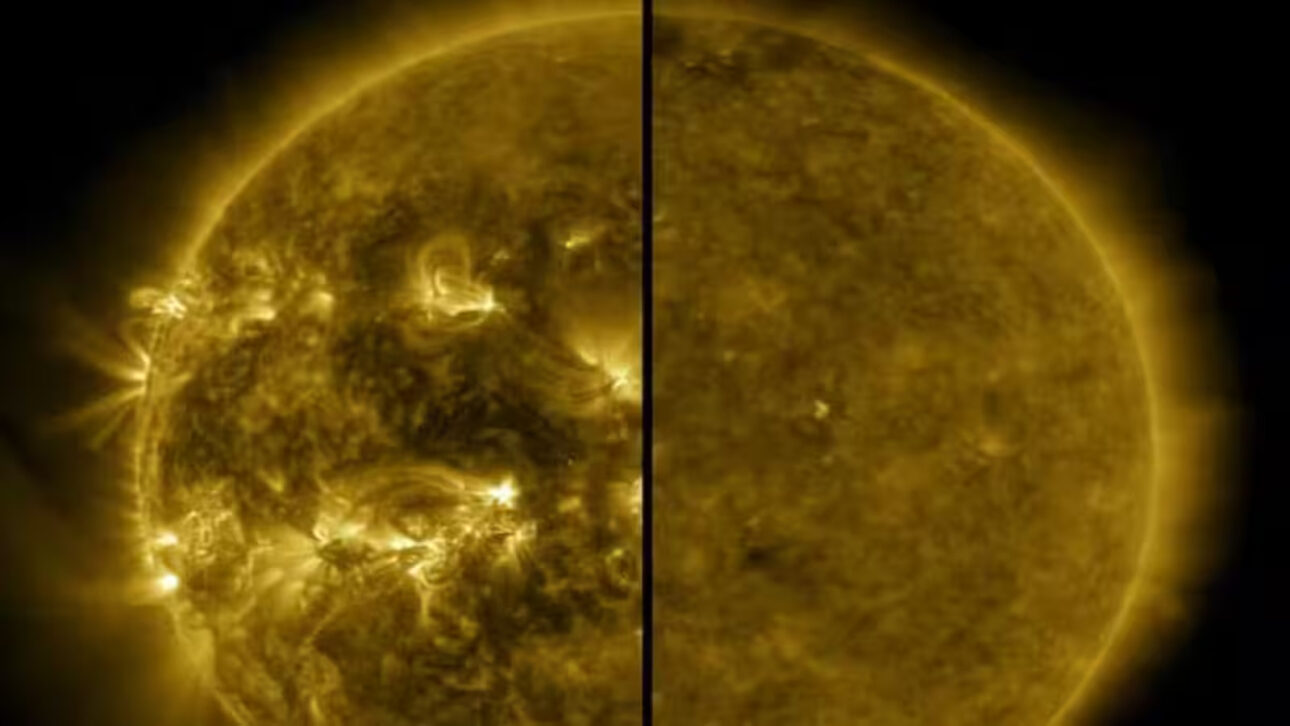
BiSON data reveal internal change
The discovery was made from helioseismic data from six telescopes of the Birmingham Solar Oscillations Network, known as BiSON, in England.
Researchers observed a gradual change in the structure just below the solar surface over several cycles.
-
Canada Sinks Six Giant Balloons in Lake Ontario to Test Underwater Battery That Stores Compressed Air 60 Meters Deep

-
Astronauts Returning from Space Develop Early Cataracts Due to Eye Lens Radiation, Highlighting Risks for Future Mars Missions

-
Brastemp Unveils New Dishwasher with Smart Sensor, 14 Place Settings, Acquaspray Jet, 70°C Rinse, Water Efficiency, and Intelligent Drying
-
Antarctic Sea Creature Yields Promising Compound Against Melanoma, Captivating U.S. Researchers



According to the study, the current 25th solar cycle shows particularly strong signs of this change. The analysis suggests that magnetic activity is being compressed into an increasingly shallow layer, just below the visible surface.
Professor Bill Chaplin, from the University of Birmingham and lead author of the study, stated in a press release that this is the first discovery of its kind and that it would have been impossible without the long observations made by BiSON.


Solar activity seems to concentrate less than 1,000 km from the surface
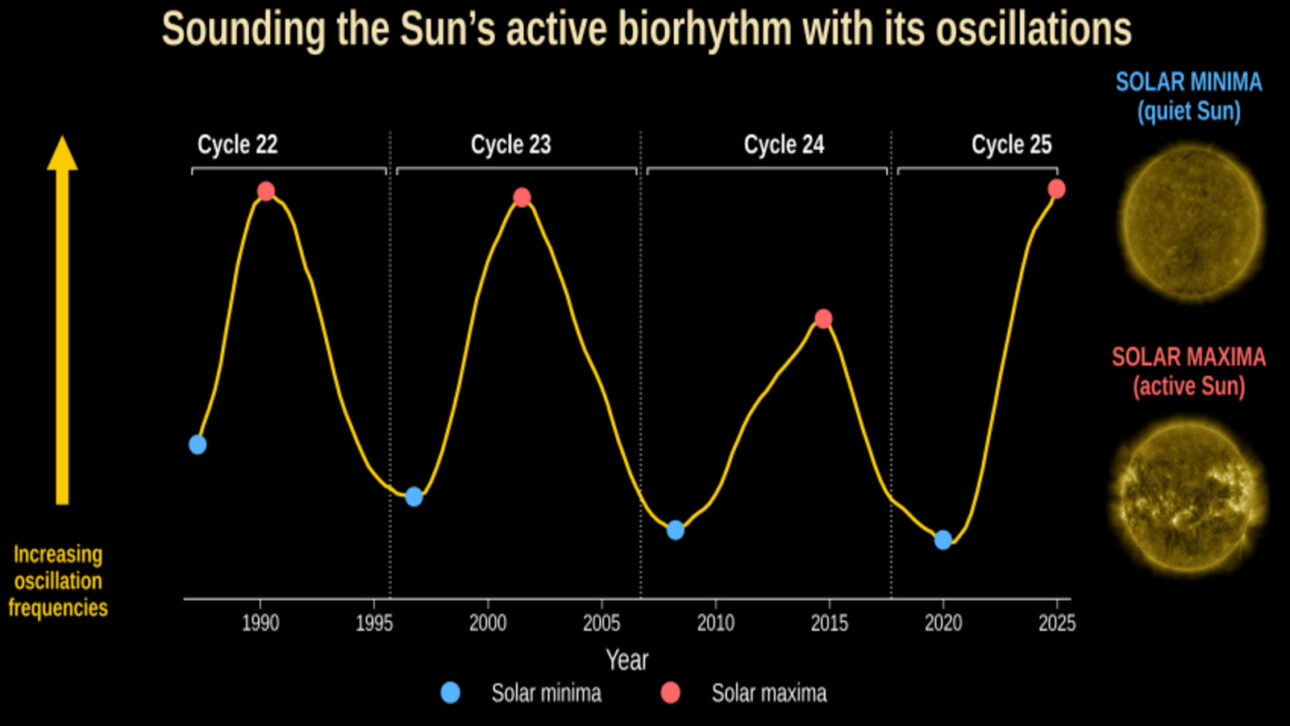
Traditionally, solar activity increases and decreases in 11-year cycles. This movement is linked to solar flares, ejections of highly charged particles, and coronal mass ejections, phenomena that can generate geomagnetic storms and auroras.
To investigate the behavior of the star, researchers analyzed p-mode oscillations, formed by sound waves inside the star. These frequencies change in response to solar magnetic activity.
The team concluded that the internal structure of the Sun has changed over cycles 22 to 25, a period from 1987 to 2025.
The changes became increasingly confined to surface layers, less than 1,000 km from the star’s surface.
WJ Chaplin
License type
Attribution (CC BY 4.0)
Cycle 25 shows difference between internal and surface measurements
Scientists grouped the oscillations into low, medium, and high frequency bands and compared these data with traditional measurements of solar activity. From this, they identified significant changes since the 23rd cycle.
One of the key points is that the 25th cycle seems weaker by traditional surface indicators. However, it appears comparatively strong when observed in high-frequency helioseismic data.
For Sarbani Basu, a professor at Yale University, the changes cannot be explained solely by weaker magnetic fields.
According to her, the data indicate a structural reorganization of how the Sun’s magnetic activity is stored below the surface.
Discovery helps monitor space weather
The practical importance of the study lies in monitoring space weather. Solar activity can affect satellites, communications, GPS systems, and power grids on Earth.
Researchers hope that new data from BiSON, collected during the remainder of the 25th cycle and in the 26th solar cycle, will help determine if the changes are part of a long-term alteration in magnetic behavior.
This article was prepared based on information from the Monthly Notices of the Royal Astronomical Society, the University of Birmingham, the Birmingham Solar Oscillations Network, and Yale University, with data, numbers, and statements preserved as per the consulted material.


