






 Portuguese
  Spanish


A habitat installed on the ocean floor begins to test a new routine of scientific research, combining technology, engineering, and human permanence in extreme conditions to enhance continuous ocean observation.
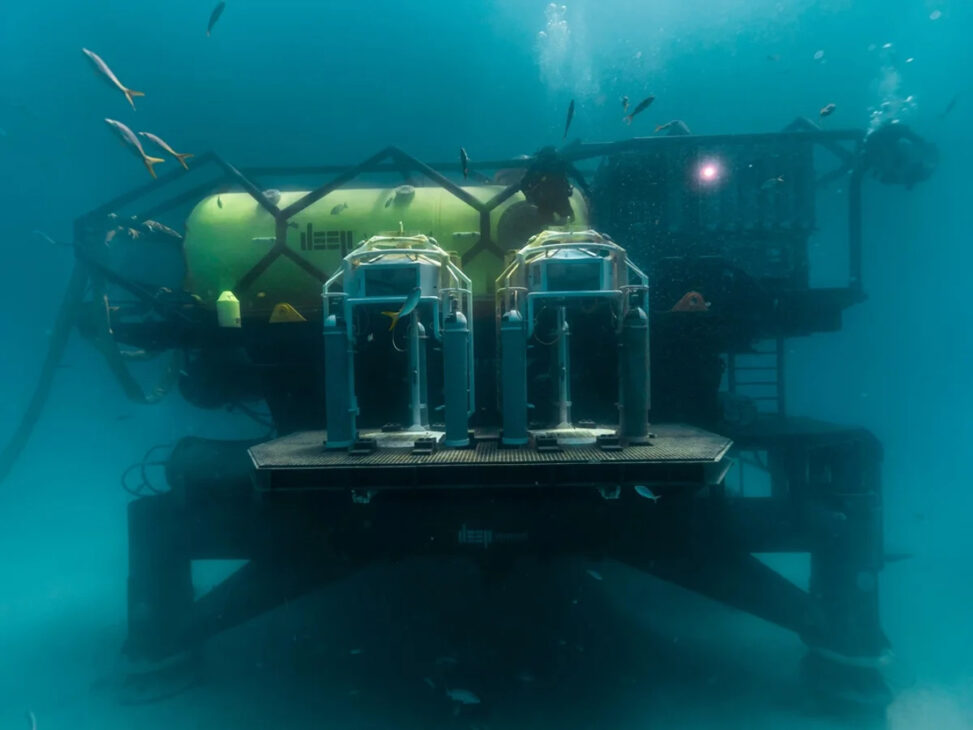
Installed at 17 meters deep in Tennessee Reef, in the Florida Keys archipelago, United States, the Vanguard was designed to accommodate up to four aquanauts living and working on the ocean floor for five days or more.
The underwater habitat by the ocean engineering company DEEP is intended to serve as a base for marine research, coral restoration, environmental monitoring, and studies on human behavior in extreme conditions.
The installation was completed on June 30, 2026, within the Florida Keys National Marine Sanctuary.
-
Retiree suspects for over 20 years a strange hole in the living room floor, digs for three days with a bucket and rope, and uncovers a 10-meter medieval well from the 16th century under his own sofa, also unearthing an ancient sword, and covers everything with a glass trapdoor and lighting.

-
NASA reveals invisible bridge between Sahara and Amazon: storms lift 182 million tons of dust in the desert, cross the Atlantic, and deposit phosphorus that helps keep the largest tropical rainforest on the planet alive.

-
An irritated Englishman with a vacuum cleaner that lost suction spent five years and his wife’s income on 5,127 prototypes until he created the world’s first bagless vacuum cleaner in 1993, a billion-dollar fortune born from 5,126 consecutive failures.
-
Scientists use an experiment over 200 years old, point a laser at a small disc, and manage to create four types of light structures simultaneously.



Since then, the project has moved to the stages of sea acceptance testing, commissioning, and preparation of the teams responsible for operation.
The official Vanguard page states that no manned scientific mission had been announced until the most recent update.
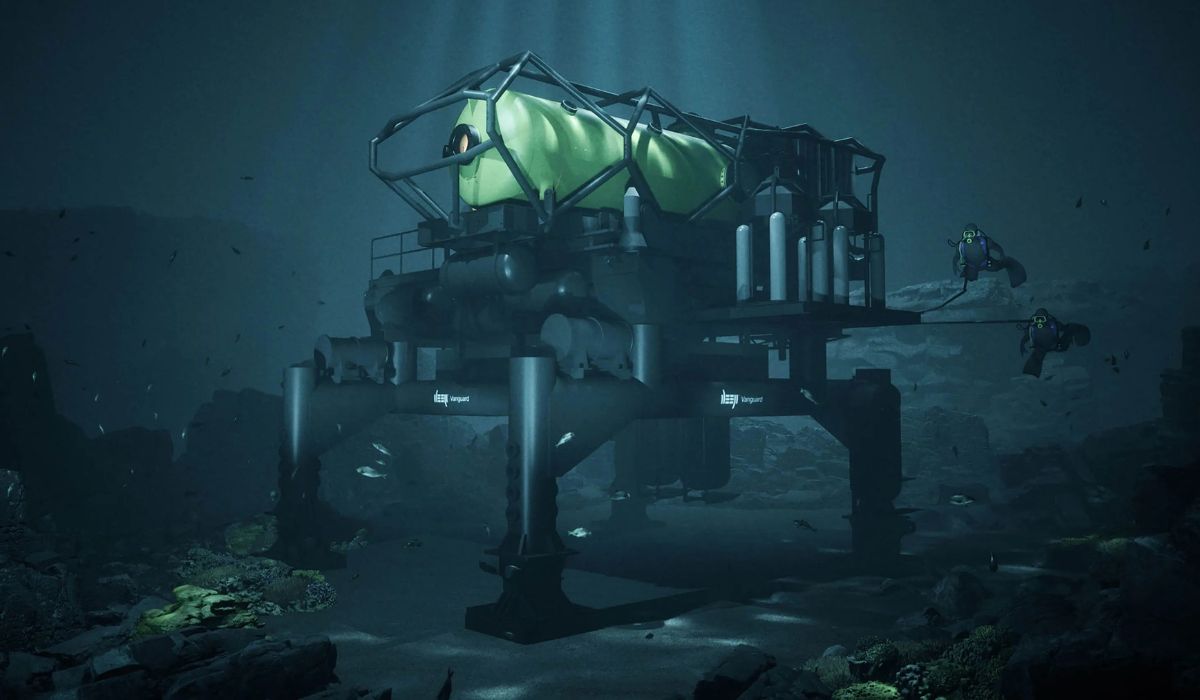
Although informally called a “submarine house,” the Vanguard combines functions of accommodation, laboratory, diving center, and life support system.
The habitable part measures approximately 10.7 meters in length by 2.5 meters in width and is attached to a structure installed on the sandy bottom.
According to DEEP, it is the first open sea human habitat built, tested, and installed in the United States in about 40 years.
The structure was presented to the public in Miami, Florida, on October 29, 2025, before being transported and fixed at the chosen location for operations.
What it’s like to live inside the Vanguard
The internal space was designed to allow four crew members to perform daily tasks without needing to return to the surface at the end of each dive.
The habitable area includes places for sleeping, working, preparing meals, and using sanitary facilities.
In a separate section, the diving center houses the equipment used in external activities.
It is also in this part that the so-called moon pool is located, an opening in the floor that functions as a direct passage between the interior of the habitat and the sea.
The water does not invade the environment because the air pressure inside the structure matches the water pressure on the outside.
This system allows aquanauts to enter and exit through the bottom of the module during missions, as long as they are using the appropriate equipment.
On the surface, a buoy connected to the Vanguard provides breathing gases, electrical power, and communication.
The system also maintains contact with a land base, responsible for monitoring habitat conditions, coordinating activities, and responding to potential emergencies.
Sensors installed in the set should continue recording environmental data even when there are no people on board.
The proposal is to produce repeated measurements of factors such as water quality, temperature, and reef conditions, preventing observations from being limited to short diving periods.
Pressure and decompression in the Vanguard habitat
Prolonged stay in a pressurized environment requires different procedures from those adopted in recreational diving.
In the Vanguard, the internal pressure should be equivalent to the water pressure at the depth where the habitat was installed.
Over time, body tissues absorb inert gases present in the breathing mixture.
Once the body reaches the saturation point, the diver can remain at that depth without indefinitely accumulating more decompression time.
This does not mean that the return to the surface can occur immediately.
At the end of the mission, aquanauts need to undergo a gradual and controlled decompression, allowing dissolved gases to be safely eliminated.
A rapid ascent can cause bubbles to form in the blood and tissues, a condition associated with decompression sickness.
For this reason, the Vanguard also functions as a pressure control structure, with protocols designed to reduce risks to occupants.
During external activities, crew members can receive air through umbilical cables connected to the habitat system.
In addition to the respiratory supply, these cables can transport communication and other resources necessary for work outside the module.
Research at the seabed preserves samples
One of the scientific objectives of the Vanguard is to allow researchers to analyze organisms and materials without immediately removing them from their natural environment.
The change in pressure during ascent can modify the physical, cellular, or molecular characteristics of certain samples.
In an interview with the portal ScienceAlert, DEEP’s scientific research director, Dawn Kernagis, explained that the decompression process can interfere with the material brought to the surface.
“You are not really seeing how this sample was at depth,” stated the researcher.
With a laboratory installed at the very bottom of the sea, part of the processing can be carried out shortly after collection.
The measure tends to reduce the interval between the sample’s removal and its analysis, as well as preserve conditions closer to those found in the original environment.
Kernagis is also expected to join one of the first crews of the Vanguard.
The researcher previously participated in the NEEMO 21 submarine mission, a NASA program that uses underwater habitats to test procedures, equipment, and team dynamics similar to those found in space operations.
Coral reefs are among the scientific focuses
The location at Tennessee Reef was chosen for providing access to an area of interest for coral reef research.
According to DEEP, the planned activities include monitoring bleaching, diseases, sedimentation, water acidification, and storm effects.
The habitat can also support the cultivation, installation, and monitoring of nursery-grown corals.
As the aquanauts will remain close to the researched area, it will be possible to repeat measurements and observe changes over several consecutive days.
Other planned fronts involve species surveys, food chain analysis, and testing of sensors and collection tools.
However, specific projects will depend on the participating scientific institutions and the schedule that will be released after the completion of operational tests.
The United States National Oceanic and Atmospheric Administration, NOAA, has long been involved with underwater structures aimed at research in the Florida Keys.
Eddie Kertis, superintendent of the marine sanctuary, stated that the arrival of a new habitat expands the available infrastructure for studies and environmental management of the region.
The human body will be studied in an extreme environment
Not all planned investigations will be concentrated in the ocean.
The very stay of the aquanauts inside the Vanguard can produce data on how the body responds to pressure, isolation, and living in confined spaces.
According to Dawn Kernagis, such research can analyze molecular, cardiovascular, and neurological changes related to exposure to extreme environments.
The dynamics of the teams, the ability to perform tasks, and the psychological effects of confinement can also be observed.
These conditions have points in common with space missions, high-altitude regions, and other places where participants cannot quickly leave the environment.
Therefore, the company includes astronaut training and specialized teams among the possible applications of the habitat.
Before receiving regular missions, the Vanguard still needs to complete the technical classification process accompanied by DNV, an international organization that operates in the evaluation and certification of maritime structures.
DEEP intends for the project to be the first underwater habitat classified by the entity.
The certification had not been completed in the most recent official update.
The tests cover internal systems, the support buoy, remote monitoring, equipment integration, and the operation of the set in the definitive location.
Vanguard will serve as a test for the Sentinel habitat
The results obtained with the Vanguard should guide the development of the Sentinel, a modular habitat project also created by DEEP.
The proposal is to gather units that can be configured according to the number of occupants, depth, and objectives of each mission.
The company states that the Sentinel can operate with pressure similar to the external environment or with pressure equivalent to that found at sea level.
The first model would allow diver exits through moon pools, while the second would enable visits by people without diving training, transported in submersibles.
The modular version was also designed to be removed, reorganized, and installed in other regions.
Although the company previously announced the intention to advance with the system from 2027, the current project website does not present a confirmed date for the start of operations.
While the Sentinel remains in development, the Vanguard will be used to practically evaluate the construction, maintenance, and routine of a human base at the bottom of the sea.


