






 Portuguese
  Spanish


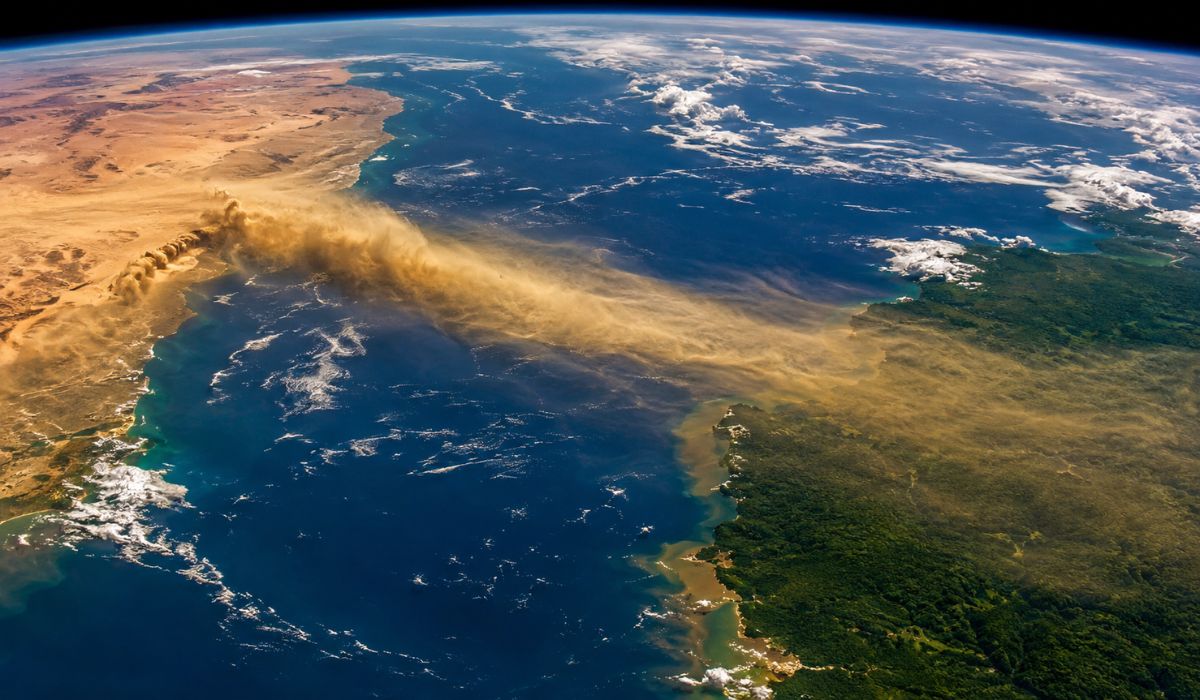

NASA study shows how Sahara dust crosses the Atlantic, brings phosphorus to the Amazon, and helps explain an atmospheric connection between desert, ocean, and tropical forest thousands of kilometers apart.
Part of the Amazon’s fertility may begin in a place where there is almost no forest.
Every year, winds in North Africa lift clouds of Sahara dust, push these particles across the Atlantic, and bring to the Amazon Basin minerals rich in phosphorus, an essential nutrient for plant growth.
The connection was measured by NASA with data from the CALIPSO satellite and helps explain how a rainy tropical forest receives, through the sky, part of what it loses through the soil.
-
An irritated Englishman with a vacuum cleaner that lost suction spent five years and his wife’s income on 5,127 prototypes until he created the world’s first bagless vacuum cleaner in 1993, a billion-dollar fortune born from 5,126 consecutive failures.

-
Scientists use an experiment over 200 years old, point a laser at a small disc, and manage to create four types of light structures simultaneously.

-
JBL launches Tuner 3 in Brazil with 7W RMS Pro Sound, Bluetooth 5.3, up to 15 hours of battery life, and IP68 water and dust protection at a low price.
-
NASA searches for the state of matter predicted by Einstein in a mini-fridge-sized laboratory on the Space Station


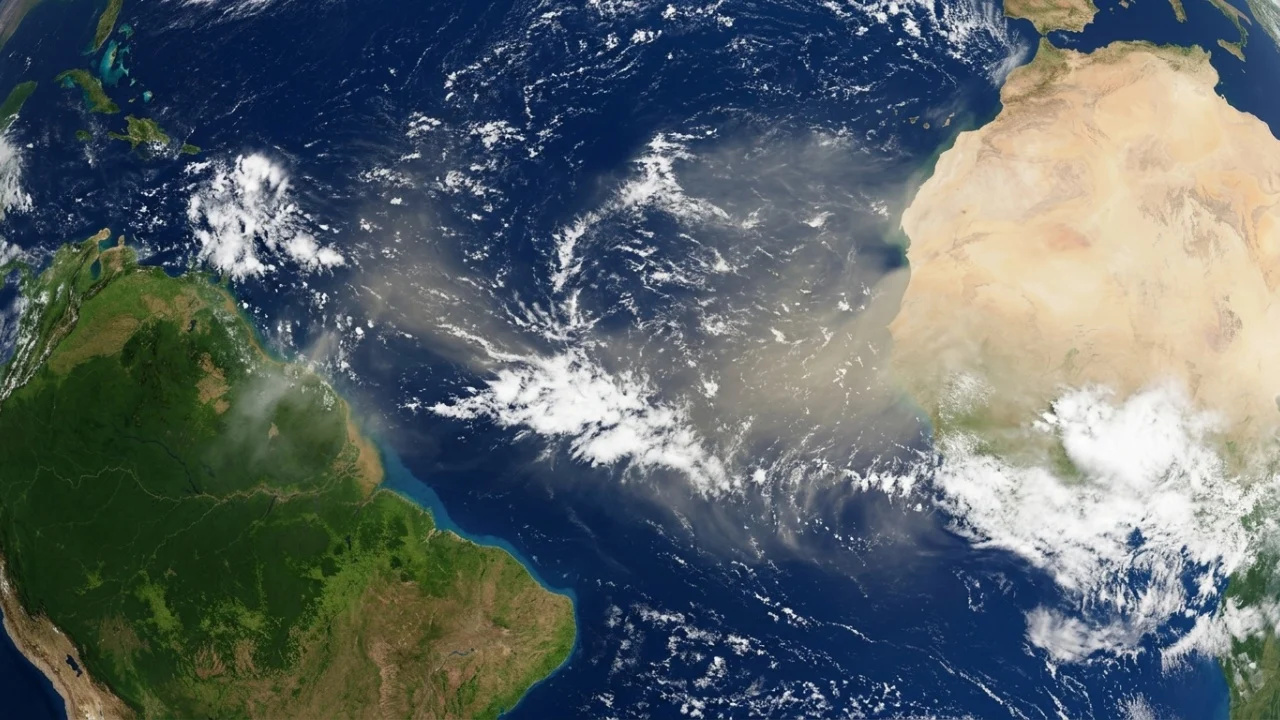
The particles travel in layers of the atmosphere and arrive gradually, often imperceptible to those on the ground.
Even so, the volume is large: according to NASA, about 182 million tons of dust leave the western edge of the Sahara annually, and 27.7 million tons end up deposited over the Amazon Basin.
Within this material, there is phosphorus.
The study published in the journal Geophysical Research Letters estimated that African dust deposits about 22 thousand tons of this nutrient per year in the Amazon, an amount close to what the region loses through rains and floods.
The research does not claim that the dust alone sustains the forest, but it indicates that it helps replenish an important part of the nutrient cycle.
The most relevant update on the subject is that the CALIPSO satellite, used in this measurement, ended its scientific mission on August 1, 2023, after 17 years of operation.
Even so, the collected data continues to be used in studies on clouds, aerosols, climate, and particle transport in the atmosphere.
Sahara Dust and Amazon Forest
The image seems contradictory: a dry desert helping a wet forest.
The explanation lies in the composition of the dust and the circulation of the winds.
Part of the material that leaves the Sahara comes from the Bodélé Depression in Chad, a former lake area where minerals formed from dead organisms are rich in phosphorus.
When the dry soil is lifted by the wind, fine particles enter the atmosphere and can be transported over great distances.
The Amazon, on the other hand, has ancient soils and, in many places, poor in available phosphorus.
A large part of the nutrients is stored in the plants themselves and returns to the cycle when leaves, branches, and organic matter decompose on the forest floor.
As the region receives heavy rains and hosts extensive rivers, some of these nutrients are carried out of the basin.
African dust comes into this equation as an external source, small in proportion to the total volume of material transported, but relevant for carrying phosphorus on an annual scale.
This process helps to show that the fertility of a forest does not depend solely on what is beneath the roots.
In certain cases, it can also depend on particles lifted thousands of kilometers away, on another continent.
How NASA measured the dust journey
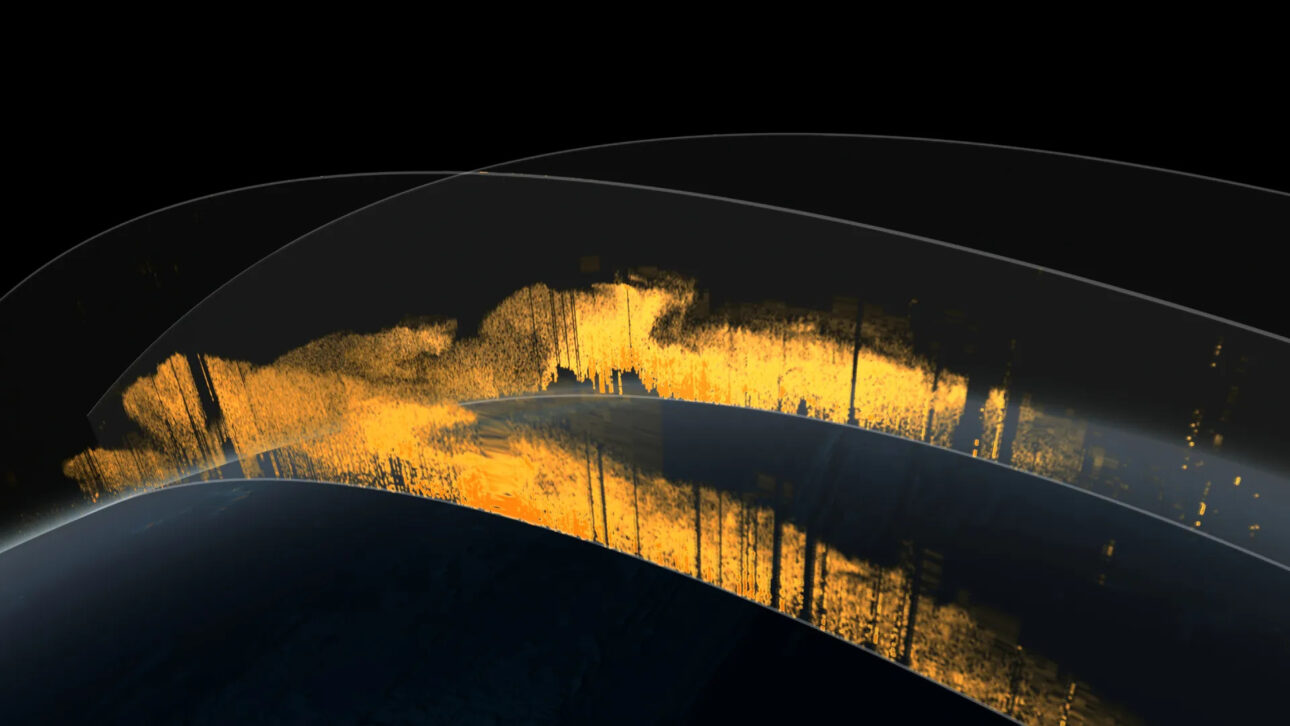
The main measurement came from CALIPSO, which stands for Cloud-Aerosol Lidar and Infrared Pathfinder Satellite Observation.
The satellite was a joint mission of NASA with the French space agency CNES and used an instrument called lidar to observe clouds and suspended particles in the air.
The lidar works like a kind of light radar.
Instead of radio waves, it emits laser pulses towards the atmosphere.
When these pulses encounter particles, part of the light returns to the instrument, allowing the estimation of the height, distribution, and some optical properties of the observed material.
Between 2007 and 2013, researchers used this type of data to measure in three dimensions the transport of dust between the Sahara, South America, and the Caribbean.
NASA reported that it was the first time a satellite quantified in 3D how much of this material made the transatlantic journey from the desert to the forest.
The numbers give scale to the phenomenon.
Of the 182 million tons that leave annually from the western edge of the Sahara, about 132 million still remain in the air near the eastern coast of South America.
In addition to the 27.7 million tons that fall over the Amazon, approximately 43 million tons continue on and deposit over the Caribbean Sea.


Phosphorus in the Amazon
Phosphorus is involved in fundamental processes for plants, including growth, protein formation, and cellular functioning.
In the Amazon, this nutrient is especially important because it is not always available in large quantities in the soil.
NASA compares the loss of phosphorus in the region to a bathtub slowly leaking.
Rain, rivers, and floods remove some of the nutrients from the basin, while organic matter tries to return another part to the soil through decomposition.
Saharan dust does not replace this internal cycle of the forest.
It acts as an external input to the system, transported by the wind and deposited over time.
According to the study led by Hongbin Yu, the phosphorus input from African dust is comparable to the annual hydrological loss of phosphorus in the Amazon Basin.
This comparison is the central point of the research, because it suggests that the desert helps to compensate for part of what the water takes away.
Why the amount of dust changes
The dust crossing does not always occur with the same intensity.
In the data evaluated by NASA, the difference between the highest transport, observed in 2007, and the lowest, recorded in 2011, reached 86%.
The researchers linked part of this variation to the rains in the Sahel, a semi-arid strip south of the Sahara.
When it rains more in this region, the amount of dust transported tends to decrease.
The exact cause is not yet determined, but NASA points to two possibilities under study.
One of them involves vegetation.
More rain can stimulate plant growth in the Sahel, leaving less soil exposed to be lifted by the winds.
Another possibility is related to the wind patterns themselves, which can change the amount of dust carried to higher layers of the atmosphere.
The route also depends on what happens over the Atlantic.
Some of the particles fall into the ocean or are removed by rain before reaching South America.
The height of the dust layer, the strength of the winds, and precipitation conditions influence how much material completes the journey.
CALIPSO and the legacy of the mission
The study that popularized this connection was published in 2015, based on data from 2007 to 2013.
It is not, therefore, a new discovery, but a scientific explanation that continues to draw attention because it reveals a counterintuitive connection between two extreme regions of the planet.
After that, CALIPSO itself ended its scientific operations in 2023.
NASA described the mission as a milestone for the use of space lidar in observing clouds, smoke, volcanic ash, dust, sea salt, and other airborne particles.
This does not invalidate the results about the Sahara and the Amazon.
On the contrary, it transforms the mission’s data into a historical basis for studies on aerosols and climate.
The agency states that CALIPSO recorded more than 10 billion lidar measurements over 17 years, information that helps to gauge the scientific legacy of the mission.
Even so, there are limits.
The research quantified a seven-year window and estimated the annual average of transport and deposition.
It does not directly measure all past years nor does it allow for precise statements on how the flow varied over millennia.
What can be safely said is that the observed atmospheric process links the Sahara to the Amazon and that African dust carries phosphorus in a relevant amount for the annual replenishment of nutrients.
The idea of an influence over very long periods is compatible with the persistent nature of this type of transport, but it was not directly measured by the cited study.
A Journey Across the Atlantic
The dust travels about 1,600 miles, or approximately 2,600 kilometers, over the Atlantic, according to NASA.
During this journey, it crosses an atmospheric corridor that connects Africa to South America.
For those observing the forest up close, this process does not appear as a layer of sand on the ground.
The deposition occurs with fine particles, spread over time and space, mixed with the normal functioning of the atmosphere.
The same dust that fertilizes part of the Amazon also influences other regions.
NASA reports that a portion of the material reaches the Caribbean, showing that the African cloud does not necessarily end over the forest.
This movement is part of a larger system of aerosols, a name given to particles suspended in the air.
They can come from mineral dust, smoke, sea salt, volcanic ash, or human activities, and influence climate, air quality, cloud formation, and nutrient cycles.


