Portuguese
  Spanish


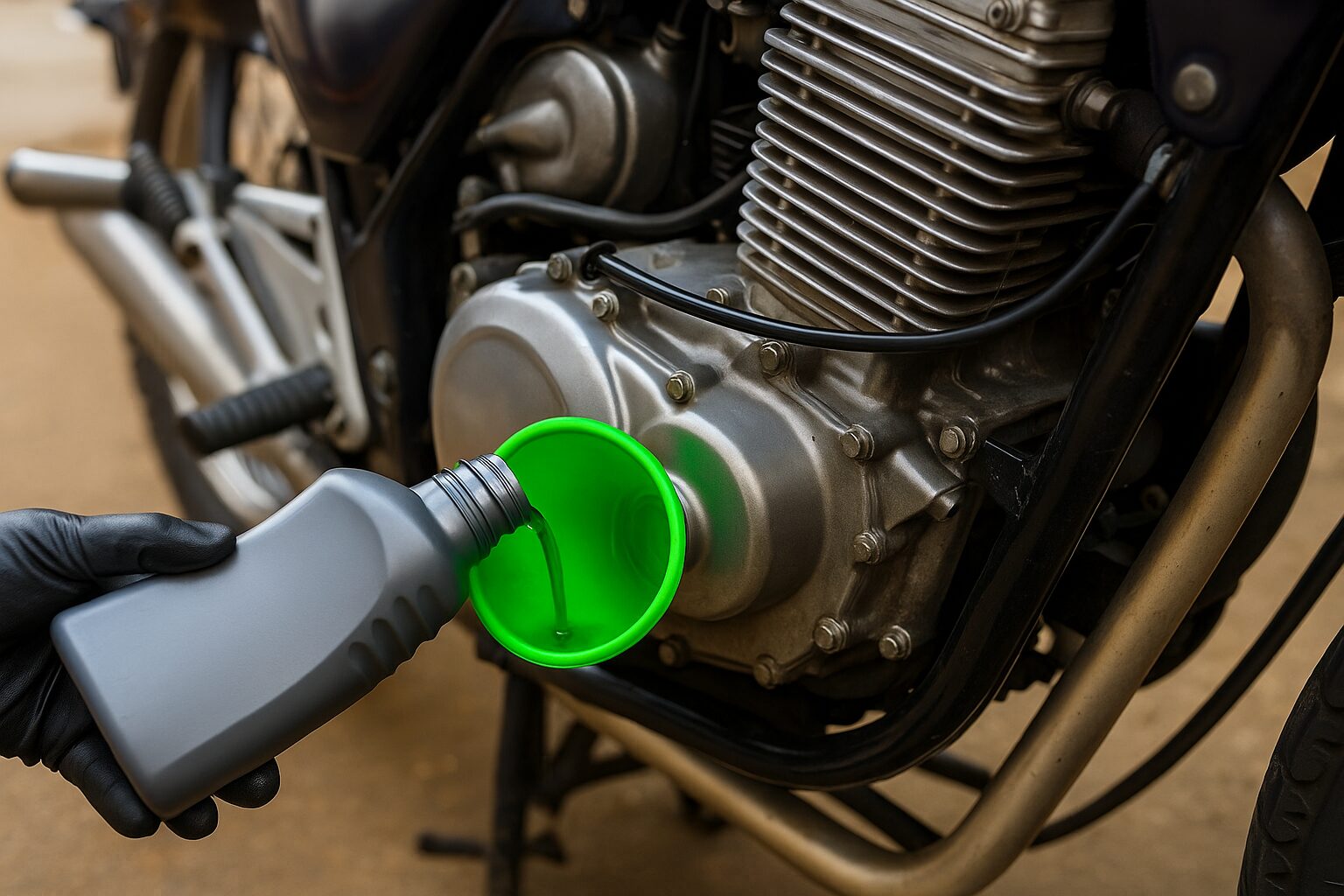

Changing the Oil of the Motorcycle on Time Avoids Losses, Improves Performance, and Guarantees Greater Durability of the Engine
Changing the motorcycle oil is one of the most important maintenance tasks to ensure the proper functioning of the engine. This procedure is responsible for lubricating and helping to cool the equipment.
Over time or with continuous use, the oil loses its properties, which is why it is essential to pay attention to the correct deadlines for changing it.
Old Intervals No Longer Apply
Many motorcyclists still believe that the oil needs to be changed every 1,000 km. This practice comes from past decades when lubricants were only mineral, and motorcycles, like the old Honda CG 125 carbureted models from the 2000s, really required short intervals, around 1,500 km.
-
End of the Affordable Car Era: Fiat Argo 1.0 2026 Offers 14.7 km/l Efficiency and Easy Maintenance, but $18,000 Price Raises Cost-Benefit Concerns

-
Honda XR 300L Tornado Special Edition 2026: Off-Road Focused Motorcycle with 293.5cc Engine, 24.3 HP, Priced at $6,200
-
Indian Government Offers Up to $1,000 Incentive for Drivers to Swap Old Cars for Electric Vehicles

-
Tesla Begins Testing Two-Seater Autonomous Robotaxi Without Steering Wheel or Pedals, Featuring Onboard Safety Monitor


Today, this reality has changed. Engines have evolved, and lubricating oils have too. Currently, most products on the market are synthetic or semi-synthetic, which ensures much greater durability and superior performance in protecting the engine.
Types of Oil and Their Differences
Lubrax, an oil manufacturer, explains that the difference between the types lies in the way the base oils are obtained. The mineral oils come from the separation of components of petroleum and contain a mixture of compounds.
Synthetic oils, on the other hand, are produced through chemical reactions, with greater control and purity in the final result.
Semi-synthetic oils combine both types in varying proportions. They aim to bring together the best of each, ensuring performance at a lower cost, as the synthetic raw material is more expensive.
Changing the oil before the recommended time does not damage the engine, but it also does not bring any advantages. It is just an additional expense without real benefit.
Follow the Manufacturer’s Manual
To know the ideal time for the change, the rider should always follow the recommendations in the motorcycle manual. It indicates the deadlines, both in kilometers and time, for each type of engine.
In smaller models, changes usually occur every 5,000 km or 6,000 km. In larger motorcycles, this number can exceed 10,000 km. Even if the mileage limit is not reached, it is important to respect the maximum time of one year to carry out the change.
One important point is the first oil change of the motorcycle, which should be done by the first 1,000 km traveled. This step is crucial to ensure a good start to the engine’s useful life.
Care with Severe Use
Motorcyclists who ride too much or too little need to pay special attention. Those working in large urban centers with deliveries, for example, or those who use the motorcycle little without allowing the engine to reach the ideal temperature, are considered to be in severe use.
In these cases, the recommendation is to reduce the manufacturer’s suggested oil change interval by half. That is, if the manual indicates 5,000 km, the replacement should occur every 2,500 km or every 6 months, whichever comes first.
Prevention Avoids Bigger Problems
Meeting the right oil change deadlines is the best way to keep the motorcycle engine in good condition. This helps to avoid damage, saves on corrective maintenance, and ensures that the vehicle has a longer useful life, with better performance and fewer headaches for the rider.
With information from Auto Papo.