Portuguese
  Spanish


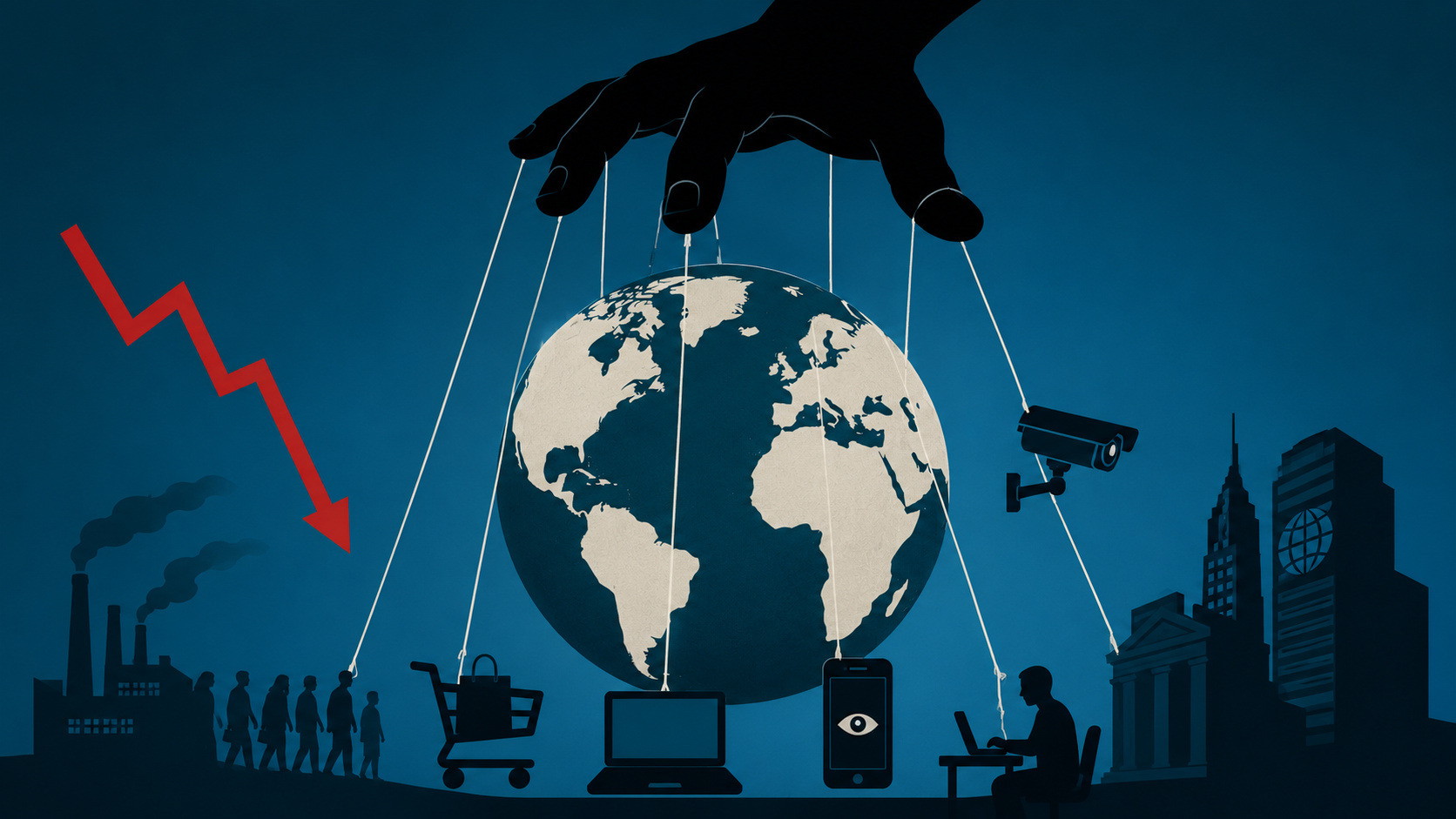

Understand what the Great Reset is, a proposal discussed by the World Economic Forum that sparked debates on economy, technology, and global power.
In 2020, amidst the COVID-19 pandemic and the global economic crisis, the World Economic Forum launched an initiative called The Great Reset. The proposal was presented as a discussion on how governments, businesses, and societies could reorganize economy, work, technology, and sustainability after a period of significant global instability.
The concept quickly moved beyond the economic environment and began to dominate political, technological, and social debates in various countries. While supporters saw the idea as an attempt to modernize economies and tackle inequality, climate change, and digital transformation, critics began to associate the topic with theories about global control, technological surveillance, and concentration of power. From there, the term “Great Reset” ceased to be merely an economic agenda and became one of the most controversial expressions of the decade.
Great Reset was launched by the World Economic Forum during the pandemic
The term gained global prominence in June 2020, when the World Economic Forum officially announced the initiative. According to the organization, the goal was to leverage the economic impact of the pandemic to discuss reforms in areas such as sustainability, technological innovation, labor market, and international cooperation. The project was presented by the forum’s founder, Klaus Schwab, along with Prince Charles, now King of the United Kingdom.
-
Chinese E-commerce Giant Predicts Robots Will Replace 700,000 Delivery Workers as Autonomous Vehicles Expand to 200 Cities, Offering Training for Workers to Maintain Their Machines

-
Trump warns Europe with 100% tariff threat on digital tax, potentially impacting wine and trade agreements

-
As Homeownership Becomes Unattainable in Brazil, Japanese Municipalities Offer Abandoned Houses for as Low as $3,000 to Revitalize Aging, Emptying Cities
-
Job Market in 2026 Welcomes High School Graduates: Logistics, Retail, and Construction Hire Without College Degrees; Quick Courses in Forklifting, Building Electricity, and Welding Boost Salary Prospects


The central idea of the Great Reset was that deep crises could accelerate structural changes. The World Economic Forum advocated for an economic reconstruction more aligned with environmental sustainability, digitalization, and reduction of social inequalities. Topics discussed included energy transition, artificial intelligence, automation, labor transformation, and new forms of economic cooperation.
The Great Reset frequently associated economic growth with environmental issues. The proposal advocated for accelerating investments in clean energy, sustainable infrastructure, and carbon emission reduction. At the same time, it highlighted the expansion of digitalization, artificial intelligence, and automation as an inevitable part of the future economy.
Labor market and automation entered the global debate
Another central point was the transformation of work. The World Economic Forum argued that automation, artificial intelligence, and digitalization would profoundly change professions, companies, and labor relations. This included discussions on professional retraining, remote work, new skills, and large-scale economic adaptation.
Phrase about private property helped to boost theories and controversies
One of the biggest controversies arose after the circulation of content related to an article published on the World Economic Forum’s website. The text referred to a hypothetical future scenario based on service sharing and the digital economy, summarized by the widely viralized phrase: “you will own nothing and be happy.”
Although the text described a theoretical projection and not an official global policy, the phrase came to be used as a symbol of supposed economic control and loss of private property.
Theories about global control grew on social networks
With the popularization of the term, much broader interpretations began to emerge. On social networks and viral videos, the Great Reset came to be associated with theories involving:
- digital surveillance
- government-controlled digital currencies
- freedom restrictions
- economic centralization
- population control
Much of these interpretations mix real facts, speculations, and misinformation.
World Economic Forum states that the proposal is not a secret global plan
The World Economic Forum itself states that the Great Reset is not a global government plan. According to the organization, it is an initiative for economic and social debate involving business leaders, governments, academics, and international organizations. The forum also states that many viral claims about the topic distort or exaggerate officially published content.

Even without adhering to extreme theories, critics of the Great Reset question the concentrated influence of large corporations and global economic elites. The World Economic Forum brings together heads of state, billionaires, multinational executives, and financial leaders at annual meetings held in Davos.
This fuels the perception that important economic decisions can be discussed by groups with enormous political and financial power.
Digital currencies and technological surveillance have increased concerns
The advancement of financial and digital technologies has also helped intensify the debate. Central bank digital currencies, artificial intelligence, and monitoring systems have come to be associated by some groups with the idea of excessive control.
Experts emphasize, however, that these themes exist independently of the Great Reset and are part of broader global technological transformations.
Pandemic helped turn the term into a global phenomenon
COVID-19 played a fundamental role in the explosion of the topic. During the pandemic, governments adopted exceptional measures, expanded health control, and accelerated digitalization in various areas. This created a conducive environment for distrust, theories, and debates about freedom, technology, and concentration of power.
The Great Reset gained strength precisely because it connects several sensitive themes at the same time. Economy, automation, artificial intelligence, climate change, digital currencies, and globalization began to appear within the same narrative. This combination helped the term surpass economic circles and reach social networks, politics, and popular culture.
Artificial intelligence and automation make the debate even more current in 2026
In 2026, the debate remains relevant because many transformations predicted years ago have already begun to occur. Generative artificial intelligence, job automation, and accelerated digitalization reinforce discussions about the future of work and technological concentration. This keeps the topic alive, especially among groups concerned about the impact of these changes on society.
What really exists behind the Great Reset
The Great Reset exists as a real initiative of the World Economic Forum. It is also true that the project discusses economic reorganization, sustainability, digital transformation, and changes in the labor market. On the other hand, many claims circulating on the networks go beyond official documents and mix speculation, political interpretation, and theories without concrete evidence.
Regardless of interpretations, the Great Reset has become a symbol of a historical period marked by global crises, accelerated technological advancement, and profound economic changes. The concept has come to represent both expectations of transformation and fears related to control, surveillance, and concentration of power. Therefore, the topic continues to provoke intense debates years after it was officially launched.
Do you believe that the Great Reset is just an economic discussion about the future of the world after major crises, or do you think the concept ended up revealing real concerns about technology, power, and global control? Leave your opinion in the comments.