






 Portuguese
  Spanish
  2 min of reading
  0 comments


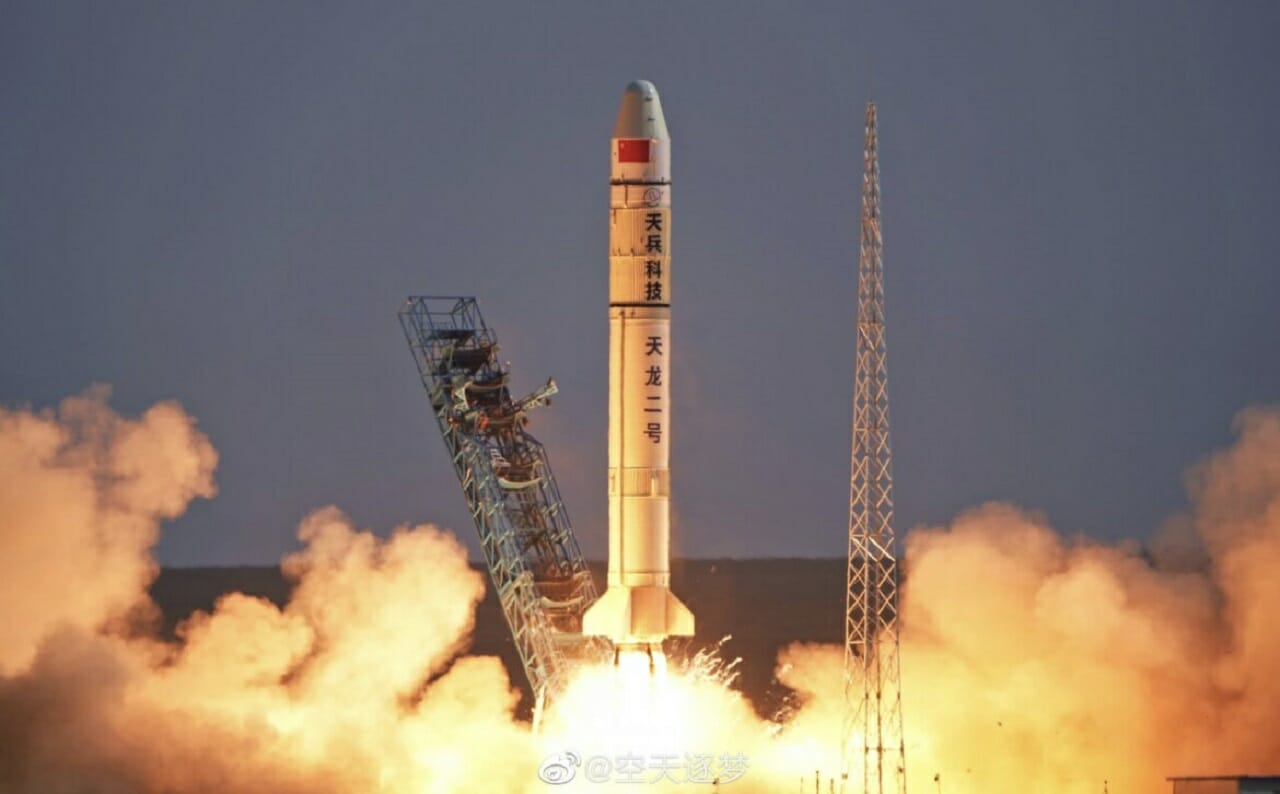
China Launches Monstrous Rocket Engine: 130 Tons of Power, Sets Records in Tests and Leaves the World in Awe!
China Aerospace Science and Technology Corp (CASC), one of the leading aerospace companies in the country, has achieved a significant milestone in the development of space technologies with the completion of tests on its new reusable rocket engine. This engine, which uses liquid oxygen and kerosene and has a thrust of 130 tons, is a vital component for the future of CASC’s reusable rockets, including the promising Long March 10, according to engenhariahoje.com
Record-Setting Tests
On April 13, the engineering team from the Sixth Academy of CASC carried out two ground ignition tests, eventually part of a series of experiments that included 15 repeated tests and 30 ignition starts. The total duration of these tests exceeded 3,900 seconds, setting a new durability record for liquid rocket engine tests in China. Thus, these tests confirmed the high reliability of the engine and its scalability, highlighting the evolution in engine reuse that now allows for multiple ignitions and extensive thrust adjustments.
Key Technologies for Rocket Reuse
According to reports from the team to the Global Times of China, rocket reuse involves four critical technological areas:
-
Why can the crane operator only obey the correct signalman on the construction site: among dozens of workers, a hand raised by the wrong person can confuse the maneuver and turn a load of tons into an immediate risk.

-
What changes with the new public transportation rules that can reduce pressure on fares and pave the way for zero fare in Brazil?
-
Offshore air transport soars in Brazil, surpasses 2.5 million passengers, and reveals how oil has transformed Rio’s airports into key pieces of national logistics.

-
Latin America becomes the “global champion” of aviation taxes, tickets may become more expensive in Brazil, and IATA’s warning exposes risk for flights, tourism, and passengers.



- Precision in return landing
- Stability during landing
- Durability for multiple uses
- Rapid maintenance for on-site repairs
The research team has been working to simplify maintenance and assessment processes to improve the longevity of the engine after multiple reuses.
Watch This Video and Draw Your Own Conclusions


The Chinese Space Race
This development marks a significant advance in China’s ambition to become the global leader in space technology, thus competing directly with the United States. While the NASA faces criticism for outdated technology in its Space Launch System (SLS), China is quickly moving to expand its fleet of reusable rockets, both state-owned and private. With plans to test two state-owned reusable rockets in 2025 and 2026, and with private companies like Galactic Energy preparing to test the Pallas-1 rocket later this year, China is firmly on track to solidify its presence in space.
Thus, China’s reusable rocket engine represents a significant leap in space technology and positions the country competitively in the global space race. In other words, with its reuse capability and testing records, China is paving the way for a more sustainable and efficient future in outer space.








Be the first to react!