






 Portuguese
  Spanish
  3 min of reading
  0 comments


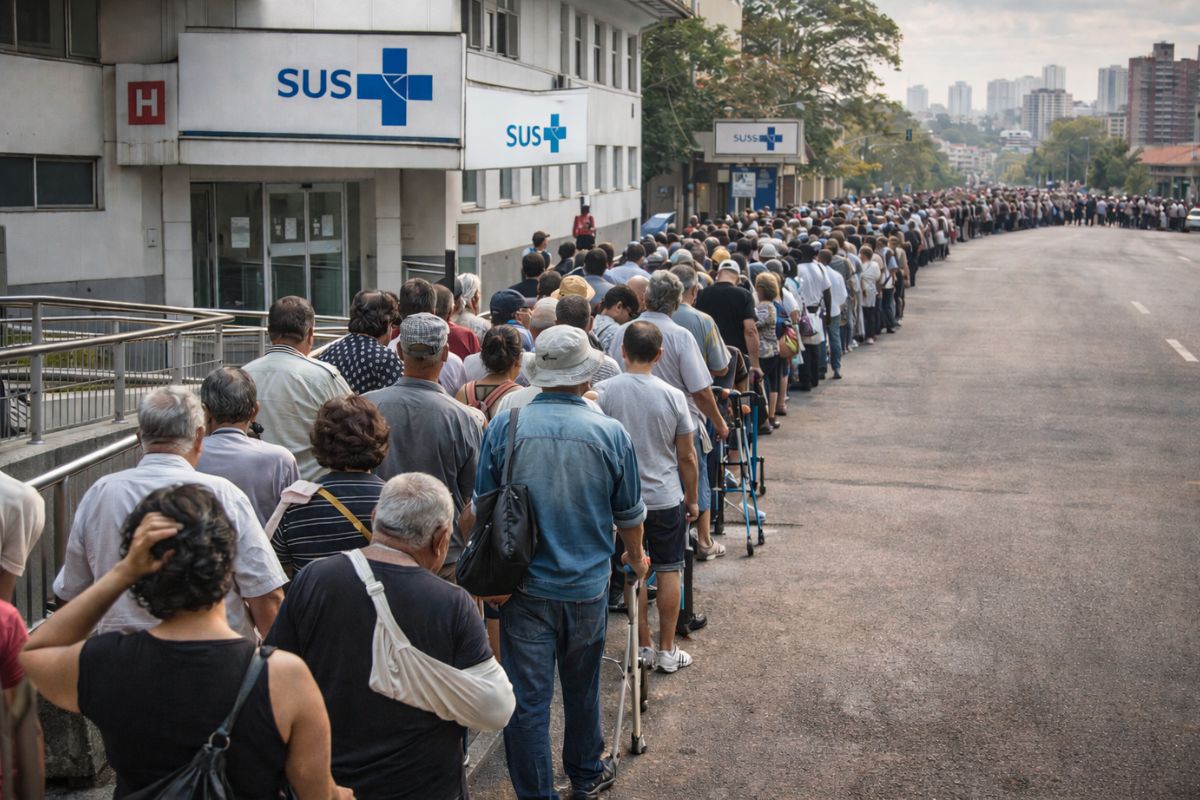
The waiting list of the Unified Health System for elective surgeries reached 924,835 people before the start of the federal program to reduce waiting lists, according to data obtained via the Freedom of Information Law by the newspaper O Globo. This number, which does not include those waiting for specialized consultations or exams, is greater than the entire population of Suriname (614 thousand), Luxembourg (660 thousand), Montenegro (620 thousand), Malta (535 thousand), Iceland (383 thousand), and Brunei (449 thousand). The waiting list of a single Brazilian health system could fit in six European and South American countries at the same time.
The data on the SUS becomes even more impressive when observing the geographical concentration of the waiting list. Goiás led the national list with 125,894 patients waiting for surgery, followed by Rio Grande do Sul with 108,066 and Pernambuco with 103,955. These three states alone account for more than 337 thousand people awaiting procedures, a number greater than the entire population of Iceland. In April 2026, Rio Grande do Norte recorded 46,930 people in the queue, with Natal concentrating 8,861 cases. The procedure with the highest demand in the state is varicose vein surgery, with 3,296 patients waiting.
The average waiting time for surgery in the SUS was 52 days in 2024, practically the same as in 2023 (53 days), which had been the highest in the historical series that began in 2009. But this average hides extremes: depending on the specialty and the state, the wait can reach 634 days, almost two years. And the calculation by the Ministry of Health starts counting from the moment the patient obtains the request, not including the prior waiting time for consultations and exams.
The government set a record for surgeries and nevertheless the queue did not end
In 2025, the SUS performed 14.5 million elective surgical procedures, a growth of 37% compared to 2022 and the highest number in the history of the system.
-
New portable bathroom is ready in 90 seconds, measures 2.18 meters, fits in the car when closed, and offers privacy for showering and changing clothes.

-
They planted a sea of eucalyptus to produce cellulose, but the monoculture turned into a green desert, dried up springs and rivers, and pushed families out of regions in Minas Gerais and Bahia.

-
Coal mine purchased for $2 million in Wyoming, the Brook Mine holds rare earth elements and critical minerals estimated at up to $37 billion, in an asset that the US is competing for with China.
-
The most common mistake when storing eggs is leaving them in the refrigerator door, where temperature fluctuations crack the shell, remove the cuticle, and cause them to lose freshness, with a risk of contamination.




To put this into context: Brazil operated on more people in one year than the entire population of Portugal (10.3 million).
The government invested R$ 600 million in the National Queue Reduction Program and conducted the largest national effort in history, bringing together more than 210 hospitals across the country.
Even with this record effort, the queue did not disappear.
The Minister of Health, Alexandre Padilha, who took office with the specific mission of reducing the queues, stated that priority continues in 2026 focusing on five areas: oncology, ophthalmology, cardiology, orthopedics, and otorhinolaryngology.
New community health initiatives are scheduled, including one focused exclusively on women’s health in March 2026.
Why does the waitlist persist even with record investment?
The problem is structural.
Elective surgeries were suspended during the Covid-19 pandemic, and the pent-up demand accumulated on a system that was already operating at its limit.
When states and municipalities began to unify their scattered lists in hospitals and health departments into a single registry, the visible waitlist grew, not because more people became ill, but because the true extent of the wait was revealed in the numbers for the first time.
The Senate approved a bill in November 2025 that mandates the online publication of SUS waitlist data, including patient position, number of people waiting by specialty, and average wait time.
To this day, there is no consolidated national portal with this information in real time.
This means that the actual number of Brazilians waiting for some type of service in the public system, including consultations and exams, remains unknown.
Estimates from managers and researchers indicate that the total could reach tens of millions when all types of waiting are added together.
The SUS surgery waitlist has more people than Iceland, Luxembourg, and Malta combined.
And no one knows how many millions are waiting for a simple consultation. Comment below: how long have you waited for SUS?




-

-

-

3 people reacted to this.