






 Portuguese
  Spanish
  3 min of reading
  0 comments


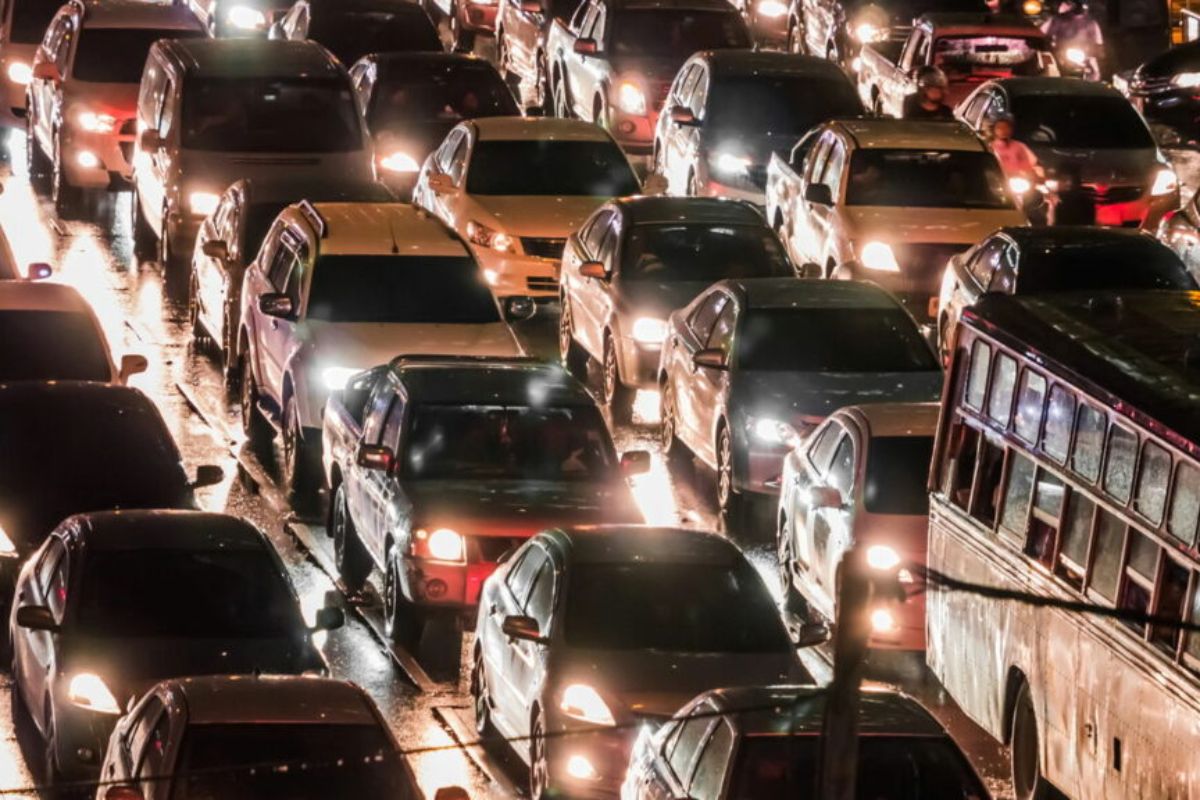
For 1.3 million Brazilian workers, the time spent in traffic per year is greater than the total vacation time guaranteed by the CLT. According to data from the 2022 Census of IBGE, released in October 2025, these people take more than two hours just to get to work, which means more than four hours daily in commuting. When the calculation that no one did is made, the result is frightening: it is more than 1,000 hours per year inside a bus, train, or car. The 30-day vacation of the CLT, in awake hours, adds up to 480.
The calculation is simple and devastating. A worker who spends 4 hours a day in traffic, during the 252 working days of the year, accumulates 1,008 hours in commuting. This is equivalent to 42 full days, of 24 hours each. The CLT vacation is 30 days. In other words, this worker spends more time commuting than resting. And we are not talking about extreme cases: 1.3 million Brazilians live this reality, concentrated mainly in São Paulo and Rio de Janeiro, where 18 of the 20 municipalities with the highest proportion of commutes over two hours are located.
But the problem is not limited to this group. IBGE recorded that 8.7 million workers spend more than one hour a day in traffic (round trip). For those who spend 2 hours daily, the annual total reaches 504 hours, a number that already exceeds the 480 hours agreed upon during 30 days of vacation. Even at the national average, the scenario is heavy: the CNDL/SPC Brazil survey calculated that residents of large cities lose the equivalent of 21 days a year in traffic.
Traffic steals more than time

The National Confederation of Industry (CNI) mapped the consequences: 55% of workers say that commuting time directly affects their quality of life.
-
Coal mine purchased for $2 million in Wyoming, the Brook Mine holds rare earth elements and critical minerals estimated at up to $37 billion, in an asset that the US is competing for with China.

-
In the year Brazil won the World Cup, gasoline cost R$ 1.77, the cheapest car was worth R$ 13,000, there were no flex-fuel cars, SUVs were rare, and no Chinese brand sold a single vehicle in the country.
-
Neighboring Balneário Camboriú will receive a R$ 1 billion airport with 225 hangars, an area of 2.2 million m², a technology park, and an export zone that promises to transform the economy and generate thousands of jobs.
-
After investing R$ 5,000 in fried chicken in his backyard, a Brazilian transformed two fryers and a freezer into a network with 115 sales points, presence in up to 17 states, and revenue exceeding R$ 115 million per year.



For 51%, productivity at work decreases due to the accumulated fatigue from the commute.
The survey revealed that 36% of Brazilian workers spend more than one hour a day in traffic, with 8% spending more than three hours, which represents commuting times that compete with the workday itself.
The profile of those who suffer the most has income and gender distinctions.
According to the Census, workers earning up to half a minimum wage face the longest commutes because they live farther from job centers and rely on public transportation.
Men have longer commutes than women: in the category above two hours, they represent 2.1% compared to 1.3% of women.
In absolute numbers, there are 857 thousand men compared to 402 thousand women in this situation.
And public transportation does not solve it
Buses are the most used means of transportation to get to work (36% of workers), followed by cars (22%).
But those who use buses face longer routes, crowded vehicles, and, in many cities, non-functioning air conditioning.
The automobile was the main means of transportation for 45.9% of workers in the South, but only 21% in the North and 21% in the Northeast, highlighting a mobility inequality that adds to income inequality.
Trains and subways, which in developed countries are the backbone of urban mobility, account for only 1.6% of trips in Brazil. BRT and rapid buses total 0.3%.
The mass transportation infrastructure has not kept up with the growth of cities, and since 2010, according to IBGE itself, the average commuting time has not improved, which means that over a decade of investments in mobility has not produced measurable results for workers.
The economic cost is invisible but concrete: hours in traffic are hours not spent with family, not used for studying, not dedicated to leisure or sleep.
For the worker who sleeps 6 hours because they leave home at 5 AM and return at 9 PM, traffic is not just inconvenient; it is a factor of illness.
1.3 million Brazilians spend more time commuting to and from work than resting during their 30-day vacation. Comment below: how many hours a day do you lose in traffic?


Be the first to react!