Portuguese
  Spanish


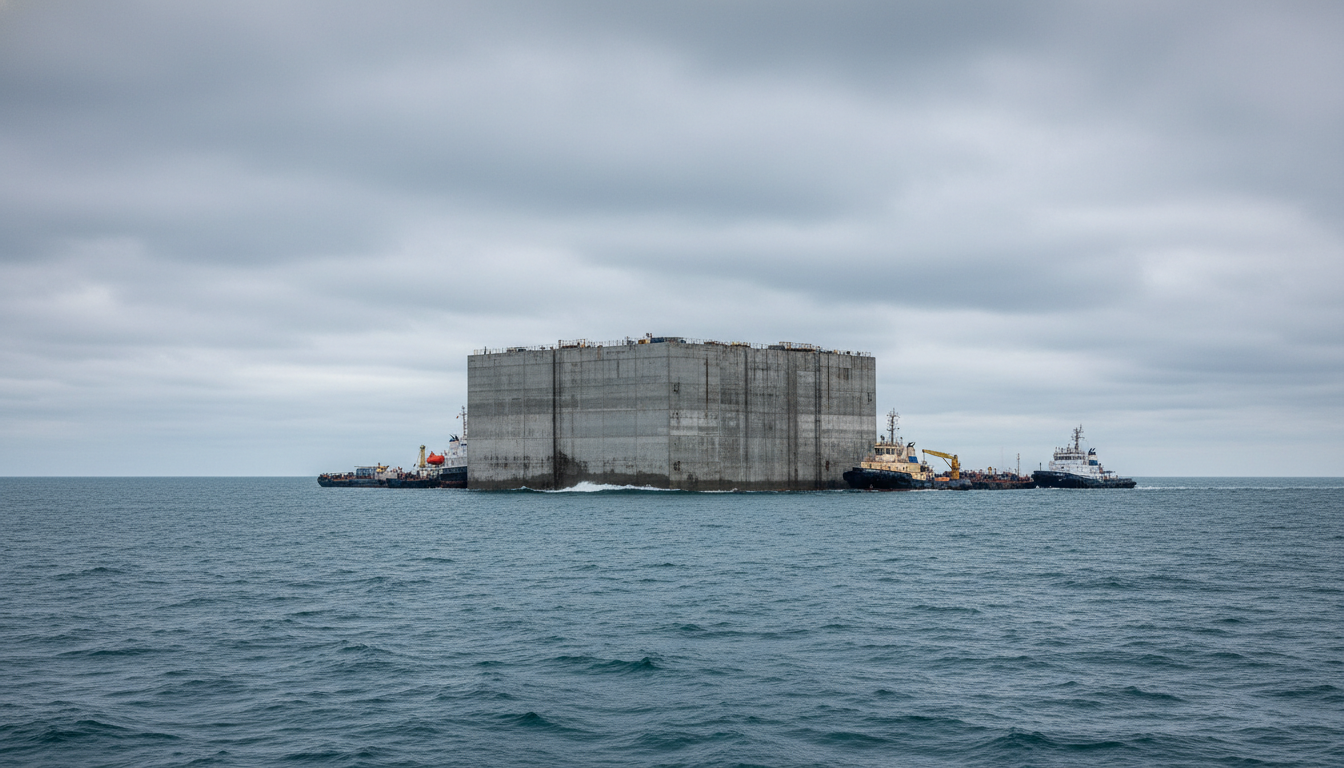


The largest underwater tunnel in the world is being built with 89 blocks of 73,500 tons each, assembled like giant Lego pieces on the seabed of the Baltic Sea at a depth of 40 meters with a precision of 15 millimeters
Engineers are constructing the Fehmarnbelt underwater tunnel between Denmark and Germany using a method that seems like science fiction. There are 89 precast concrete elements, each measuring 217 meters in length and weighing 73,500 tons.
These giant pieces are manufactured on land, towed by sea, and positioned on the Baltic seabed at a depth of 40 meters. The precision required for the fit is only 15 millimeters.
The project costs €7.4 billion and will create an 18-kilometer tunnel connecting the islands of Lolland and Fehmarn. It will be the largest immersed tunnel in the world.
-
28-meter, 156-ton titans traveled 20,000 km from China to the port of Santa Catarina: Portonave received 7 fully electric megacranes, part of a R$ 210 million package, to double container handling.

-
They exchanged the idea of a large house for a 35 m² warehouse, spent US$ 12,000 on the structure, and created a tiny house in Colorado with space to live and work.

-
A newly opened terminal in the middle of the Amazon has begun transporting soy and corn through Amapá, eyeing the queue of ships that is congesting the ports in the South.

-
Goodbye to old tiles: renovation technique without construction transforms bathrooms in a few hours, eliminates debris, and reduces costs with coverings using special paints, high-resistance adhesives, and modern finishes that completely renew the space.


When completed, cars will make the crossing in 10 minutes and trains in just 7 minutes. Currently, ferries take hours and road detours add up to 160 km between Hamburg and Copenhagen.
An entire factory was built from scratch on a Danish beach just to manufacture the 89 blocks
To produce the elements, a factory was built from scratch in Rødbyhavn, on the coast of Denmark. The construction of this facility would already represent a megaproject in itself.

The tunnel combines a 4-lane highway with a 2-line electrified railway. Separate areas accommodate cars, trucks, and trains, as well as emergency exits.
Mads Schreiner, market director of VisitDenmark, stated: “The new connection will make Denmark more accessible to tourists from Central Europe and is expected to increase the flow of sustainable tourism.”
The project is financed by Denmark through Femern A/S, with reimbursement from tolls over 36 years. Germany contributes €800 million for road connections.
Fehmarnbelt versus Gotthard: two different methods of crossing mountains and seas
Unlike the Gotthard Tunnel in Switzerland (excavated in rock), the Fehmarnbelt uses immersed prefabricated modules. This method allows for faster construction but requires millimeter precision.

At 18 km, the Fehmarnbelt will surpass the Channel Tunnel in the length of immersed modules. However, the Channel (50 km total) is excavated, not assembled.
According to InfoMoney, the project represents the largest traffic investment in Danish history: 52.6 billion Danish crowns.
Other tunnels under construction in Europe, such as the Lower Thames Crossing, follow a similar trend of crossing bodies of water with submerged infrastructure.
Environmental compensation: 300 hectares of recreational areas and 42 hectares of reconstructed reefs
The environmental licensing required significant compensations. The project will create 300 hectares of new recreational and conservation areas in Rødbyhavn.

Additionally, 42.5 hectares of reefs have been reconstructed at Sagas Bank as part of the environmental compensation measures.
According to Gazeta do Povo, completion forecasts vary between 2029 and 2031, reflecting possible delays due to the complexity of the work. Assembling 89 modules with a precision of 15 mm on the seabed presents an unprecedented technical challenge.
The official Femern A/S website confirms that the project is progressing in 2026 with the start of module immersion. When completed, the Fehmarnbelt will change the transport map of Europe and shorten the route between Hamburg and Copenhagen by 160 km.