






 Portuguese
  Spanish
 4 min of reading
  0 comments



The Second Crop Directly Influences Freight Prices for Grains in Brazil. Mato Grosso, Goiás, Paraná, and Mato Grosso do Sul Registered Declines in August, While Exports of Corn and Soybeans Continue to Rise, According to Data from Conab in the September Logistics Bulletin
The second crop is always a milestone in the agribusiness calendar in Brazil, especially when it comes to corn.
This year, the states of Mato Grosso, Goiás, Paraná, and Mato Grosso do Sul played a central role in the flow of this production, according to an article published.
What actually happened was that in August, freight prices for grains showed declines in most routes assessed by the National Supply Company (Conab).
-
Low-Demand Brazilian Beef Offal Gains Popularity Abroad: Indonesia Purchases $19.5 Million, Boosting Revenue and Reducing Waste

-
Soy Expansion in Former Brazilian Savanna Sparks Water and Land Conflicts in Major Agricultural Frontier
-
Mexican Pest Threatens U.S. Cattle Herds at Historic Lows, Potentially Boosting Brazilian Beef Exports as Burger Prices Soar

-
Avocado Boom for European and U.S. Markets Fuels Water Crisis in Drought-Stricken Chilean Region


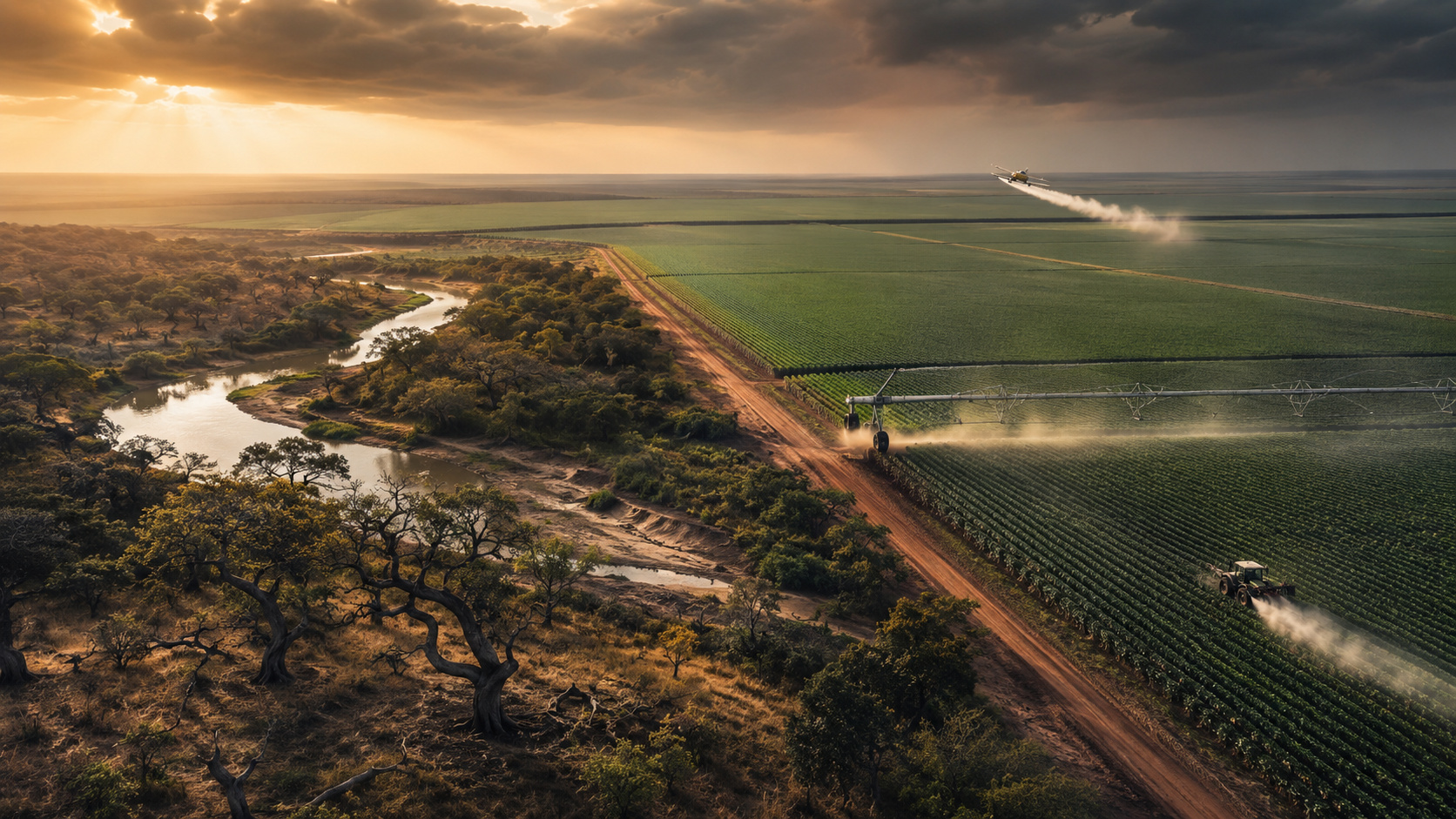


This data is part of the September edition of the Logistics Bulletin, released on the last day of the month. According to the state-run company, road transport prices peaked in July and then retreated the following month.
However, even with this decrease, prices remain above those recorded in the same period of the previous harvest.
This movement can be explained by the combination of high supply and a logistical flow that needs to handle large volumes of grains in motion, both in the domestic and external markets.
Corn and Its Effects on Road Freight
When talking about corn, the direct relationship with the second crop is inevitable. The cereal had a record production in the 2024/25 season, which increased the need for quick transport.
This pressure caused freight prices to rise in July and then retreat in August, but still maintaining relevant levels.
The Operational Logistics Superintendent of Conab, Thomé Guth, highlighted that the strong supply creates a scenario where prices do not decrease as much as last year.
This happens because the transport market is heated, with demand from animal feed and bioenergy companies. The performance of these sectors ensures that even after the peak, prices do not return to previous levels.
In some states in the Northeast, such as Maranhão, prices fell. In Piauí, there was stability, but with less intense movement. This picture shows how conditions vary according to the pace of flow in each region.
Soybean and Corn Exports Maintain Accelerated Pace
The movement of soybeans and corn during the second crop is also reflected in exports. In August, corn shipments reached 17.9 million tons, surpassing the 15.7 million recorded during the same period in 2024.
The Northern Arc emerged as the main route, accounting for 39.8% of the movement. Following this was the Port of Santos, with 29.6%, followed by São Francisco do Sul (11.6%), Paranaguá (11.4%), and Rio Grande (5%).
Meanwhile, soybeans totaled 86.5 million tons exported from January to August 2025. This number is higher than the 83.4 million from the previous year.
The Northern Arc once again stood out, accounting for 37.5% of national shipments, while the Port of Santos was responsible for 34.2%. Paranaguá accounted for 12.9%, and São Francisco do Sul recorded 5.2%, a decrease compared to 6.5% last year.
These numbers show how the ports of the Northern Arc and Santos are essential to ensure the flow of the second crop’s production.
Moreover, they highlight how logistics need to be prepared to respond to demand during peak periods.
Regional Variations in Transport Prices
Regarding road transport, the second crop brought different effects depending on the state. In Bahia, for example, prices fluctuated between stability and increases, depending on the producing region.
In Luís Eduardo Magalhães, there was an increase in demand for both grains and fiber, which pushed prices up.
In the Federal District, freight prices also rose in August, especially on routes to Imbituba (SC), Uberaba and Araguari (MG), and Guarujá (SP). The variations reached 12%, 11%, and 10%, depending on the route.
These results show that, even in a scenario of decline in states in the Midwest, other regions recorded increases.
This difference reinforces how grain transport depends on local factors, specific routes, and market dynamics.
The Immediate Impact of the Second Crop on Grain Transport
The data from the Logistics Bulletin of Conab, which compiles information from ten states, helps to understand how the second crop impacts not only agricultural production but also the entire logistical chain.
Monitoring freight behavior, the busiest routes, and the performance of exports is essential to understand the flow of Brazilian agribusiness.
Analyzing transportation, prices, and shipping activity at ports makes it clear how each crop has its own rhythm.
What we see now is a combination of record supply, transportation needs, and regional variations that influence costs for those needing to move their production.





Be the first to react!