Portuguese
  Spanish


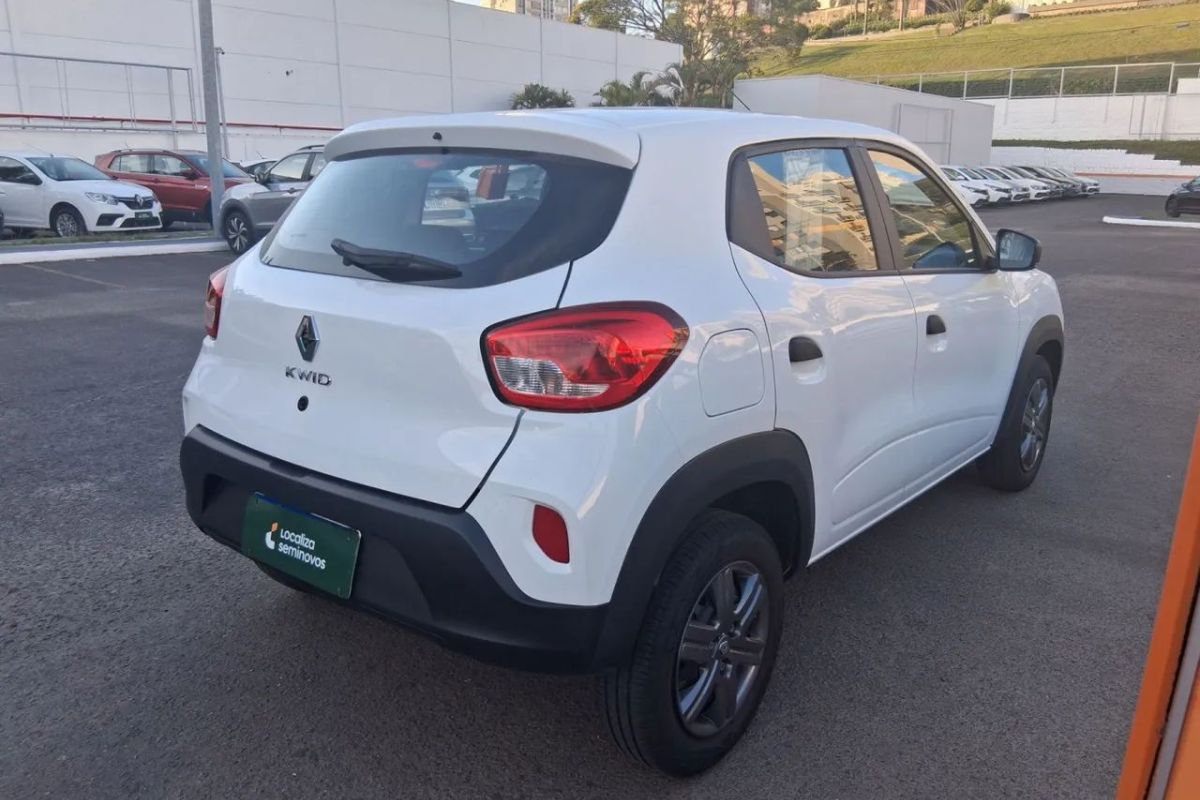

Second Cheapest 0Km Car in Brazil, the Renault Kwid Zen 1.0 2026 Costs R$ 78,690 and Delivers 14.6 km/l in the City. In a Scenario Where Nearly Everyone Exceeds R$ 90,000, It Only Trails the Citroën C3 at R$ 75,990 with a 1.0 Flex Engine and Manual Transmission.
The Second Cheapest 0Km Car in Brazil made headlines in 2026 because, in a zero-kilometer market with high prices following years of economic challenges, finding options under R$ 80,000 is becoming increasingly rare. In this context, the Renault Kwid 2026 emerges as a “find” at R$ 78,690, while most models already exceed R$ 90,000.
Besides the price, the Kwid stands out for its fuel efficiency: 14.6 km/l in the city with gasoline. This set of data reinforces why the car rises in the accessibility ranking and simultaneously highlights the scarcity of truly affordable alternatives in Brazil.
High Prices Became the Rule and Affordable Cars Became the Exception
The zero-kilometer car market in Brazil, in 2026, continues to be pressured by high prices.
-
Hilux’s little sister: Toyota relaunches the Land Cruiser 70 in the 2027 lineup with over 40 years of production, a 2.8 turbo diesel engine with 201 hp and 51 kgfm, a six-speed automatic transmission, and a renewed retro look.

-
Automatic, economical, and known for reliability: with a 1.5 engine of up to 110 hp, CVT transmission, seven airbags, and fuel consumption of up to 15.9 km/l, this used hatchback appears as a rational alternative to Polo, HB20, and Onix; meet the Toyota Yaris XLS 2020.
-
He surpassed the Tera, Creta, and Tracker: With a TSI engine of up to 150 hp, 6-speed automatic transmission, and a 373-liter trunk, the Volkswagen T-Cross was the best-selling SUV in June, with 11,753 registrations.

-
It looks factory-made, but it came out of a workshop: a mechanic from Pernambuco builds a handcrafted “mini Toyota,” drives it through the streets, and the video goes viral on social media, leaving residents astonished.



The idea of “popular cars” has lost ground, especially when the benchmark is simple: below R$ 80,000, options are few.
When the consumer’s reference shifts to a threshold of R$ 90,000 as a cutoff, even models that traditionally occupied the entry-level mindset, such as the Hyundai HB20 and Chevrolet Onix, start to be perceived as expensive.
The result is an environment where any model that remains below this threshold becomes an outlier.
Ranking of January 2026: The 10 Cheapest 0Km Models
The list of the cheapest 0Km models in Brazil in January 2026 practically shows the narrowing of the entry segment and the speed at which the prices rise above R$ 90,000:
- Citroën C3 Live 1.0 Manual 2026: R$ 75,990
- Renault Kwid Zen 1.0 Manual 2026: R$ 78,690
- Fiat Mobi Like 1.0 Manual 2026: R$ 81,060
- Fiat Argo 1.0 Manual 2026: R$ 92,990
- Peugeot 208 Style 1.0 Manual 2026: R$ 92,990
- Volkswagen Polo Track 1.0 Manual 2026: R$ 93,660
- Citroën Basalt Feel 1.0 Manual 2026: R$ 94,990
- Hyundai HB20 Comfort 1.0 Manual 2026: R$ 95,190
- Chevrolet Onix 1.0 Manual 2026: R$ 99,990
- Fiat Pulse Drive 1.3 Manual 2026: R$ 101,990
The ranking delivers a direct message: after the Kwid and the C3, the price ladder rises quickly.
And from fourth place onwards, practically everything already falls into the range above R$ 90,000.
Second Cheapest 0Km Car in Brazil: Why the Kwid 2026 Stands Out
The Second Cheapest 0Km Car in Brazil stands out because it fits exactly where the consumer feels the market shift: it is still below R$ 80,000, while most models have already crossed R$ 90,000.
The Renault Kwid Zen 1.0 Manual 2026 is priced at R$ 78,690 and only trails the Citroën C3 Live 1.0 Manual 2026, at R$ 75,990.
This difference in ranking matters because, in a context of scarcity, the “second cheapest” isn’t a detail: it indicates that the corridor of affordable cars is narrowing.
At the same time, the Second Cheapest 0Km Car in Brazil helps illustrate how the market has reorganized.
There is a clear gap between the top three and the next block, which already begins above R$ 90,000, with the Argo and Peugeot 208 tied at R$ 92,990.
Fuel Consumption of the Renault Kwid 2026: What Does Inmetro Say?
The fuel consumption of the Renault Kwid 2026 gains importance because it is one of the points that reinforce its attractiveness in the entry segment.
The cited figures are based on the Brazilian Vehicle Labelling Program (PBEV) from Inmetro, and they are the same for all combustion configurations of the model.
For the Kwid Zen 1.0 MT, the data indicates:
City
Gasoline: 14.6 km/l
ethanol: 10.4 km/l
Highway
Gasoline: 15.5 km/l
ethanol: 10.8 km/l
The same consumption pattern is reported for the other combustion versions:
Renault Kwid Intense 1.0 MT
City: 14.6 km/l (gasoline) and 10.4 km/l (ethanol)
Highway: 15.5 km/l (gasoline) and 10.8 km/l (ethanol)
Renault Kwid Intense Pack Biton 1.0 MT
City: 14.6 km/l (gasoline) and 10.4 km/l (ethanol)
Highway: 15.5 km/l (gasoline) and 10.8 km/l (ethanol)
Renault Kwid Outsider 1.0 MT
City: 14.6 km/l (gasoline) and 10.4 km/l (ethanol)
Highway: 15.5 km/l (gasoline) and 10.8 km/l (ethanol)
These numbers help explain why the Second Cheapest 0Km Car in Brazil does not appear solely as a price option.
It also enters the conversation as a choice linked to efficiency.
Engine and Transmission: What All Combustion Versions Have in Common
All combustion versions of the Renault Kwid 2026 use the 1.0 Flex Naturally Aspirated engine. The reported power is 68 hp with gasoline and 71 hp with ethanol, always associated with a five-speed manual transmission.
This standardized mechanical set makes it easier to read the model for those comparing versions: the consumption data remains the same, and the proposal centers on a car that seeks efficiency in a market where access has become a primary issue.
The “Find” Below R$ 80,000 and What It Reveals About 2026
The Second Cheapest 0Km Car in Brazil becomes a symbol for a reason that goes beyond the Renault Kwid 2026.
It highlights a scenario where affordable cars are rare and most of the market concentrates above R$ 90,000.
When a model priced at R$ 78,690 is treated as an exception, the message is that entry-level options have become expensive and scarce.
Thus, the Kwid appears as an attractive alternative for those prioritizing fuel efficiency and wanting to keep the cost of acquisition under control, without relying on a market that has pushed nearly everything into the higher price ranges.
In practice, do you think the Second Cheapest 0Km Car in Brazil has become a “find” because of the Kwid’s merits or because the market has left consumers without truly affordable options?