






 Portuguese
  Spanish
  4 min of reading
  2 comments


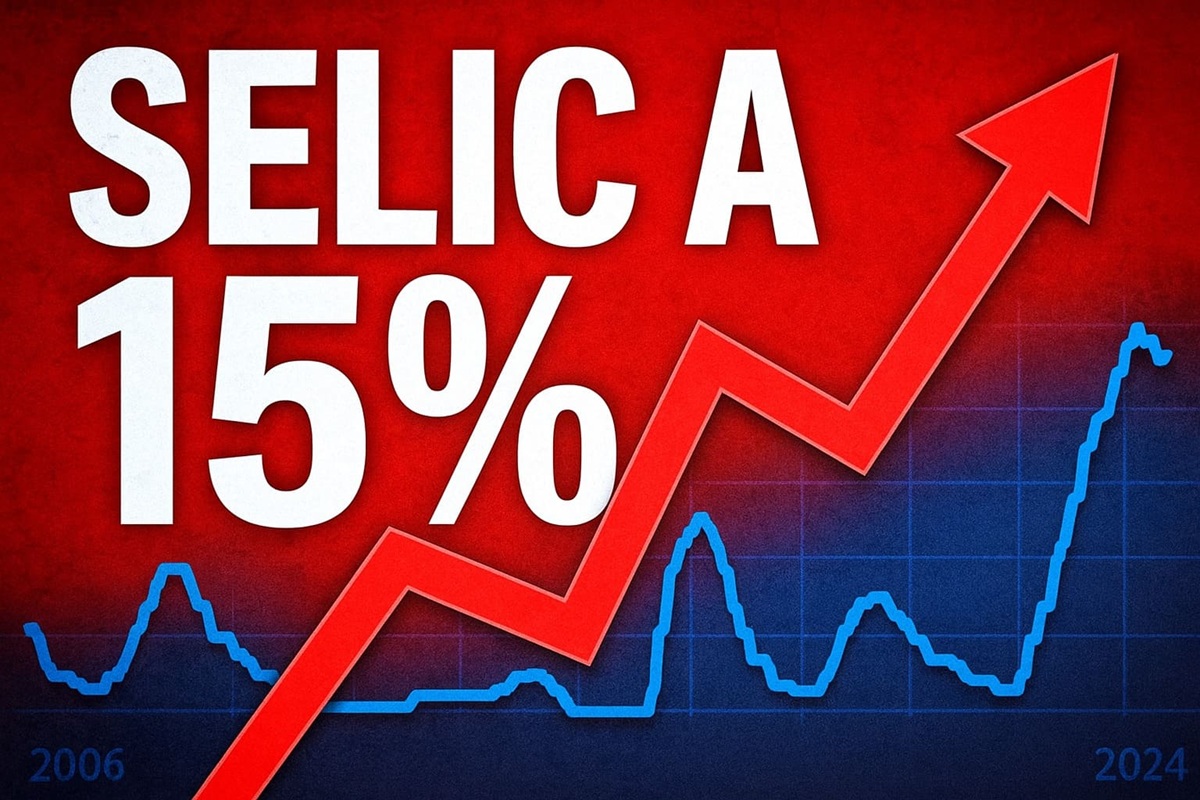


With the Selic at Its Highest Level in 20 Years, the Government Runs the Risk of Spending More on Interest Than It Collects in Surplus.
The Selic rate reached 15%, the highest level in two decades. The Brazilian economic scenario is in a state of alert.
Experts point out that this number directly impacts the citizen’s wallet, increases public debt, and creates an environment of instability.
Why Is the Selic So High
Since 2006, the Selic has shown ups and downs. It dropped to 2% during optimistic moments, such as at the beginning of the pandemic, but rose sharply again soon after.
-
Survivor of 1966 SS Daniel J. Morrell Shipwreck in Lake Huron Recounts 38-Hour Ordeal in Extreme Cold

-
The Greatest Hoax in World Cup History? The Film That Denied Brazil’s 1958 Victory and Exposed How Fake Evidence Can Seem Convincing on TV
-
Fake South Korean Online Stores Offer Shopping Thrill Without Spending Money or Receiving Products
-
Brazilian Joins Homeownership Consortium, Faces Decade of Dual Payments Totaling $141,000, Surpassing Traditional Mortgage


Reaching 15% now is a clear signal of imbalance. This increase is influenced by two main factors: the dollar at high levels and inflation above the target.
The strong dollar makes everything that depends on imported inputs more expensive.
Common products such as cereals, toothpaste, sneakers, cell phones, and even beverages have a strong dollarized component.
The second factor is the inflation target. In Brazil, this target varies between 1.5% and 4.5%. For 2025, the projection is 5.51%, which is outside the limit.
This triggers mechanisms from the Central Bank to try to curb the rise in prices, and the main tool is to raise the Selic. The higher the rate, the less people consume. This reduces demand and helps contain inflation.
The Big Problem That’s Not Often Discussed: The Deficit
But the high basic interest rate hides a bigger problem: the hole in public accounts.
Brazil collects a lot, but spends even more. The primary result — the difference between revenues and expenses — was positive in 2022, with a surplus of R$ 54 billion, driven by dividends from Petrobras and tax increases. However, this was an exception.
Since 2014, the country has faced recurring deficits. Even with a record collection of R$ 2.65 trillion in 2024, public spending has already surpassed R$ 1.6 trillion in just the first four months of the year.
If the pace continues, annual revenue could reach R$ 4.1 trillion. Nevertheless, the deficit remains.
The government has insisted on raising taxes. Since 2023, there have been 24 increases or new taxes, one every 37 days.
Despite this, it projects only a surplus of R$ 34 billion for 2026 — an amount considered small in light of the magnitude of the debt.
The Ticking Time Bomb of Public Debt
The real critical point is public debt. And it’s not just the total amount that worries, but also its structure.
Today, almost half of the debt is tied to floating interest rates, meaning it is directly impacted by the Selic. In 2025, 47.3% of the debt has this characteristic.
With the Selic at 15%, Brazil is expected to spend about R$ 1 trillion just on interest payments this year. It’s a staggering number, especially when compared to the projected surplus of R$ 34 billion.
The spending on interest represents about 30 times more than the positive balance of public accounts.
In the international scenario, no relevant country pays as much interest as a proportion of GDP as Brazil.
Even countries with larger debts, like Italy and Argentina, pay smaller percentages. This illustrates the fragility of the Brazilian fiscal system, which uses a significant portion of its revenue just to cover debt charges.
The Political Impact and Populist Measures
The popularity of the current government also influences economic decisions.
With the lowest approval ratings and the highest disapproval since the beginning of the term, the government has resorted to popular measures.
Tax exemptions for those earning up to R$ 5,000, an expansion of the zero-rate energy tariff, and promises of free gas are some of the announced actions.
However, all these initiatives come with a cost. And that cost falls on the population, especially through more taxes.
The proposal to tax investments such as LCI, LCA, real estate funds, and dividends shows that the government is trying to fill the gap with piecemeal measures that may generate insecurity among investors.
How to Protect Money Amid the Crisis
The crisis worries investors. But it also opens opportunities. The strategy, according to industry experts, is to diversify.
In uncertain times, it’s common to see investors fleeing to conservative assets. However, those with a cool head can take advantage of bargains.
During previous crises, allocation in stocks, real estate funds, and international assets showed good results.
The secret lies in maintaining discipline and seeking knowledge. Investors who increased exposure to risk assets during declines achieved good returns in the recovery.
Brazil may hit a historic record of spending on interest in 2025: R$ 1 trillion.
This, in itself, summarizes the gravity of the moment. It’s an amount that consumes a significant part of the wealth generated by the country.
And, even with revenue on the rise, the growth of debt and the Selic indicates that the snowball is getting bigger and bigger.
This is the most important warning: it is not just an economic issue, but the financial future of an entire nation. The risk is real. And it requires conscious decisions from both those who govern and those who invest.





Com a Selic a 15%, o Brasil deve gastar cerca de R$ 1 trilhão só com pagamento de juros neste ano.
É totalmente balela essa questão de atribuir culpa dos juros altos por causa da “inflação fora da meta”; existe uma margem de 0,75% p.p. para mais ou para menos estabelecido no próprio decreto do ajuste fiscal votado em 2023, porém o mercado de capitais e seus asseclas na “imprensa especializada” jogam sempre de forma à pressionar que se a inflação medida não estiver no centro exato da meta então nada presta e precisa aumentar ainda mais a taxa Selic; isso é ótimo pra eles porque ganham muito mais dinheiro especulando na bolsa de valores, mas é péssimo para o resto do país, principalmente para as indústrias tendo custos quase inviáveis pra investir, como tbm para a população com o custo de vida aumentando artificialmente e para o governo por ter que pagar mais juros da dívida pública.
São pouquíssimos que ganham muito em detrimento de todo um país que sai perdendo, porém esses pouquíssimos detém muito poder financeiro e de lobby político no congresso/senado.