Portuguese
  Spanish


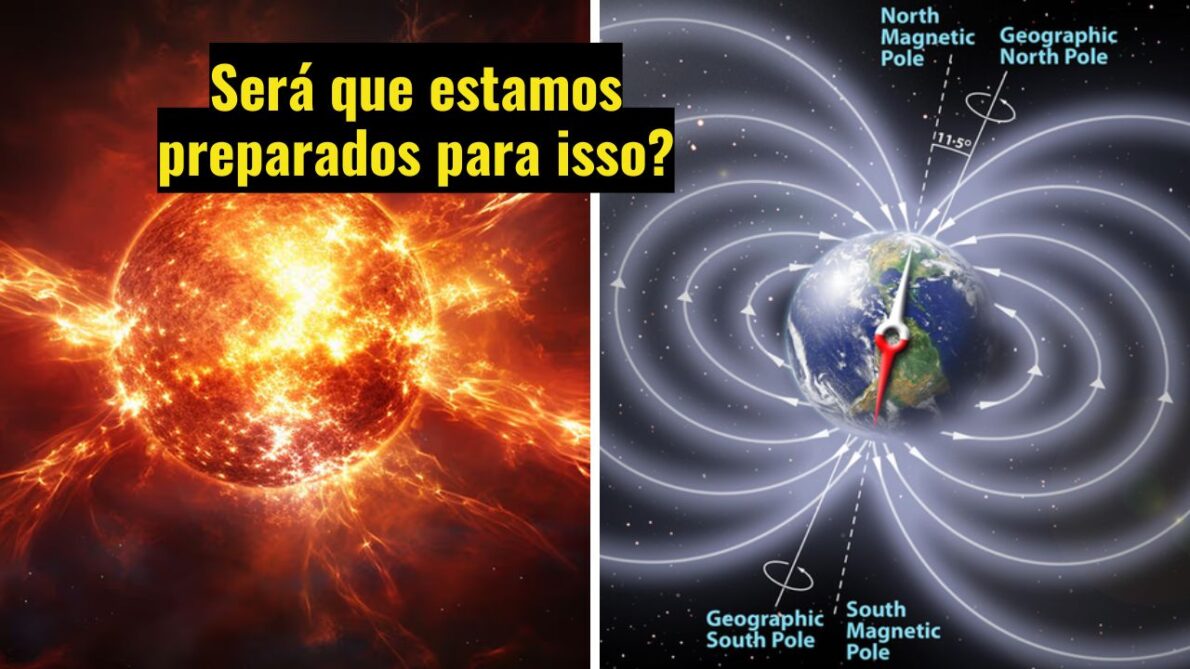


The Inversion of Earth’s Magnetic Poles Is Getting Closer, But Does This Really Pose a Risk to Life on the Planet?
Have you heard that the Earth’s magnetic poles could flip? It sounds like something out of a movie, right? But this possibility is real and has intrigued scientists around the world. The Earth’s magnetic field, which protects us from radiation and charged particles coming from space, is weakening, and this may indicate that a significant change is on the way. The question is: are we prepared for it?
First, let’s understand what we are talking about. The Earth’s magnetic field acts like a protective shield that defends us from solar winds, cosmic rays, and other space threats. It is generated by the movement of the Earth’s molten outer iron core, and its magnetic poles—the north and south—function like the ends of a giant magnet. However, these poles do not always stay in the same place. In fact, they tend to flip from time to time.
Earth’s Magnetic Poles Flipped 780,100 Years Ago
The last time this occurred was about 780,100 years ago. Interestingly, this inversion, on average, happens every 200,000 to 300,000 years. This means we are somewhat overdue for a new flip of Earth’s magnetic poles. And that’s not all. The Magnetic North Pole, for example, has been moving rapidly in recent years, shifting from the Canadian Arctic to Siberia at an impressive speed—from 15 km per year in the 1990s to an astonishing 55 km per year today!
-
Artist’s 15-Meter Lighthouse in the Mojave Desert, 160 km from the Sea, Intrigues Visitors with 19 km Range After Years of Bureaucracy

-
Bluetti AC70 Solar-Powered Station: Powers Fridge and Wi-Fi During Blackouts, Delivers 1,000W, 3,000 Charge Cycles, Priced at $900

-
Enormous Black Hole Phoenix A* Challenges Scientific Understanding with Mass of 100 Billion Suns, Surpassing Famous TON 618 in One of the Largest Known Galaxy Clusters
-
Say Goodbye to Storing Wine in a Regular Fridge: Midea’s Climate-Controlled Cellar Holds 34 Bottles, Maintains 5-18°C, and Uses Only Half a kWh Daily


A New Inversion Might Be On The Way
This strange movement of the magnetic poles, combined with the weakening of the Earth’s magnetic field, leads some scientists to believe that a new inversion might be on the way. If this really happens, what would change in our lives? Well, the answer is not that simple. The truth is, the planet has gone through this several times, and life has moved on. The bigger problem might be for our technology.
Solar Storms
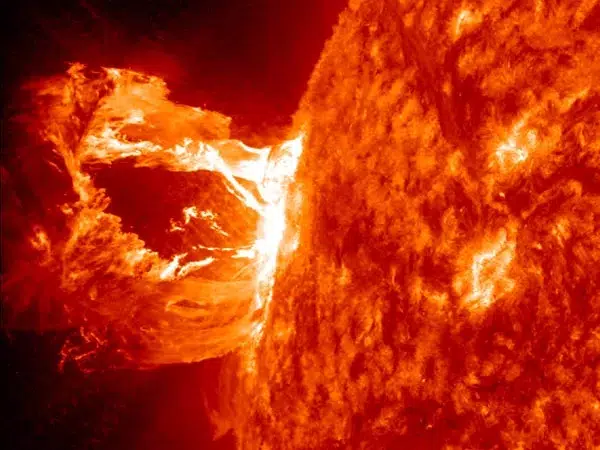
If an inversion of the Earth’s magnetic poles occurs, the magnetic field could become unstable for quite some time, leaving modern technology vulnerable. Solar storms, which are already a risk even with a strong magnetic field, could cause significant damage to satellites, power grids, and communication systems. Imagine a global blackout or GPS failure worldwide— it would be chaos!
Magnetic Pole Inversions Are Not Instantaneous
However, it’s important to remember that these magnetic pole inversions are not instantaneous. The process can take thousands of years, providing enough time for us to adapt. Additionally, scientists believe that, despite all the drama, an inversion would not be the end of the world. Earth has survived various changes, and there is no evidence that they cause natural disasters like earthquakes or volcanic eruptions.
Earth Has Its Mysteries
So, as scary as it may seem, there’s no need to panic. Earth has its mysteries, and the inversion of the magnetic poles is just one of them. What we can do is continue studying and preparing for any eventuality. After all, the universe is always in motion, and we are part of this cosmic dance.
No Need to Panic!
Earth may be approaching a new inversion of the magnetic poles, something that has happened several times in the planet’s history. Even if the change brings challenges, especially for our technology, life as we know it should go on. So, no need to panic! Let’s take the time to learn more about our planet and how it works, because, in the end, Earth still has many secrets to reveal.