






 Portuguese
  Spanish
  3 min of reading
  0 comments


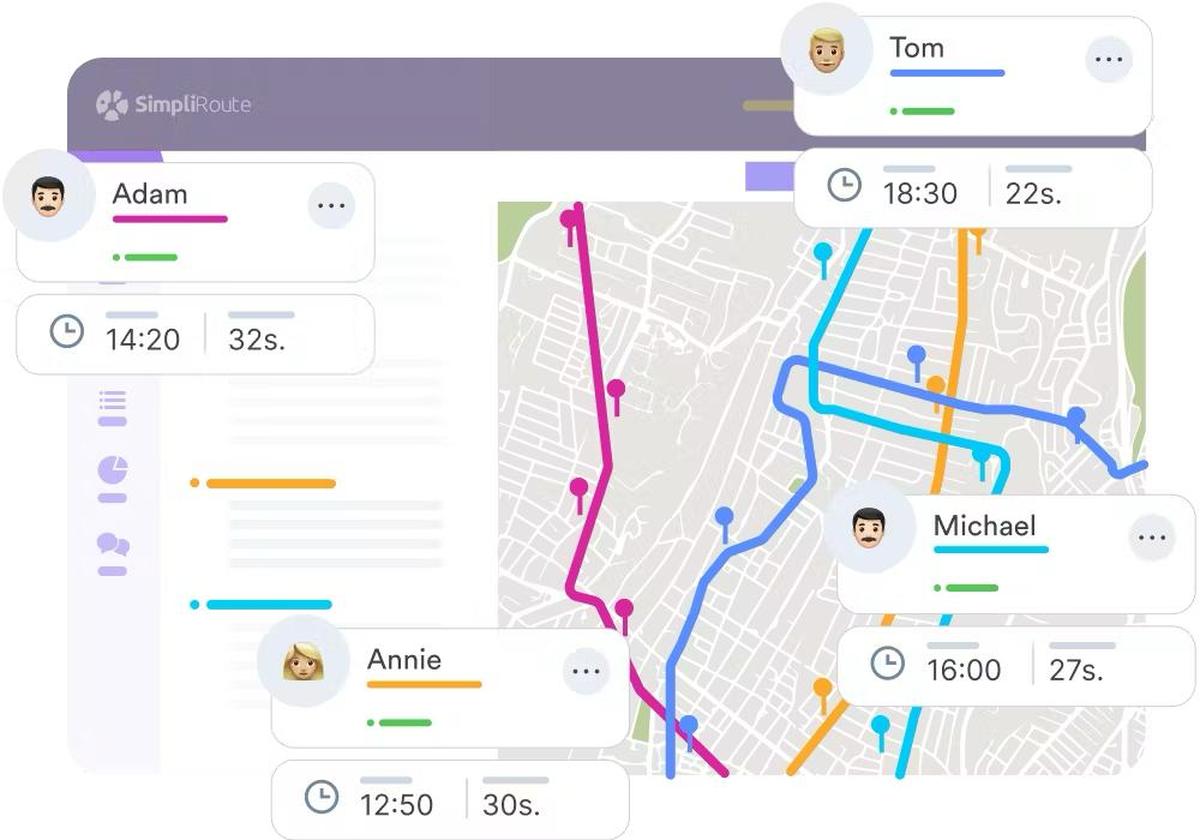
New Automation Tools Promise to Reduce Failures, Increase Efficiency, and Transform Security in Cargo Transport
SimpliRoute, a Latin American reference in intelligent routing technology, introduced in September 2025 a set of five artificial intelligence agents developed to operate autonomously in logistical processes. The solutions were created to continuously act on operational data, making real-time decisions and eliminating the need for human intervention.
AI Agents That Anticipate Failures and Reduce Costs
Based on historical, contextual, and behavioral data, the agents are capable of predicting risks, optimizing routes, and automatically correcting failures. In this way, they adjust routes, send alerts, and communicate directly with drivers, ensuring efficiency and reducing costs.
According to Sérgio Simões, Growth Director at SimpliRoute in Brazil, the company’s goal is to elevate logistics to a new technological level. He states that the agents act as strategic layers, anticipating problems and proactively working to reduce waste, improve customer experience, and generate direct impact on competitiveness.
-
The ‘tsunami’ of investments directed at Artificial Intelligence (AI) and semiconductor companies, which prioritize security and more predictable profits, has been a determining factor in the declining trajectory of Bitcoin.

-
Samsung eyes strategic chip factory in South Korea and could shake up the global AI landscape with advancements in HBM memories and advanced packaging.

-
Nvidia makes agreements in South Korea for AI factories and takes data centers, advanced chips, and global cloud to another level by 2027
-
ChatGPT reveals which human job it would choose if it could really work


- Real-Time Risk Identification
- Automatic Route Adjustments
- Direct Communication with Drivers
- Reduction of Operational Failures
Direct Impact on Consumer Experience
Failed deliveries represent one of the biggest challenges in logistics. On average, companies need to make up to three delivery attempts per order, leading to extra costs with labor, fuel, and reprocessing. When the first attempt fails, carriers can charge up to 50% of the original freight cost in redelivery fees.
According to research released in 2024 by the Descartes Systems group, 63% of consumers who experienced delivery issues reacted negatively towards the responsible company, affecting its reputation and customer loyalty.
To face this scenario, SimpliRoute created agents specialized in:
- Automating communication with recipients
- Rescheduling incomplete deliveries without human intervention
- Automatically validating addresses and reducing inconsistencies in registration
“Delivery failures affect customer trust and the company’s reputation. Our agents were designed to prevent and mitigate these risks,” emphasizes Sérgio Simões.
Security and Real-Time Monitoring
In addition to efficiency, security is also at the heart of innovation. According to NTC&Logística, Brazil reported losses exceeding R$ 1.2 billion in stolen cargo in 2024. The Federal Highway Police recorded over 34,000 accidents on federal highways between January and July 2025.
In this scenario, SimpliRoute developed a real-time risk monitoring agent, capable of identifying unexpected deviations, unusual stops, and atypical behaviors. The system autonomously sends alerts, communicates with the center, and adjusts logistical plans to protect goods and drivers.
Additionally, the agents use historical data and external variables, such as weather, traffic, and seasonality, to recalculate routes in real-time, enhancing the safety and reliability of deliveries.
Pioneering Autonomous Logistics in Latin America
With the arrival of the new agents, SimpliRoute reinforces its position as a pioneer in predictive and autonomous logistics in Latin America. The company already serves over 1,400 clients in 26 countries and continues to invest in solutions that transform data into concrete actions.
“The logistics of the future will be based on continuous intelligence, where systems not only recommend but also act. This is the paradigm we are delivering,” concludes Sérgio Simões.





Be the first to react!