Portuguese
  Spanish


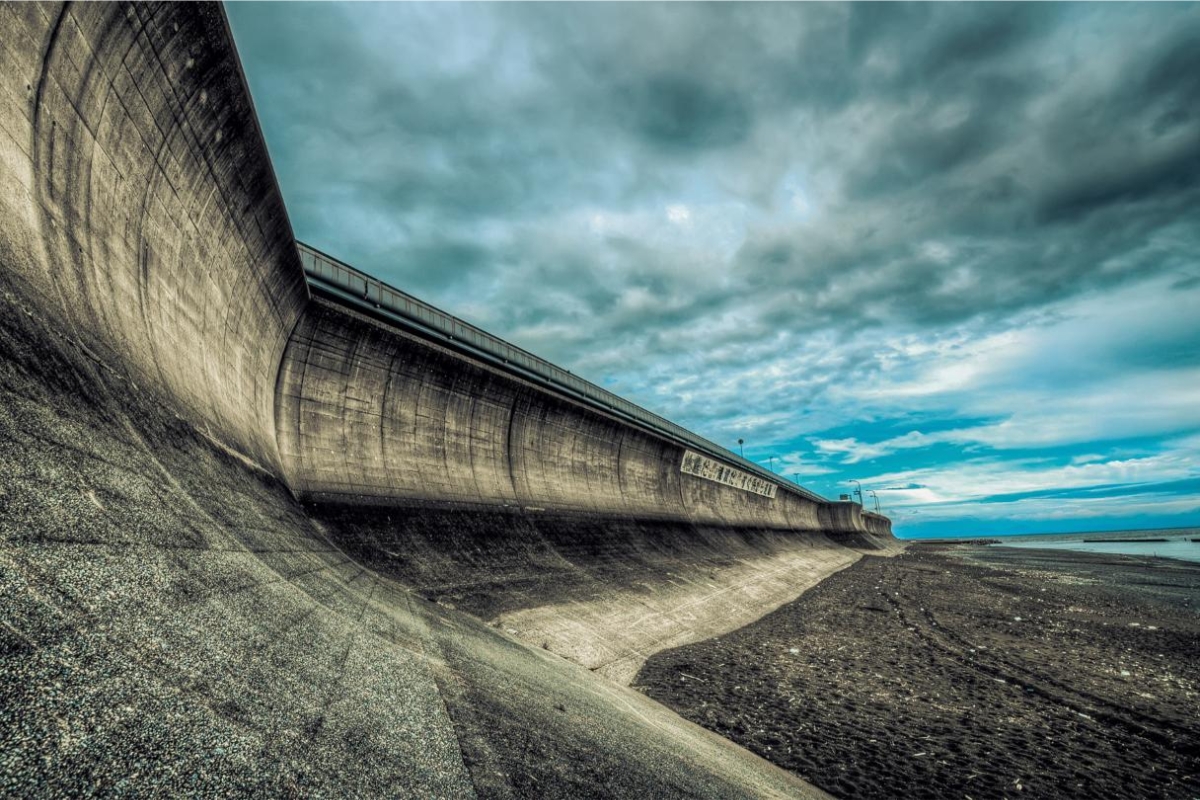


Mega Billion-Dollar Project Attempts to Reduce the Impact of Extreme Tsunamis and Gain Crucial Minutes to Save Lives in One of the Most Seismic Regions on the Planet
The Japan daily faces the risk of earthquakes and tsunamis, a result of the constant meeting of four major tectonic plates. There are over 500 earthquakes per year, many imperceptible, but enough to keep the country on permanent alert. This extreme scenario has shaped how cities, ports, and coastal communities must prepare.
This risk materialized brutally on March 11, 2011, when a magnitude 9.0 earthquake ruptured more than 480 km of a tectonic plate on the Pacific floor. The quake generated a tsunami with waves of up to 15 m high, surpassing any existing defenses and making it clear that the greatest danger did not come from the tremor itself, but from the force of the water.
What Happened in 2011 and Why the Tsunami Became the Greatest Enemy

The magnitude 9.0 earthquake caused a sudden displacement of the seabed, pushing millions of tons of water toward the coast. Within minutes, entire cities were hit by gigantic waves that advanced without sufficient obstacles to contain them.
-
Mother Who Called Herself a ‘Pinterest Failure’ Learned Wood Furniture Restoration from Videos, Now Earns Around $15,900 Monthly

-
Denmark Constructs World’s Largest Immersed Tunnel to Connect with Germany, Sinking 217-Meter Concrete Sections in the Baltic Sea
-
Low-Cost Concrete Panel House Goes Viral: Investor Reveals Prefabricated Kit Structure for Around $1,500, Assembled in 30 Days, with Plans for Rental and Resale Income

-
Polymeric Mortar Revolutionizes Brazilian Construction with Efficient, Clean Application and Uniform Finish



The ancient walls could withstand a maximum of 8 m, well below the actual height of the tsunami. The result was devastating, with over 20,000 lives lost, 120,000 homes destroyed, and the tragedy worsened by the Fukushima nuclear disaster, which further amplified the human and environmental impacts.
The Decision That Changed the Japanese Coast After the Tragedy
In light of this scenario, Japan adopted a response considered bold even by international standards. The country decided to build 400 km of coastal walls, some reaching up to 15 m high and foundations buried 25 m deep, creating the largest continuous coastal defense system in the country.
The investment exceeded 12 billion dollars, with a clear goal: to buy time during evacuation. Even a few extra minutes can mean thousands of lives saved when a tsunami approaches at high speed.
How Engineers Defined the Ideal Shape of the Wall
Before construction, it all started in the lab. Engineers used real data from the 2011 tsunami to recreate waves in artificial tanks with scaled models. Different heights, thicknesses, inclinations, and foundation depths were tested to understand how water behaves when hitting a solid barrier.
After hundreds of simulations, an ideal standard was reached. The wall was designed to be 14 to 15 m high, with foundations between 20 and 25 m, a wide trapezoidal base, and a reinforced steel core capable of withstanding the impact of an extreme tsunami.
Where the Wall Was Built and the Challenges of the Terrain
The structure primarily protects the Torroku region in northeastern Japan, one of the areas hardest hit in 2011. The line of defense crosses four provinces, including Fukushima, as well as other severely damaged coastal regions.
Before construction began, it was necessary to remove old houses, power poles, pipelines, and compromised infrastructure. A temporary construction town was also created, with roads, concrete plants, material yards, and drainage systems to allow work even during heavy rain.
How Weak Soil Was Reinforced to Support the Mega Structure
A large part of the coast has sandy and unstable soil, incapable of supporting a wall of this magnitude. To solve this problem, engineers drilled into the ground and installed deep concrete and steel piles, creating a strong foundation from the very beginning.
Layers of crushed stone and compacted sand were added to stabilize the surface. The goal was to ensure that the wall would not sink, slide, or crack over time, even under constant ocean pressure.
Stages of the Foundation and Visible Construction of the Wall

With the soil prepared, excavations for the foundations began, some over 20 m deep, equivalent to a multi-story building below ground level. Near the sea, temporary structures were used to prevent water from entering during the work.
On top of the base, dense reinforced steel cages were assembled, followed by the placement of large concrete blocks. This assembly forms an extremely heavy base that prevents the wall from being pushed when millions of tons of water hit the structure.
Systems That Reduce Wave Force Before Impact
On the ocean-facing side, energy dissipating blocks, such as tetrapods and dolos, were installed in several layers around the base. These elements break the force of the wave before it reaches the main wall.
Some sections received stepped surfaces, special inclinations, and overhangs, reducing the height of the waves that can rise. On the land side, compacted soil, crushed stone, and drainage channels were added to prevent rainwater accumulation.
How Tsunami Gates Work in Ports
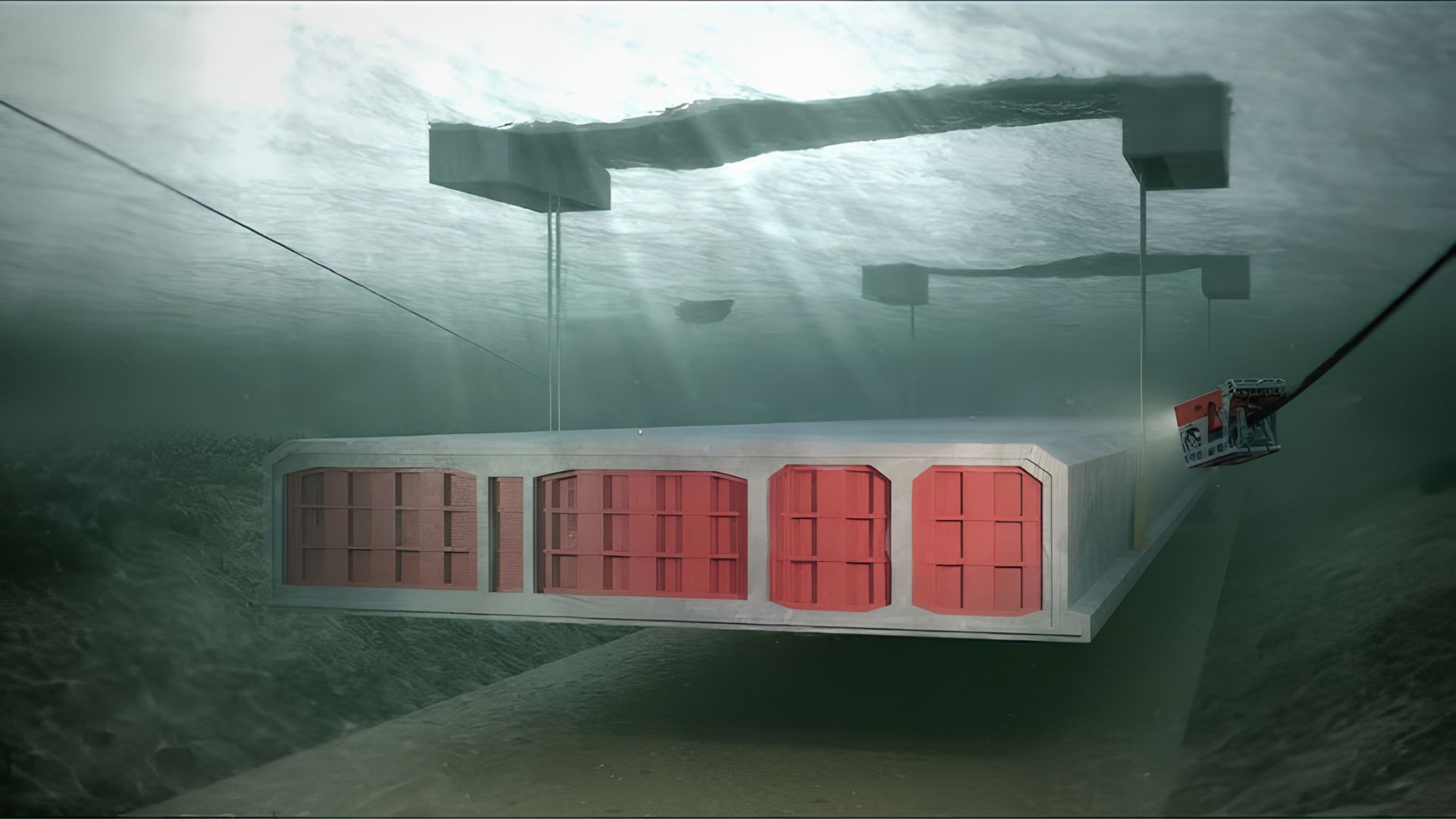
In busy port cities, such as Iwaki, special systems were created to allow ships to enter and exit without compromising safety. One of the models is the vertical tsunami gate, a suspended steel panel between concrete towers that descends when there is an alert.
Another model is the rising gate, which lies flat on the ocean floor and raises from the bottom up through hydraulic systems. This design is ideal for areas with limited space and allows continuous maritime traffic throughout the day.
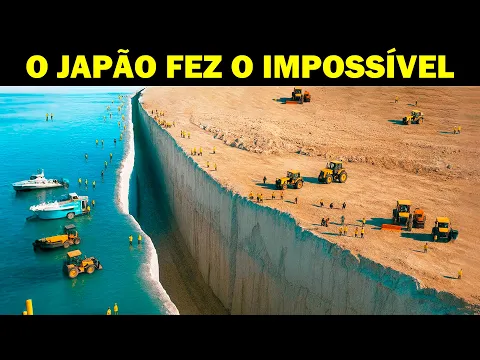

After years of intense work, the 400 km wall has become the largest continuous coastal defense system ever built in Japan. Over 30,000 professionals participated in the project, with thousands of heavy machines operating for 5 to 7 years across hundreds of simultaneous fronts.
Simulations indicate that the system can reduce tsunami impact force by 30 to 50%, in addition to providing extra minutes for evacuation, a decisive factor in saving tens of thousands of people. Although it cannot contain all types of tsunami, the wall has become Japan’s last line of defense, significantly improving the protection of roads, ports, and coastal residential areas.