





 Portuguese
  English
  Spanish
  3 min of reading


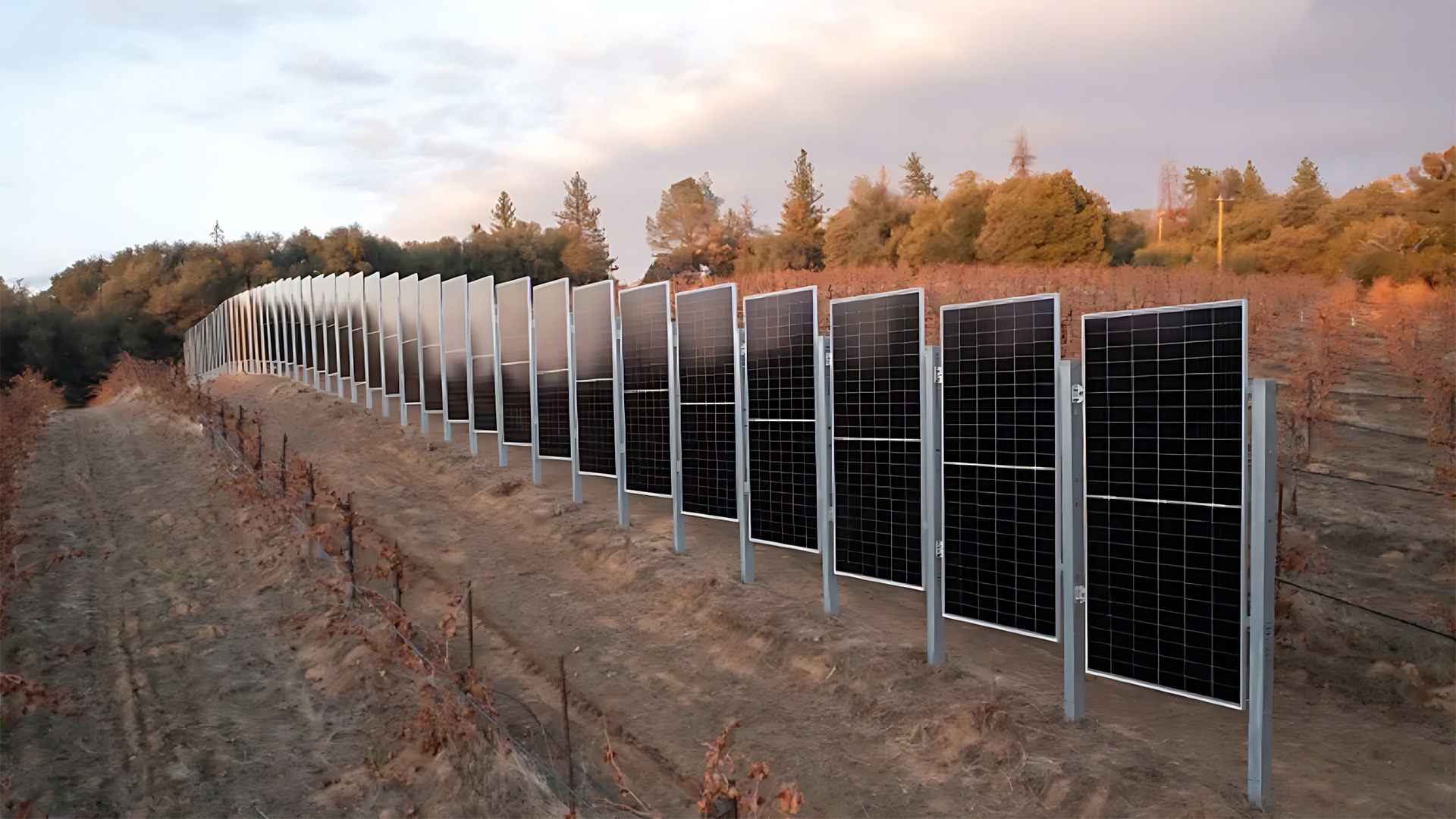
The Vertical Solar Energy Systems from Sunzaun Run Parallel to the Uneven Terrain of the Vineyard for More Than 60 Meters and Provide Energy for the Farm, Mainly in the Morning and in the Afternoon, in the Example Mounted by the Company
Sunstall, a company that installs solar energy systems, has announced that it has just created Sunzaun, a division that manufactures vertical solar energy systems for use in farms and other agricultural situations.
The company, based in Novato, California, says that its vertical solar systems can also be used as municipal infrastructure. For example, the company’s vertical solar systems can be used as residential or public fences, along roadsides and beside train tracks.
The vertical solar energy systems from Sunzaun have been developed for the expanding area of agrivoltaics, which describes the situation where solar energy and agricultural practices coexist on the same land. Fields of crops or flocks of sheep grazing can be seen around or even on top of the solar panels.
-
The era of silicon alone in solar energy comes to an end with the arrival of perovskite, a material that captures a broader light spectrum, is applied as a thin film, and, together with silicon, reaches a theoretical limit of 45% efficiency in tandem modules.

-
China implements basalt fibers tested on the Moon to contain the desert’s advance in 1 million hectares, and the program surprises scientists worldwide.

-
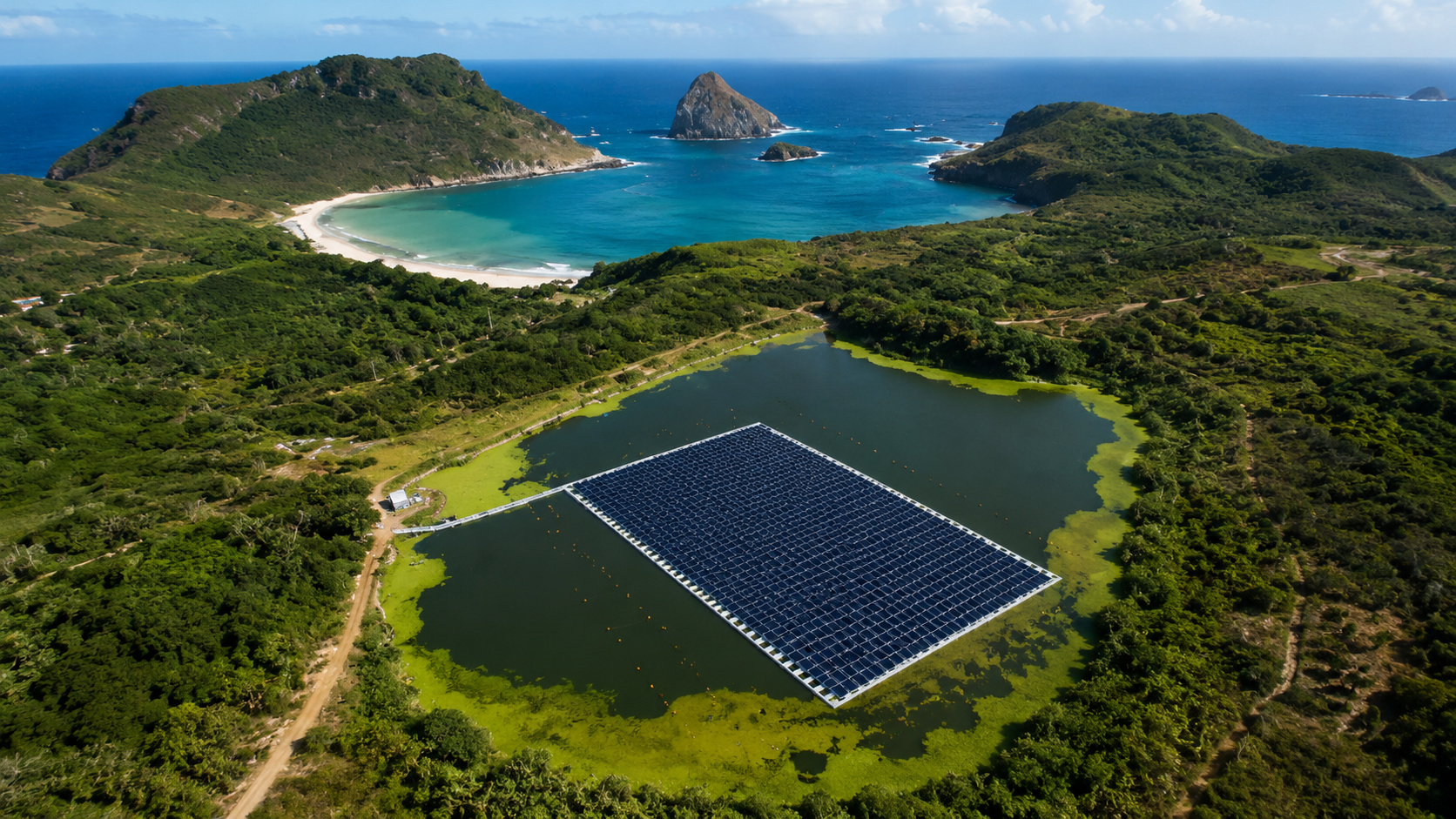
Fernando de Noronha begins unprecedented energy transformation with a R$ 350 million solar plant that promises to replace diesel generation and change the island’s sustainable future by 2027.
-
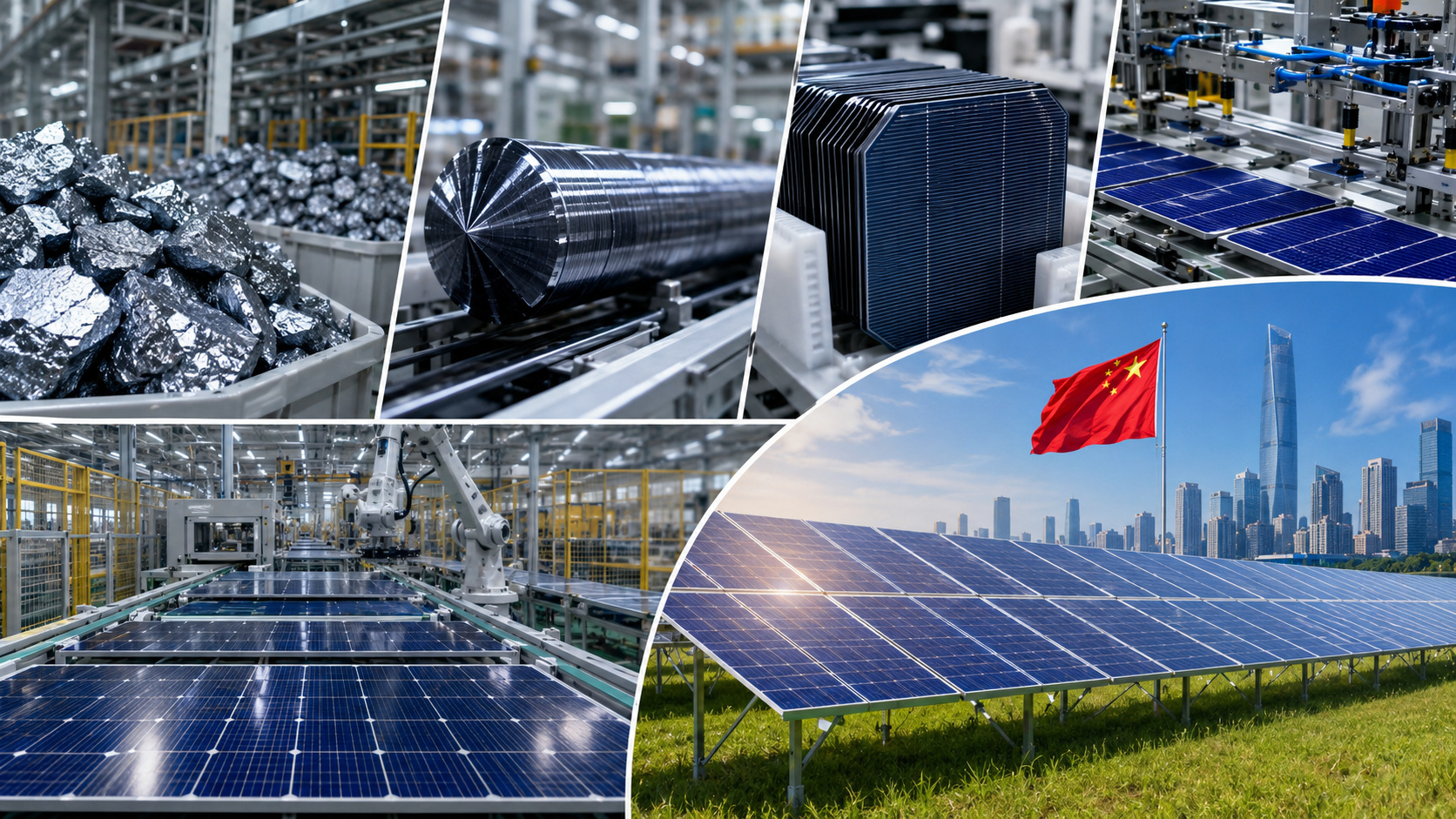
While Europe and the United States rush to save their own solar chains, China already dominates more than 80% of the global manufacturing of solar panels and has turned the sun into an industrial machine controlled by Beijing that is redefining the global energy transition.
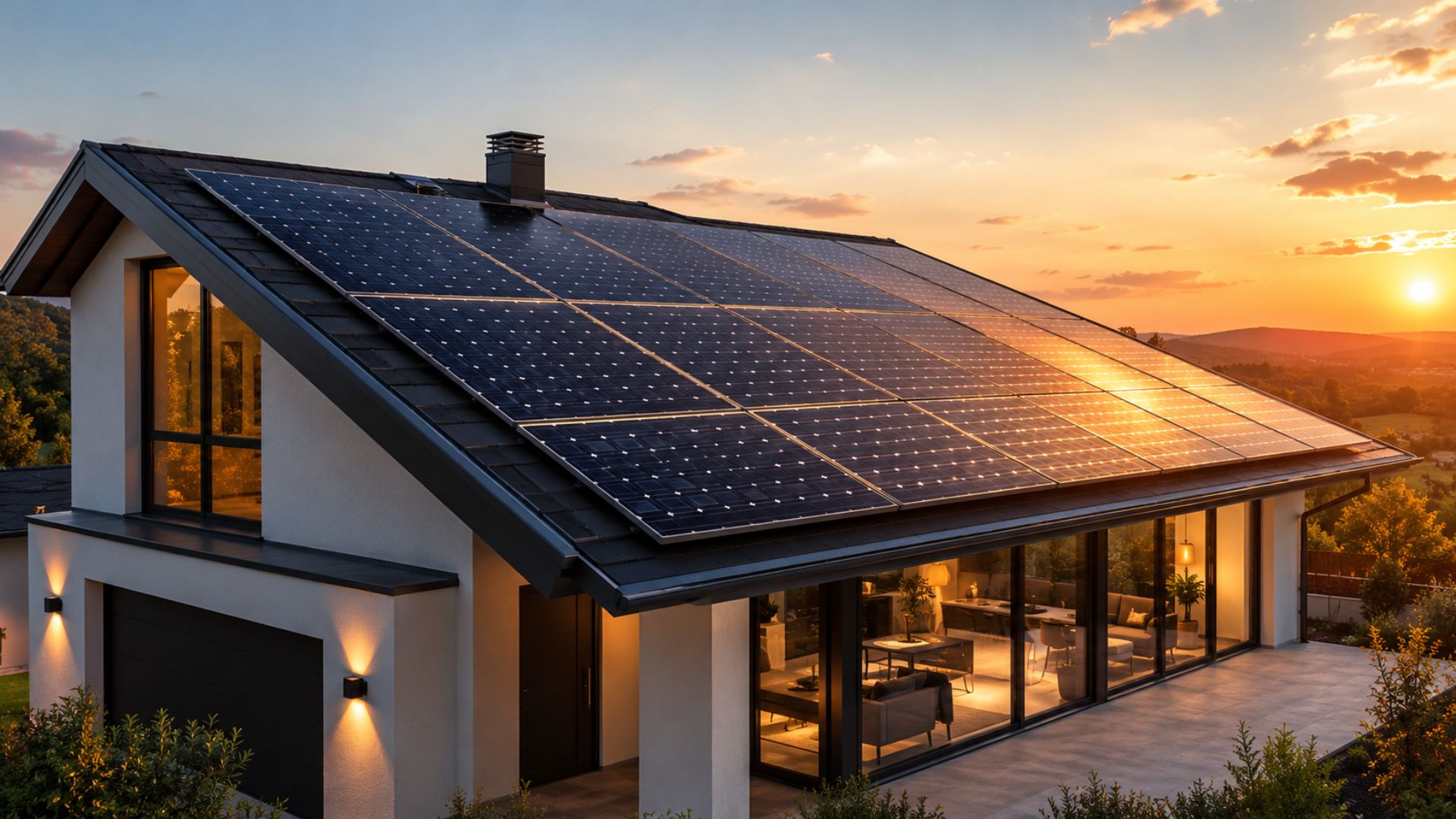

The solar panels offer a number of advantages, including effective land use, clean energy, and even the possibility of reducing water use as a result of the shade they generate.
Sunzaun claims that its system is capable of supporting vertical bifacial solar panels with and without frames, and that the wires are safely managed. Additionally, the company states that its system is designed to accommodate both vertical and horizontal bifacial solar panels.
The devices can withstand a wind load of up to 0.084 psi and can be used on slopes of up to 15 degrees. The company states that it is in the process of maintaining its UL 2703 certification, which is the safety standard for photovoltaic modules and panels.
Researchers from Leipzig University of Applied Sciences Say That Bifacial Solar Panel Systems with One Side Facing East and the Other Facing West Can Produce the Same Amount of Energy as Systems Tilted to the South
In this example, see the vineyard in Somerset, California, known as Somerset Gourmet Farm, and take a look at the method that Sunzaun uses. A microinverter and two batteries are connected to its 43 bifacial vertical modules, which together have a power output of 23 kW.
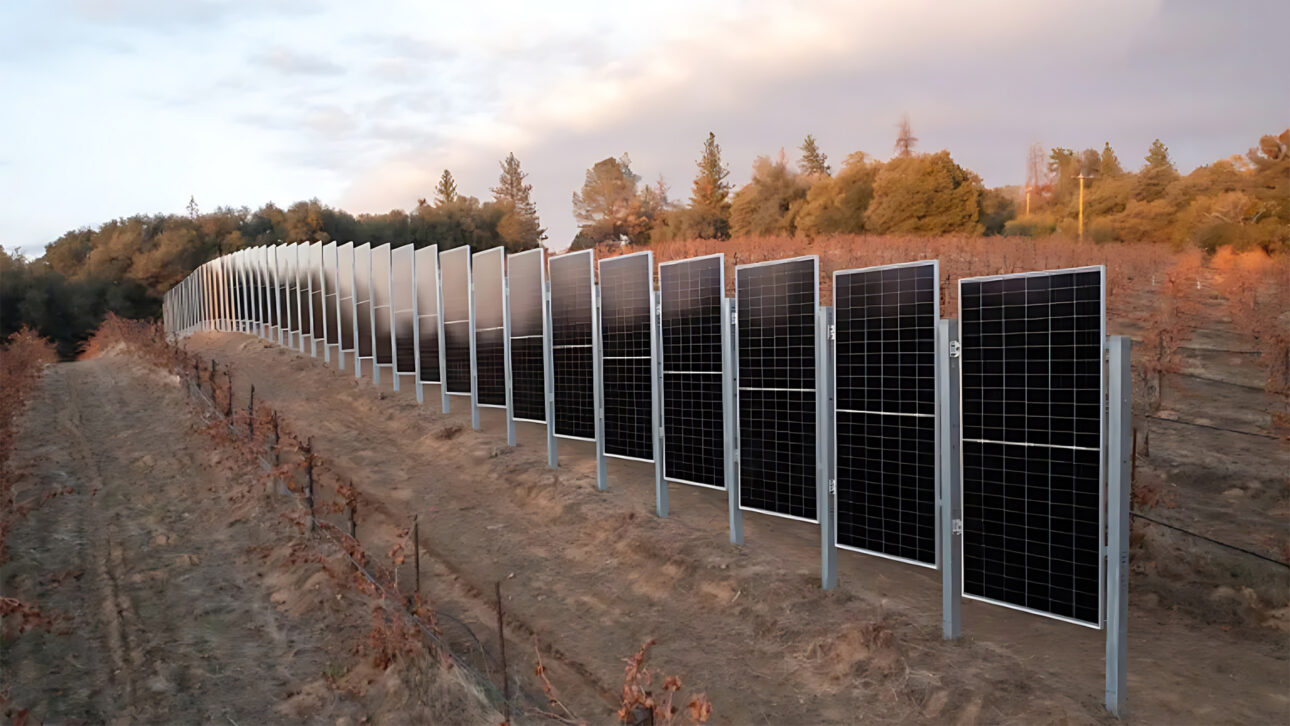
The vertical solar energy systems from Sunzaun run parallel to the uneven terrain of the vineyard for more than 60 meters and provide energy for the farm, mainly in the morning and in the afternoon. This vertical construction not only provides shade to the farmer, but also allows the farmer to position their harvesters close to the Sunzaun. In this approach, viticulture and renewable energy generation can enhance land use efficiency.
Researchers from the University of Applied Sciences in Leipzig state in a paper published in August 2022 in the journal Smart Energy that installing bifacial solar panels with one side facing east and the other facing west would generate clean energy at the same intensity as south-tilted systems.




Be the first to react!