






 Portuguese
  Spanish
  6 min of reading
  0 comments


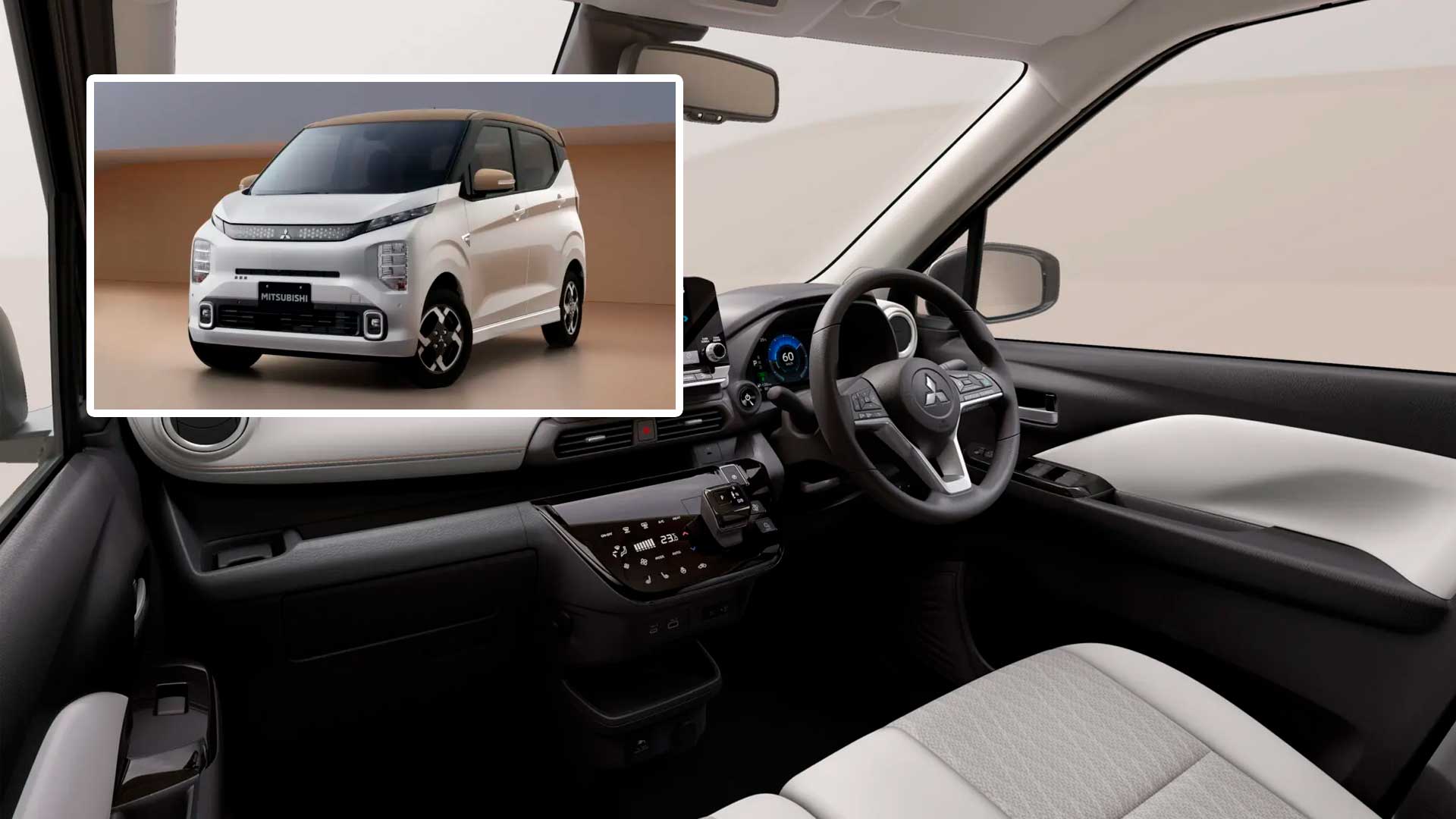
Small in size, electric in concept, and useful even off the streets, the Mitsubishi eK Cross EV shows how Japanese kei cars are entering a new phase
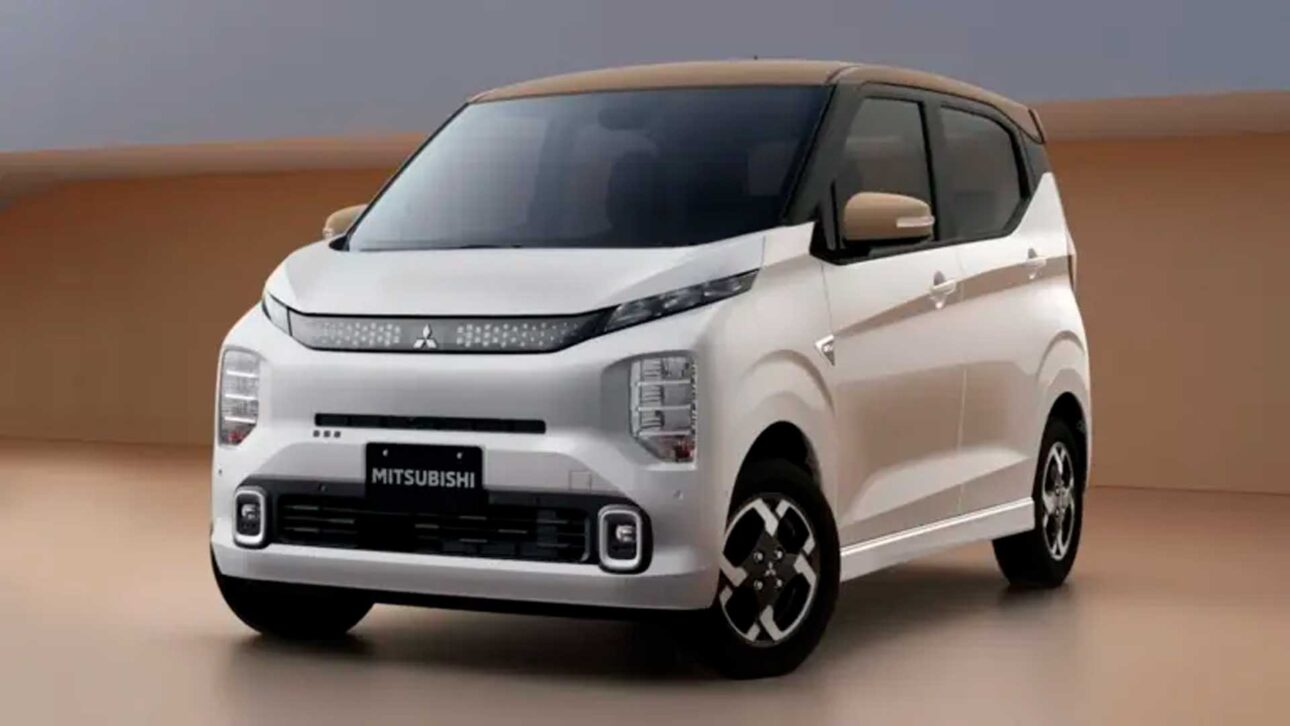
Mitsubishi has updated the eK Cross EV in Japan, a small urban electric car that stands out for three reasons: low price for electric standards, smaller dimensions than a subcompact sold in Brazil, and a new socket capable of powering external equipment.
According to Mitsubishi Motors, the renewed version starts at 2,446,400 yen, but can be priced at 1,872,400 yen for Japanese consumers who have access to the local subsidy for clean energy vehicles. In direct conversion, this amount is close to the range of R$ 60,000, although it does not include taxes, import costs, or any price for the Brazilian market.
The model will be launched in Japan on June 25, 2026, and is part of the kei cars category, ultra-compact vehicles created for urban use, low ownership cost, and better space utilization in Japanese cities. The update brought visual changes, internal improvements and reinforced a function that increases the car’s utility beyond daily transportation.
-
Move Brasil promises car financing without a down payment for app drivers and taxi drivers.

-
BYD offers 950 km of range in a seven-seater electric SUV, charges the price of a mid-sized SUV in Brazil, and increases pressure on premium rivals in China.

-
Nissan X-Trail e-Power debuts as a hybrid SUV that runs like an electric vehicle, uses a 1.5 turbo engine only as a generator, promises up to 1,039 km per tank, and arrives in the Philippines with 204 hp, a 482-liter trunk, and a competitive price.

-
Cheaper than Civic and Corolla, this Korean sedan offers a giant 520-liter trunk, 2.0 flex engine, and 6-speed automatic transmission; the Kia Cerato EX 2.0 2022 stands out as an ideal option for those who prioritize interior space and comfort.


The main novelty is the adoption of an AC100V socket, Japanese standard, with a maximum power of 1,500 W. In practice, this allows the eK Cross EV to function as a kind of power bank on wheels, powering appliances, light tools, camping equipment, or devices in emergency situations.
The price draws attention, but there is an important detail behind the R$ 60,000
The most attention-grabbing value of the Mitsubishi eK Cross EV is the effective price of 1,872,400 yen in the G Business Package version, obtained after applying the Japanese subsidy of 574,000 yen. Without this incentive, the list price of the same version is 2,446,400 yen.
According to Mitsubishi, the renewed line ranges from 2,446,400 yen to 3,214,200 yen, always with a 20 kWh battery and 2WD traction. The intermediate G configuration costs 2,662,000 yen, while the more equipped P version reaches 3,214,200 yen.
Therefore, the comparison with popular cars sold in Brazil needs to be made carefully. The amount close to R$ 60,000 is a direct conversion of the subsidized price in Japan, not a national price forecast. So far, there is no announcement of the sale of the Mitsubishi eK Cross EV in Brazil.
Even so, the case shows a relevant contrast. While the Brazilian market still faces high prices for entry-level electric vehicles, Japan advances with a smaller, urban, and more rational solution, designed for short commutes and daily use.
An electric car smaller than a Kwid, but designed to make the most of every centimeter
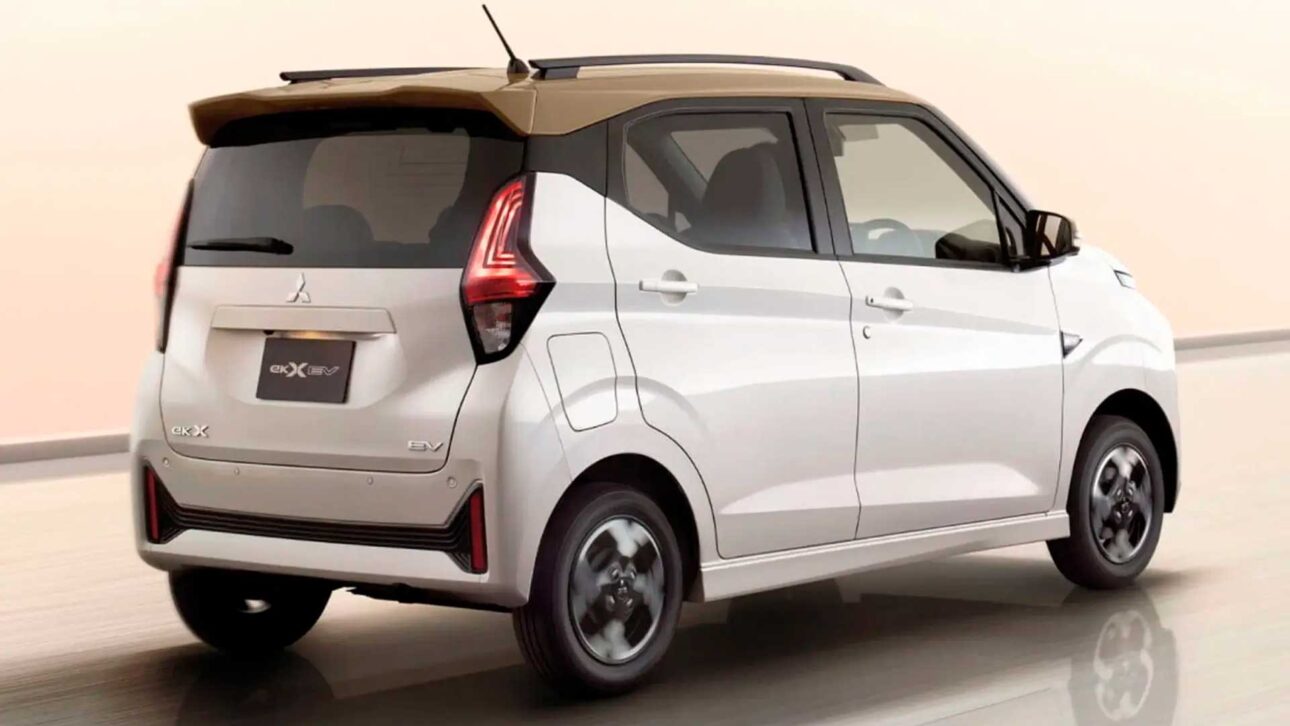
The Mitsubishi eK Cross EV measures 3.39 m in length, 1.47 m in width, 1.60 m in height, and 2.49 m in wheelbase. It is a very compact car, made for narrow streets, small parking spaces, and urban commutes.
For comparison, it is smaller than a Renault Kwid in length and width, but taller. This vertical body helps compensate for the reduced size and improves internal space utilization, something typical of Japanese kei cars.
The category follows strict rules in Japan, with size limits and an urban use proposal. In the case of the eK Cross EV, Mitsubishi bets on a high cabin, good passenger space, and a compact electric package to keep the car within this formula.
The result is a vehicle that does not try to compete with larger SUVs or long-range electric vehicles. It targets another audience: those who need a small, quiet, economical car for daily use and easy to park.
20 kWh battery and 180 km range aimed at urban routine
The eK Cross EV’s battery has a capacity of 20 kWh and offers a range of up to 180 km in the WLTC cycle, a standard used in Japan. Mitsubishi itself states that this range is sufficient for daily use, such as commuting to work, shopping, and driving within the city.
The brand also cites its own survey according to which about 80% of kei car and compact users travel up to 50 km per day. In this scenario, the small electric vehicle could run for more than a day without needing a recharge, depending on usage, traffic, weather, and driving style.
The set delivers 64 hp and torque of 195 Nm, a number that helps with urban starts. Although the power seems modest, the instant torque of electric vehicles tends to favor quick starts at low speeds, precisely where an urban car works the most.
The recharge was also designed for routine use. Since the original launch, Mitsubishi states that the model can be charged using a standard 200 V outlet in Japan or with fast charging, capable of bringing the battery up to 80% in about 40 minutes, depending on usage conditions.
The powerbank function transforms the small Mitsubishi into a power source
The most curious novelty of the update is the socket on the lower panel, capable of providing up to 1,500 W. This feature allows the stored energy in the battery to power external equipment, something useful in camping, outdoor activities, small jobs, and power outages.
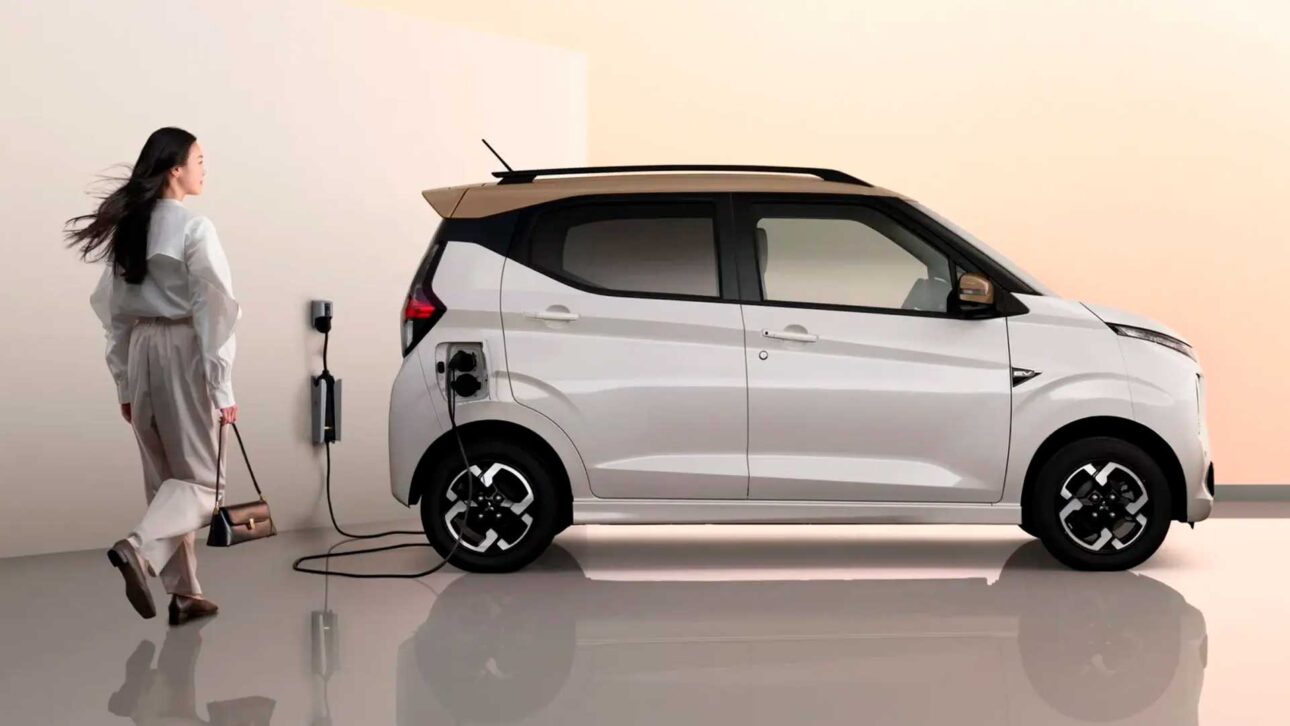
In practice, the eK Cross EV now has a function similar to that of a portable generator, but without a running combustion engine. Mitsubishi states that the socket is an optional factory item and was designed to enhance the car’s utility in everyday situations and emergencies.
The model also fits into the V2L logic, an acronym for vehicle to load, when the vehicle’s energy powers external devices. In V2H systems, with specific equipment, an electric car can also transfer energy to a residence, temporarily assisting in case of a blackout.
This type of function has gained importance in countries subject to natural disasters or power outages. In Japan, where earthquakes and typhoons are part of reality, a car capable of storing energy and powering equipment can be more than just a means of transport.
Renewed look tries to make the kei car more modern without abandoning simplicity
In terms of appearance, Mitsubishi redesigned the front of the eK Cross EV. The car received a cleaner front, more continuous lines, and LED lighting on the grille, reinforcing the electric vehicle look.
The brand’s traditionally more aggressive visual language was softened. As a result, the model no longer looks just like a miniature SUV and gains a more friendly identity, aimed at urban and family use.
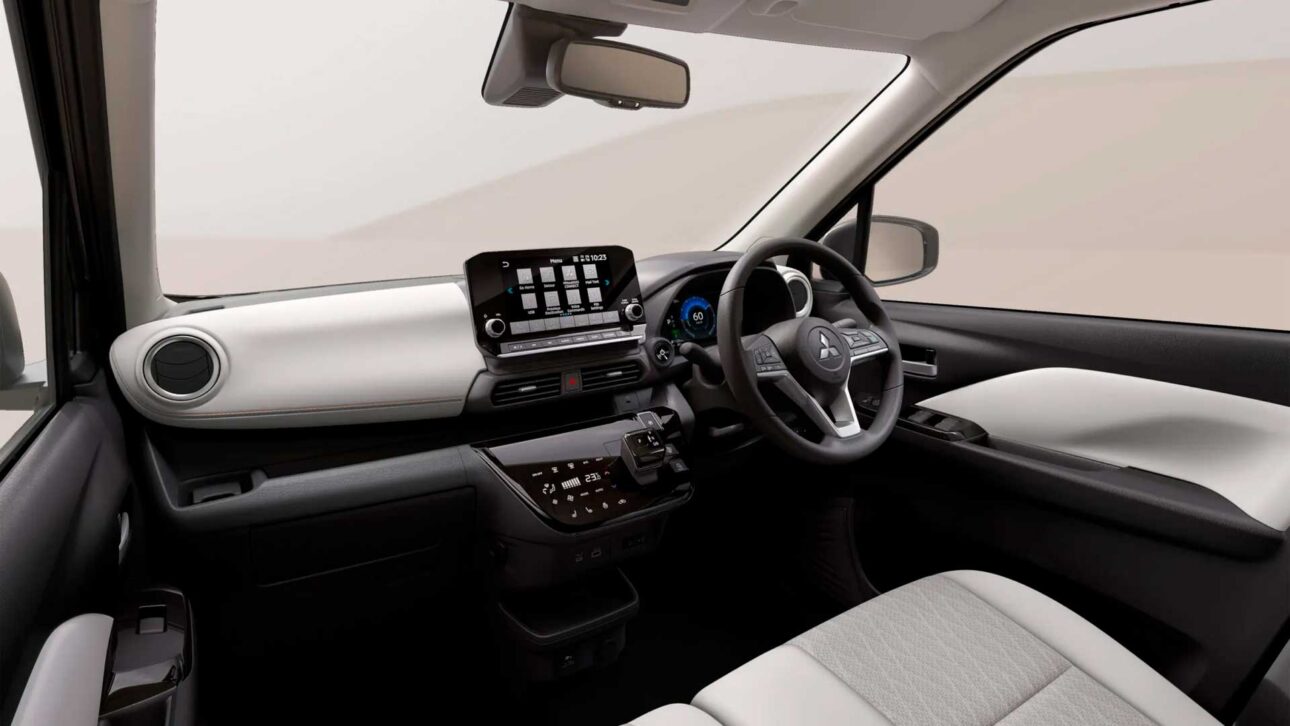
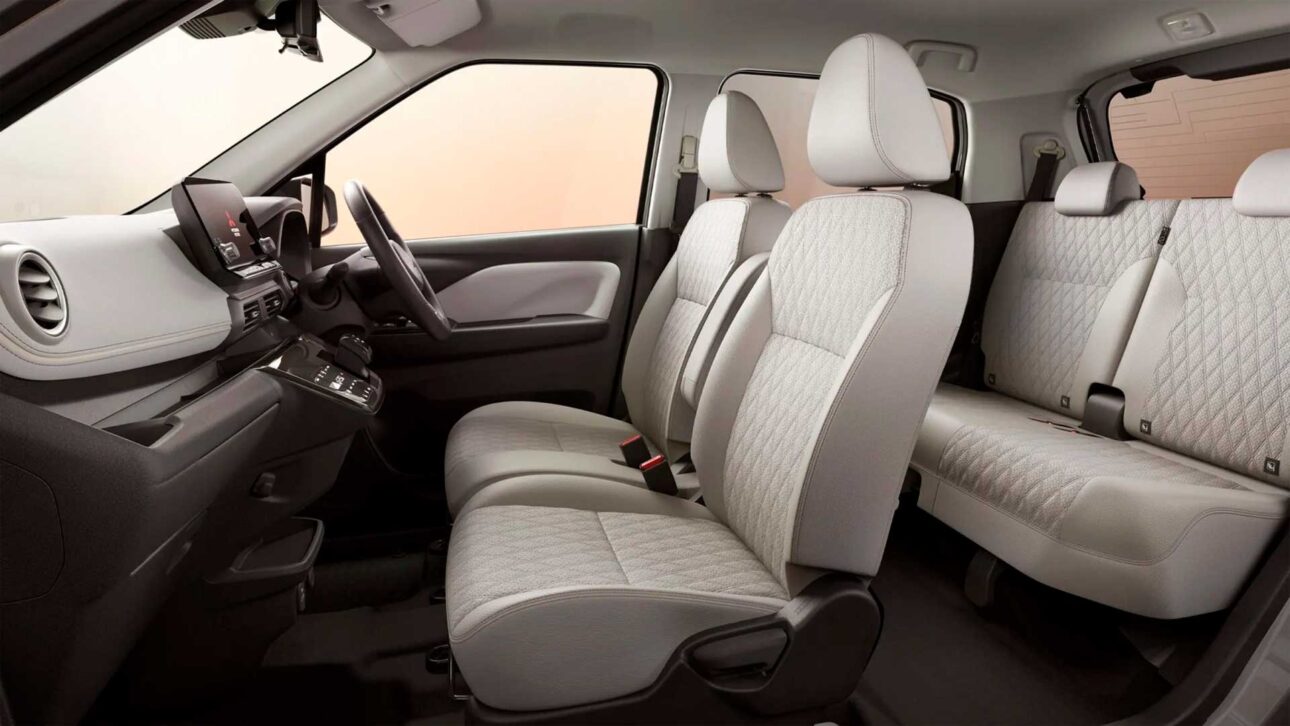
Inside, the update brought improvements in finish and convenience. The P version received more USB inputs, with two Type-C ports and one Type-A, while the G and G Business Package versions now have at least one Type-C port as standard.
Mitsubishi also expanded comfort equipment, such as steering wheel and front seat heating in the G version. Another enhancement was the rear seat alert, which warns the driver about the possibility of a person or object being forgotten in the back.
Why this electric kei car matters even far from Brazil
The Mitsubishi eK Cross EV would hardly be sold in Brazil at the same price seen in Japan. Besides the difference in taxes, logistics, exchange rates, and local regulations, the subsidized price depends on a specific Japanese public policy.
Even so, the car shows an interesting direction for the electric market. Instead of always seeking large batteries, sporty performance, and big bodies, Mitsubishi bets on a small, simple, urban, and multifunctional electric vehicle.
This proposal may make sense in large cities, where extreme range is not always the main issue. For many people, price, parking space, low consumption, and practicality weigh more than high power or SUV size.
The eK Cross EV shows that the entry-level electric car can be more useful when it stops being just a vehicle and also functions as a mobile power source. In Japan, this idea is already taking shape in a model smaller than many popular Brazilian cars.
Would you have a small electric car, with 180 km of range and powerbank function, if it were sold in Brazil at a competitive price? Leave your opinion in the comments and tell us if such a kei car would make sense in your routine.






Be the first to react!