Portuguese
  Spanish


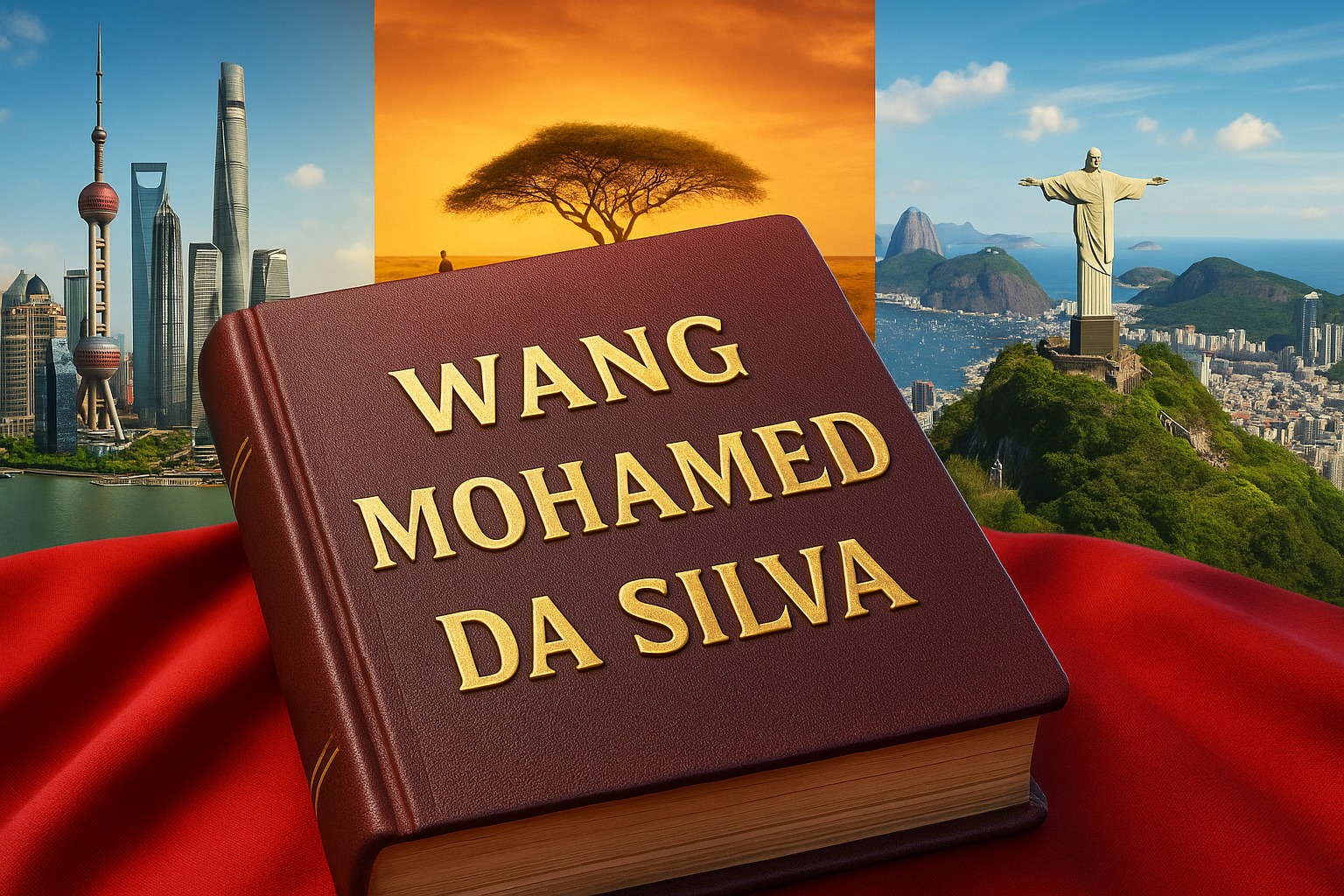


From China to Brazil, the list reveals how faith, colonization, and culture shaped the most repeated surnames in each continent.
The distribution of the most common surnames on the planet reveals paths of migration, colonial domains, and cultural traditions that span centuries.
The genealogy of each name carries fragments of identity and shows how religion, profession, and territory shaped families across all continents.
According to the websites Forebears and HowStuffWorks, the origins of the most repeated names in the world help to understand social and linguistic transformations of different peoples.
-
15-Year-Old Entrepreneur Malu Lira Publishes 20 Children’s Books on Financial Education, Earns $500,000, and Expands Her Project to the Amazon Rainforest

-
Entrepreneur Turns Rio Cemetery Canteen into a Successful Snack Chain Generating $4.9 Million Annually and Expanding to Metro Stations

-
Rare fox feared “extinct” found alive on Caribbean island after over two decades without official sightings

-
21-Year-Old Brazilian Student Turns Homemade Popsicle Hobby into $100,000-a-Month Business




Africa: The Influence of Islam and Colonization
According to the website Forebears, the surname Mohamed is the most common in Africa, belonging to around 7.5 million people.
Next are variations such as Mohammed (4.9 million), Muhammed (1.8 million), and Mahamat (829 thousand). Combined, nearly 15 million Africans share names derived from Muhammad.
According to HowStuffWorks, this prevalence is directly linked to the expansion of Islam and the processes of Muslim colonization in the north and parts of the west of the continent.
These surnames represent not only religious belief but also the heritage of centuries of cultural exchanges and internal migrations.
Asia: The Strength of China and Ancient Traditions
Asia has the largest number of people with the same surname.
According to Forebears, Wang is the most common surname in the world, with over 106 million individuals. Following closely is Li, with around 105 million.
These numbers reflect the Chinese population density and the ancestral value of genealogy. Also according to the site, Kim, Lee, and Park dominate in Korea; Devi in India; and Nguyen in Vietnam. Each of these names has its own symbolic roots, connected to local history and traditions.
HowStuffWorks explains that Wang, which means “king” or “prince,” became widely used during the Xin Dynasty, when royal families adopted the name as a form of protection. From then on, the surname crossed generations and became a symbol of status and family continuity.
Europe: Professions, Regions, and Lineages
In Europe, the surname García leads the ranking, with 1.7 million bearers, also being the most popular in Spain. HowStuffWorks indicates that the term comes from the Basque word for “bear”, a symbol of strength and protection.
Other traditional surnames reflect professions. Müller, common in German-speaking countries, means “miller” and has equivalents such as Molina (in Spain) and Melnik (in Ukraine). These variations arose in agrarian societies, where grain milling was essential.
According to the site, names like Murphy (Ireland), Smith (Scotland and England), and Jones (Wales) also appear prominently. They represent occupations — blacksmith, sea warrior — or family ties passed down from generation to generation.
North America: Colonial Heritage and Diversity
The composition of surnames in North America is marked by colonization and immigration. According to Forebears, the most frequent names have Hispanic origins, reflecting the presence of countries such as Mexico, Central America, and the Caribbean.
When the analysis is limited to Canada and the United States, Smith tops the list, followed by Johnson, williams, Brown, and Jones. These names, according to HowStuffWorks, trace back to European colonizers — primarily English, Scottish, and Welsh — who established the first communities in the region.
In England, Smith is also the most popular surname, a result of the work of blacksmiths, a fundamental profession during urban and industrial growth.
Oceania: Colonization and Adoption of British Names
Before the arrival of Europeans, many Indigenous peoples of Oceania did not have formal surnames. According to Forebears, British colonization changed this scenario, and many began to adopt imposed names or those derived from the colonizers.
HowStuffWorks explains that Anglo-Saxon surnames became predominant in Australia and New Zealand — countries that account for almost three-quarters of the region’s population. Thus, names like Smith, Brown, Johnson, and williams also dominate the civil registry in Oceania.
South America: Between Spain and Portugal
In South America, the origin of surnames varies according to colonial history. According to Forebears, although a large part of the population is of Spanish descent, Brazil — which houses half of South Americans — was colonized by Portugal, which explains the prevalence of Lusitanian names.
HowStuffWorks highlights Ferreira (related to ironwork) and Da Silva (associated with wooded areas) as some of the most frequent. Other regional surnames share similar meanings, varying only in language and spelling.
Migrations, Impositions, and Adaptations
The use and persistence of surnames are linked to cultural, religious, and historical factors. Many societies created names from physical characteristics, places of origin, occupations or family ties.
In certain periods, however, surnames were imposed. During slavery in the United States, for example, many Black people adopted the surnames of their owners, such as Williams, Davis, and Jackson.
HowStuffWorks notes that migration further altered this landscape. Immigrants from countries like Poland and Russia modified or shortened their names to fit the spelling and pronunciation of their new homelands.
A Global Portrait of Identity
Among all, Wang stands out as the most widespread surname on the planet, associated with over 106 million people. Its origin in Chinese nobility and its maintenance over the centuries reflect how names can cross empires, cultures, and borders.
From Mohamed to Da Silva, each surname carries echoes of faith, territory, and work. The genealogies, while personal, form a collective history of humanity — a mosaic of heritages and trajectories that continue to evolve over time.