Portuguese
  Spanish


The Trade War Between Washington and Beijing Dipped American Agriculture Into Turbulence, Leaving Fields Full, Saturated Warehouses, and Farmers Without Buyers for Their Largest Harvest.
Soybean farmers in the United States are facing a severe financial blow due to tariffs, losing billions of dollars in sales to China halfway through the current marketing season.
Stalled trade negotiations have disrupted American exports, while rival South American suppliers, mainly from Brazil, are taking up the space and meeting the demand of the Asian giant.
According to traders and analysts, this absence of China is transforming the global soybean market.
-
High School-Educated Farmer in India Converts 40 Hectares of Arid Land into Native Forest with 900 Species and Up to 40,000 Trees

-
After Two Years of Water Scarcity, Brazilian Farmer Finds Well on Her Land, Boosting Mango and Passion Fruit Production in Central Brazil

-
Cashew Becomes Billion-Dollar ‘Superfood’ in Ivory Coast: 1.6 Million Hectares of Monoculture Encroach on Forests as Families Trade Food for Nuts
-
In Rural Brazil, José Sirval Operates a Water-Powered Mill Grinding 125 Kilograms of Corn Daily Using His Great-Grandfather’s Century-Old Monjolo



Chinese Purchases Migrated to Brazil
Importers from China have secured about 7.4 million metric tons of soybeans, mostly South American, for shipment in October.
This volume already covers 95% of the country’s projected demand for the month and an additional 1 million tons for November, representing about 15% of the expected imports.
In the same period last year, Chinese buyers had reserved between 12 and 13 million tons of soybeans from the U.S. for shipment between September and November, according to a trader based in Singapore.
U.S. Harvest Goes Without Buyers
Traditionally, the U.S. ships most of its soybeans to China between September and January, before the arrival of the Brazilian harvest in the market.
This year, however, Chinese buyers have yet to reserve any shipment from the new U.S. crop year, according to traders monitoring international shipments.
In 2024, China purchased US$ 12.8 billion in soybeans from the U.S., which sold 22.9 million tons to the country by August 2025.
Price Outlook Falls
“If you look at how things are, we think it will be South American grains until the end of the year,” said the Singapore trader to Reuters.
The prolonged absence of Chinese purchases is likely to further pressure soybean futures in Chicago, already near five-year lows.
Although U.S. soybeans are 80 to 90 cents per bushel cheaper than Brazilian ones, the 23% tariff imposed by China adds US$ 2 per bushel to the final cost.
Bushel is a unit of capacity for bulk agricultural products, widely used in the United States. Soybeans: 1 bushel ≈ 27.2 kg.
Expectations for Export Forecast Cuts
American farmers estimate that if China remains out of the U.S. market until mid-November, losses could reach 14 to 16 million tons.
According to him, the USDA is expected to lower its soybean export forecast for 2025/26, currently at 46.4 million tons, down from 51.02 million the previous year.
New revisions may arise if the trade war is not resolved.
China Has Not Closed the Doors
Despite the absence, China has not completely halted purchases of U.S. soybeans, leaving room for trade between November and January.
Currently, U.S. soybeans are attractively priced for many non-Chinese buyers, especially with limited competition.
Meanwhile, strong Chinese demand has driven prices for Brazilian soybeans up at the end of the sales season.
Chinese Processors Face Negative Margins
High prices for Brazilian soybeans have reduced profits for Chinese processors.
Crushing margins in the industrial center of Rizhao turned negative in recent weeks after being positive in early August.
At the same time, China set import records in May, June, July, and August, increasing stocks as a buffer against potential supply disruptions at year-end.
Tennessee: Weak Harvest and High Costs
In Tennessee, the situation is also critical.
Local producers face persistent inflation, extreme weather events, and prices too low to generate profit, according to Stefan Maupin from the state Soybean Promotion Council.
He states that the agricultural economy resembles “death by a thousand cuts.”
Accumulated Losses and Lack of Profit
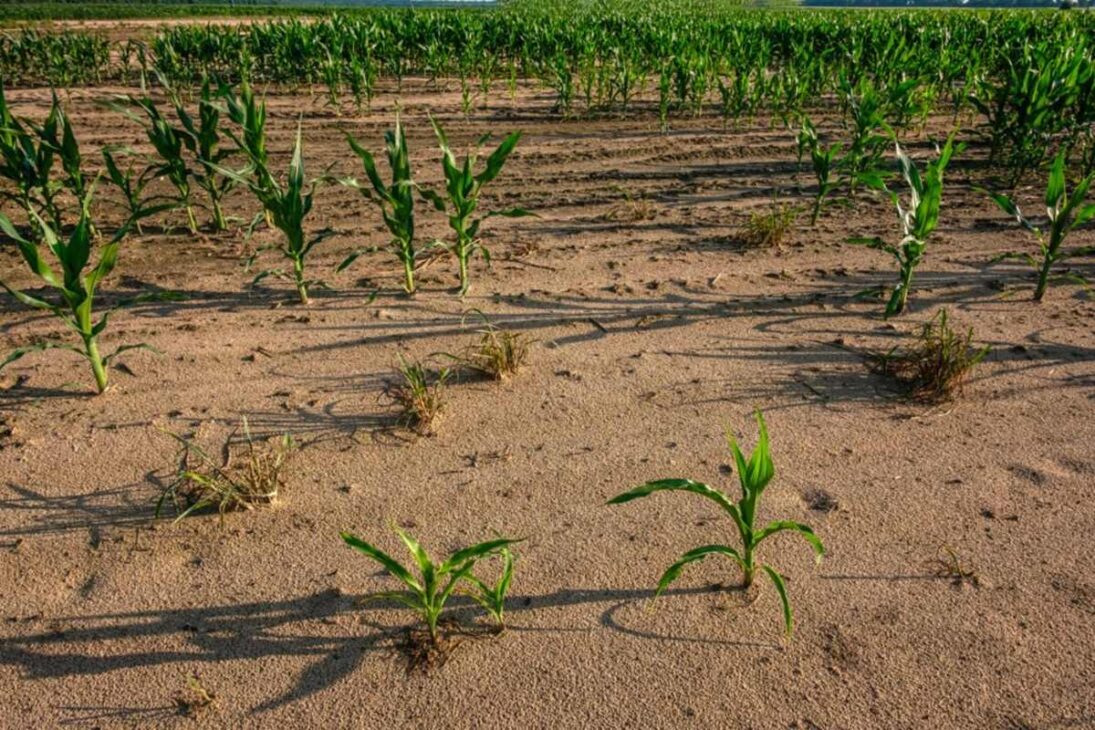
Inflation since the pandemic has raised production costs, while storms and droughts have drastically reduced crop productivity.
Now, farmers are harvesting a product that will be sold at prices below the breakeven point, without the presence of the largest buyer: China.
“We are in a significant and desperate situation,” Maupin told Tennessee Lookout.
Soybean Leads State Exports
Soybean generated over US$ 990 million in revenue in 2023 and led Tennessee exports, with US$ 489.4 million.
Still, producers could lose about US$ 84 per acre with the current harvest, according to estimates from the University of Tennessee.
The state is expected to accumulate losses of nearly US$ 110 million just from soybeans in 2025.
Tariffs Aggravated the Crisis
Since Donald Trump reinstated tariffs on Chinese products, China has imposed retaliatory tariffs on American soybeans and began boycotting these purchases.
The President of the American Soybean Association, Caleb Ragland, called for Trump to remove the tariffs and secure new purchase commitments.
In 2018, similar disputes cost US$ 9.4 billion to farmers, according to the USDA.
Extreme Weather Affected Crops
Alan Meadows from Lauderdale County said the harvest started well in March but was devastated by torrential rains and then by an extremely dry summer.
Additionally, equipment and inputs have become more expensive due to inflation and import tariffs.
“We just want a free, fair, and open market,” he said.
High Debt Risk
Maupin warns that even if a trade agreement comes about now, it will be too late to save the year for Tennessee producers.
Without revenue, many may struggle to pay basic bills or finance the next harvest.
Some will have to mortgage properties or personal belongings to obtain new loans.
Young Farmers Are the Most Vulnerable
Young farmers haven’t had time to build equity and withstand consecutive years of losses.
Maupin states that the only way out may be federal support or new internal markets, such as biofuels, encouraged by a law passed in July.
However, implementation is uncertain and slow.
Minnesota: Abundant Harvest but Without Buyers
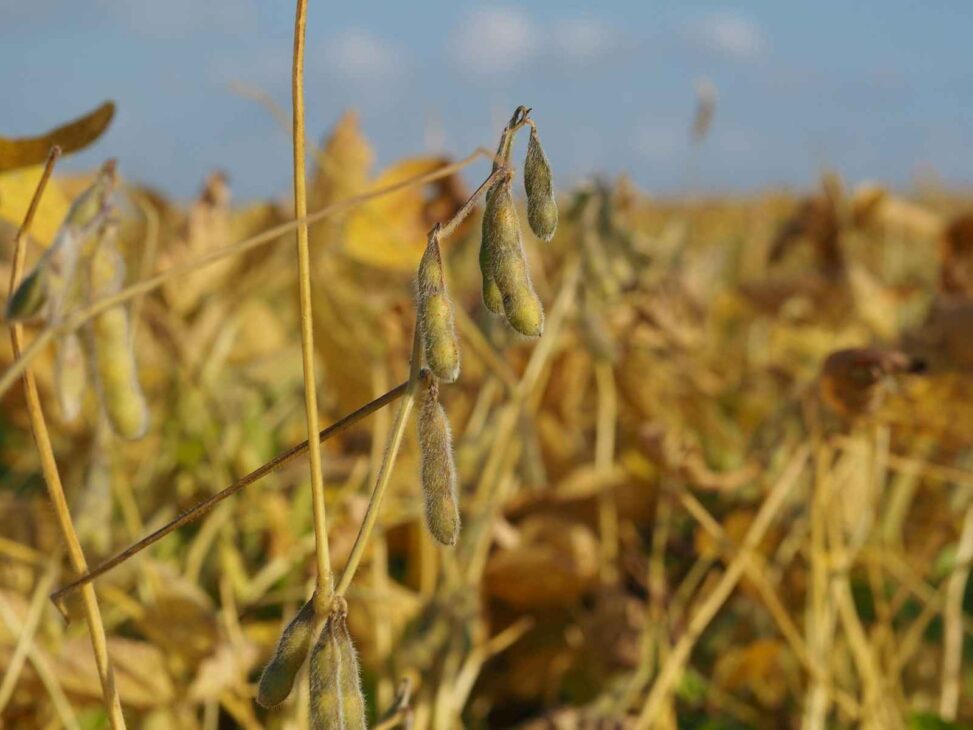
In the state of Minnesota, fields are full of healthy, productive pods, but buyers are scarce.
China has yet to reserve any shipment from the new American harvest, something unprecedented for this time of year.
This has driven soybean futures prices down to just above US$ 9 per bushel.
Stocks Without Storage Space
Darin Johnson, president of the Minnesota Soybean Growers Association, says producers are “sitting on large volumes” that would normally go to Asia.
Without an outlet, they will have to store the grains, but silo capacity is limited and a robust corn harvest is also approaching.
He states that, without new trade agreements, some form of federal assistance will be necessary.
Seeking Relief in Washington
Gail Donkers, a farmer and president of the Minnesota Soybean Research & Promotion Council, went to Washington to seek emergency help.
She fears losing decades of work building trade relations with China.
During the 2018-19 trade war, farmers received US$ 23 billion in government bailouts.
Concern Over New Bankruptcies
Thom Petersen, Minnesota’s Agriculture Commissioner, states that the state is also seeking federal support to avoid a wave of consolidations and bankruptcies.
Some producers report that they can’t even buy fuel for harvesters.
Soybean is the second largest crop in the state and yielded US$ 3.2 billion in 2024.
The agricultural cooperative CHS, based in Minnesota, has reduced its profit distribution to the lowest level in years due to low prices and tight margins.
The decline underscores the severity of the crisis facing producers in the state.
Local lawmakers are calling for the creation of new internal markets to compensate for the collapse of exports.
North Dakota: Total Dependence on China
In North Dakota, producers heavily depend on exports to China, but so far there have been no purchase commitments.
John Newton from the consulting firm Terrain said that commitments are at the lowest level since 2018-19.
This has kept prices depressed on the eve of the harvest.
Lines of Dialogue Remain Open
The North Dakota Soybean Council received a Chinese delegation in August.
Scott German, the local association director, says talks are ongoing, but Brazilian prices are more competitive.
“We need to take politics out of it,” he stated.
Inventories, Tariffs, and Legal Uncertainty
Newton notes that China stocked up on soybeans before Trump’s inauguration and can survive with Brazil and inventories for another harvest.
He says the Chinese play for the long term, without the political pressure that exists in the U.S.
A Supreme Court decision on the legality of Trump’s tariffs, expected in November, may affect negotiations.
Logistics Limit Gains in the State
Even when Southeast Asian countries buy soybeans from the U.S., shipments leave from the Gulf or the East Coast.
This means that North Dakota farmers, who ship via the Northwest Pacific, do not benefit from these sales.
Additionally, storms have destroyed silos and force producers to accept low prices at harvest.
Spotting Relief Signs
There are small positive points: beef prices are at record levels, and corn exports remain strong.
New soybean crushing plants recently opened in Jamestown and Casselton help keep part of the production in the state, raising local demand.
According to German, these factories “are a godsend right now.”
Pressuring for Federal Aid
During Trump’s first term, farmers received US$ 23 billion in aid to offset trade losses.
Now, lawmakers are discussing using part of the US$ 66 billion allocated for agriculture in the next decade to support the sector.
But many of the expected benefits would only arrive in the next harvest, warns Newton.
Senator John Hoeven stated that he is working with Senate leaders and the Department of Agriculture to support producers.
Meanwhile, farmers harvest with apprehension, unsure if they will be able to sell their crop profitably.
For many, survival depends on a new trade deal with China — or immediate federal relief.
Article written with information from Reuters, Agriculture, and Startribune.