






 Portuguese
  Spanish


A New Study Reveals That Electric Vehicles Do More Than Just Cut Emissions. They Also Reduce an Invisible Type of Pollution That Directly Affects People’s Health: Brake Dust.
A new study revealed a positive side effect of electric vehicles that goes beyond the elimination of exhaust smoke.
Pollution in cities goes beyond car exhaust.
A new study by EIT Urban Mobility and Transport for London reveals that electric vehicles also help reduce another significant source of emissions: brake dust.
-
Electric and Hybrid Cars Set to Transform Brazilian Streets: A New Era Begins

-
Chinese Giant Invests $1.3 Billion in Brazil to Produce 50,000 Cars Annually, Create Jobs, Develop Local Suppliers, and Manufacture Electric, Hybrid, and Combustion Models by 2027

-
Unprecedented achievement in India: a colossal 650-ton, nearly 3,000 hp excavator is transformed into 100% electric, marking a new phase in heavy mining.
-
Frightened by the speed of Chinese manufacturers, Renault decided to mimic the pace, made the new electric Twingo in just 21 months, wants to repeat the feat with 36 models by 2030, and along the way, will cut up to 2,400 engineering positions.

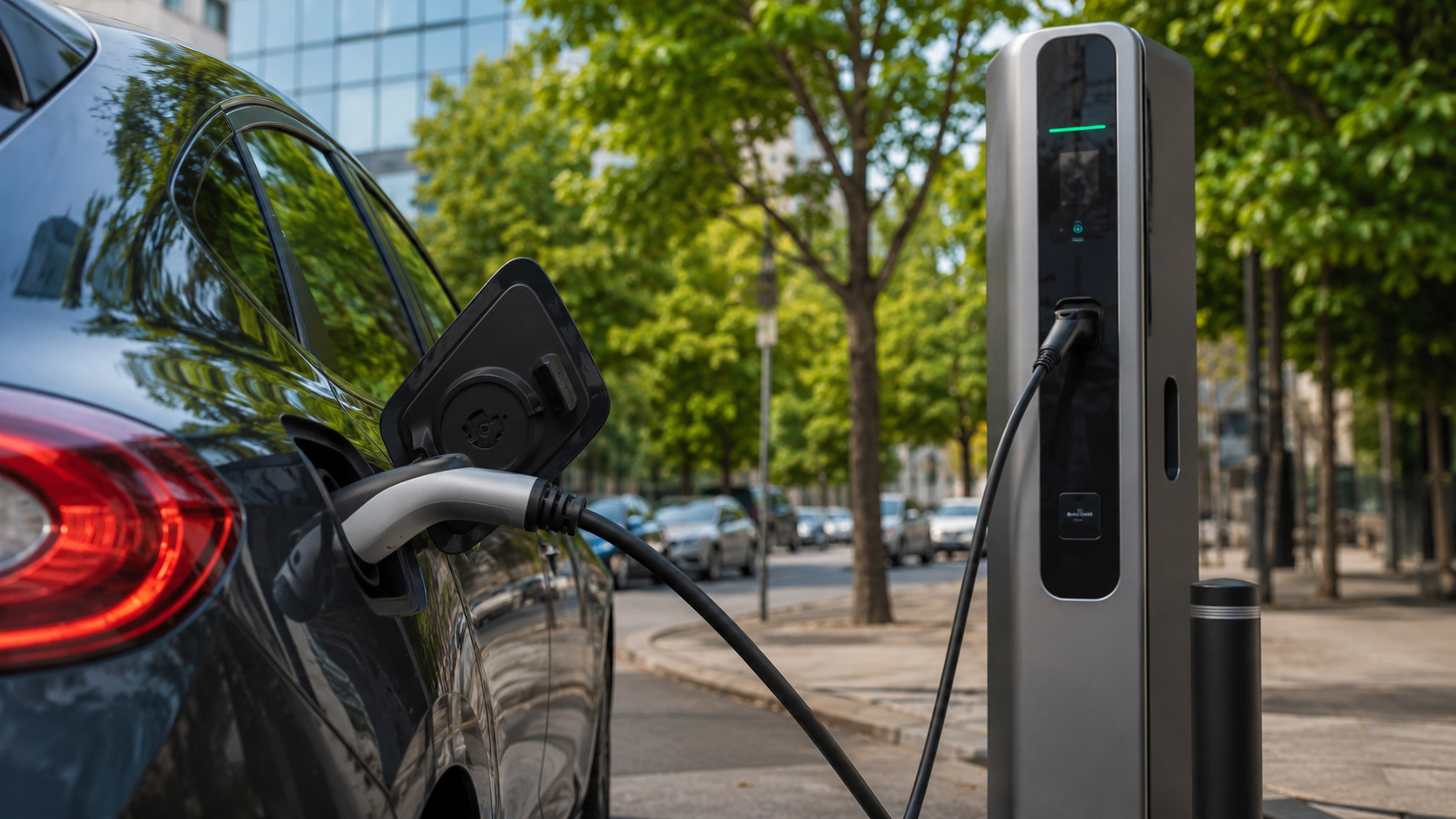
The research, conducted in London, Milan, and Barcelona, shows that battery electric cars reduce this type of pollution by 83%.
According to the researchers, the main reason is the regenerative braking technology.
This system allows electric vehicles to decelerate using the motor, reducing the reliance on conventional brakes. This generates less friction, less wear, and thus, less dust released into the air.
Emissions That Don’t Come from the Exhaust
The analysis focused on the so-called non-exhaust emissions.
As exhausts pollute less due to fleet electrification, other pollutants become more significant.
This includes brake dust, tire wear, and road wear.
Until now, some critics of electric vehicles argued that despite not emitting gases, they still pollute with brake and tire dust.
The response, now backed by numbers, shows that this argument does not hold. Electric cars outperform even hybrids in this regard.
Conventional hybrids, powered by gasoline, managed to reduce brake dust by 10% to 48%. Plug-in hybrids achieved a reduction of 66%.
But battery electric vehicles lead with 83%.
And Tires? And Weight?
The study also analyzed tire wear. Since electric vehicles tend to be heavier, greater wear was expected.
In fact, battery electric vehicles are about 20% heavier than gasoline ones. This happens because currently, most sold models are large SUVs.
Still, the weight difference is not as significant when comparing similar models.
A Tesla Model 3, for example, weighs only about 5% more than a BMW 3 Series. In other words, the extra weight is not always as relevant as it seems.
Moreover, tires generate a form of pollution that is less harmful than brake dust.
Only 1% to 5% of the rubber worn from tires turns into airborne particles. In the case of brakes, this number exceeds 40%.
Less of the Worst, a Little More of the Less Bad
Overall, electric vehicles come out on top. Even accounting for the additional 20% weight, they still produce 38% less combined emissions from brakes, tires, and road wear.
This does not even take into account exhaust gases, which simply do not exist in battery electric vehicles.
The study also created an interactive tool to simulate different types of transport and the associated emissions.
Electric vehicles appear as winners among the various types of propulsion analyzed.
Comparison with Motorcycles
When summing all forms of emissions — exhaust, tires, brakes, and road — electric cars come close to gasoline motorcycles.
Still, a regular motorcycle pollutes less per kilometer than an electric car. The difference is 57%.
However, the study highlights an important factor: vehicle occupancy.
Since cars carry more passengers than motorcycles, emissions per person can be lower in electric vehicles, depending on the number of occupants.
Public Transport and Changing Habits
Another central point of the analysis is “mode shift,” or switching from a car to another mode of transport.
Buses, for example, emit more pollutants per kilometer than cars. But since they carry many more people, emissions per passenger drop significantly.
A bus can emit 4 to 5 times more dust and wear than a car per kilometer traveled.
However, it carries many more people. In practice, this means lower emissions per person and less congestion on the streets.
Like cars, electric buses also outperform those powered by gasoline. The trend is that, with electrification, public transport will become even cleaner.
Walking and Biking: The Definitive Solution
The study goes beyond motorized vehicles. It reinforces the importance of walking and biking as ideal forms of urban transportation.
Walking or riding a bicycle has an insignificant environmental impact and brings health benefits.
The researchers’ recommendation is clear: cities should invest in infrastructure to facilitate these modes of transport. Fewer cars, more sidewalks, bike lanes, and safety for pedestrians.
As an example, the study cites electric bicycles, which combine the benefits of regular bikes with greater comfort in uphill and windy conditions.
They are a practical, clean, and accessible alternative for many urban journeys.
The study by EIT Urban Mobility and Transport for London leaves little room for doubt.
Electric vehicles not only eliminate exhaust pollution but also significantly reduce other sources of emissions, such as brake dust.






No calor do Brasil, acha mesmo que andar a pé ou de bicicleta é viável no dia a dia? Eu chsgsria a qualquer lugar precisando de um banho. Sem chance!
Nossa o site abre tanta propaganda que fica inviável ler a reportagem
A engenharia elétrica que controla a velocidade de zero ao limite estabelecido com torque (força) nominal é excepcional!!!