Portuguese
  Spanish


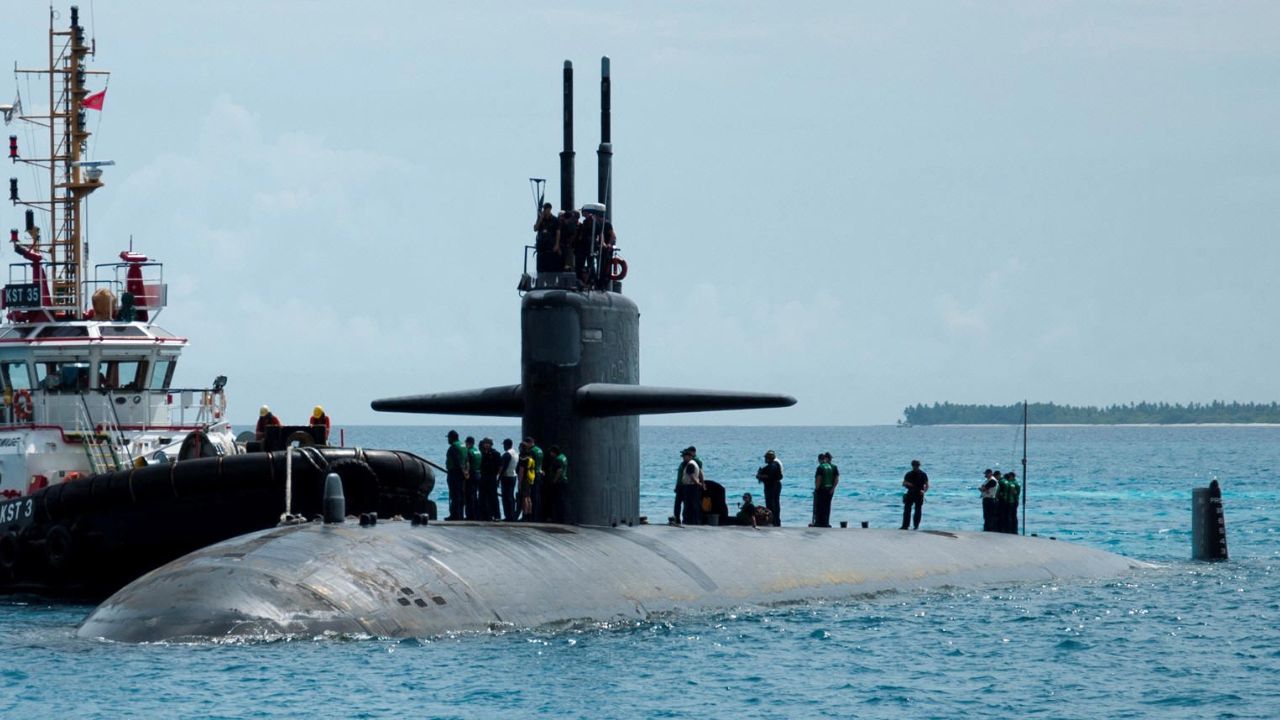

Ceremony in the U.S. Marks the End of Operations of the USS Helena, Nuclear Submarine that Served in Strategic Missions for Nearly Four Decades.
The nuclear submarine USS Helena (SSN-725), one of the longest-serving in the fleet of the United States, was officially decommissioned on July 25, in a ceremony held at the U.S. Naval Undersea Museum in Keyport, Washington State. After 38 years of active operation, the vessel concludes its journey as one of the last representatives of the first generation of the Los Angeles class, considered for decades the main pillar of American submarine force.
Nuclear Submarine USS Helena: Nearly Four Decades of Service
The retirement of the USS Helena symbolizes not only the end of a vessel but also the technological transition of the U.S. Navy, which is advancing with newer, more modern, and efficient models.
The submarine will be sent for dismantlement at the Puget Sound Naval Shipyard, where it will undergo a rigorous process of recycling and safe removal of nuclear fuel.
-
North Korean Fiasco: Launch of the Largest Warship Ends in Sinking

-
While giant ships still burn heavy fuel and the maritime sector races against climate targets, Maersk and Vale are starting to bet on ethanol as a new route to reduce emissions at sea.

-
China begins construction of the world’s largest LNG ship, a 344-meter giant capable of supplying 4.7 million homes for a month, carrying 271,000 m³ of gas, and placing QatarEnergy in the largest naval order ever recorded in world history.
-
China is designing a container ship with a thorium nuclear reactor that will operate for 40 years without refueling, and the 25,000-container giant from Jiangnan Shipyard will cross oceans without emitting carbon in an industry that burns 300 million tons of fuel per year.



Commissioned in 1987, the USS Helena nuclear submarine served in various regions around the globe, including the Atlantic, Pacific, Indian, and Mediterranean Oceans.
Its missions varied between security patrols, intelligence gathering, support for special operations, and anti-submarine warfare.
In addition to its operational versatility, the USS Helena received several commendations throughout its career, including five Meritorious Unit Commendations and two Battle Efficiency “E” Awards, recognitions that reinforce its operational excellence within the U.S. fleet.
The USS Helena was the 37th submarine of the Los Angeles class, a model that dominated U.S. submarine operations during and after the Cold War.
These vessels were designed to operate silently in strategic areas, with the capability to launch Tomahawk missiles, conduct mine warfare, and support naval operations worldwide.
With the advancement of new generations, such as the Virginia class submarines, the U.S. Navy has been progressively retiring older models.
Currently, only the USS Newport News (SSN-750) remains active as an example of the original configuration with depth control planes positioned on the sail, known as fairwater planes.
Commander Highlights Legacy and Symbolism of the USS Helena
During the ceremony, Commander Kyle Jones, the last to lead the vessel, emphasized the historical significance of the USS Helena. He classified the nuclear submarine as a symbol of “courage, resilience, and unwavering commitment to defending American ideals.”
The commander also highlighted the significance of the vessel’s name, which honors the city of Helena, the capital of Montana. This was the fourth vessel in the U.S. Navy to carry that name.
Final Destination: Safe Recycling and Environmental Commitment
With the flag officially lowered, the USS Helena will be sent to the Ship-Submarine Recycling Program, a U.S. Navy program dedicated to the dismantlement of nuclear ships.
The process includes structural dismantlement and controlled removal of nuclear fuel, following strict safety and environmental sustainability protocols.
This program ensures that decommissioned nuclear submarines have an appropriate destination, with minimal environmental impact and total transparency in the decommissioning processes.
The conclusion of the USS Helena’s activities represents more than the departure of a historic vessel: it marks the end of an era of technological supremacy of the Los Angeles class nuclear submarines.
Its silent contribution to the strategic interests of the U.S. will continue to be remembered as an example of engineering, dedication, and operational effectiveness.