






 Portuguese
  Spanish


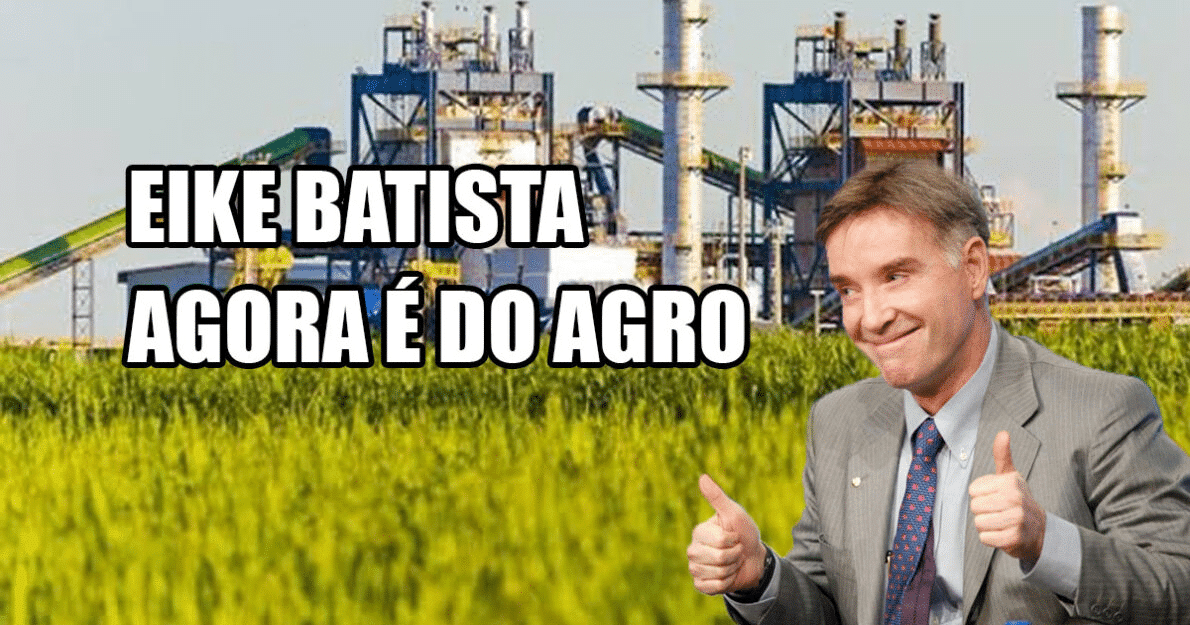


Eike Batista’s “Super Cane” Promises More Biomass Per Hectare And To Double National Production!
The “super cane”, an innovative project conceived by entrepreneur Eike Batista, has stirred the sugar and energy sector once again after a billion-dollar announcement.
The investment group Brasilinvest, led by entrepreneur Mário Garnero, has committed to an investment of US$ 500 million to develop this new variety of sugarcane.
The investment involves resources from the funds Abu Dhabi Investment Group (ADIG) from the United Arab Emirates and General Finance from the United States.
-
As Engineering Jobs Decline in Brazil, Professionals Eye the U.S. with 186,500 Annual Openings and Salaries Up to $170,000

-
Brazilian Innovator Develops Concrete Blocks from Recycled Plastic, Eliminating Mortar and Reducing Construction Costs
-
World’s Most Powerful MRI Machine in France, Weighing 132 Tons and Generating 11.7 Tesla Magnetic Field, Offers Unprecedented Clarity of the Human Brain
-
Brazilian Woman Builds House with Recycled Plastic Bottles, Halving Construction Costs in the Process


According to Batista, this new variety could be a game changer in biofuel production, as it produces two to three times more ethanol per hectare and 10 to 12 times more biomass compared to traditional cane.
Luis Rubio, CEO of BRXe and a partner of the entrepreneur, detailed that there are 17 varieties or clones of super cane, with the most promising being SC157070.
The project is expected to start generating revenue from 2028.
A Promising Innovation Or A Risky Bet?
Despite Batista’s enthusiasm, not everyone in the sector believes in the potential of super cane. Rubens Ometto, CEO of Cosan (CSAN3), revealed that his company has already studied this technology but decided to not move forward.
For him, the great revolution in the sugar and energy sector will come from second-generation ethanol (E2G), a technology that allows for more biofuel extraction from conventional cane waste.
Even with this resistance, the promise of a significant increase in ethanol production catches attention.
The question remains: if all the cane grown in Brazil were replaced by super cane, how much ethanol could be produced?
The Impact of Super Cane on National Ethanol Production
The consulting firm StoneX estimates that ethanol production in Brazil, combining the Central-South and North-Northeast regions, will reach 37.4 billion liters in the 2024/2025 harvest.
From this total, 8.33 billion liters (22.3%) will come from corn ethanol, while the remainder will originate from conventional cane.
For the 2025/2026 cycle, StoneX has not yet released complete estimates for the North-Northeast region, but there are some preliminary projections.
Marcelo Bonifácio, an analyst at the consulting firm, explains that the region is expected to maintain its conventional cane ethanol production, while corn ethanol may grow by around 300 million liters with new plants coming online, such as Inpasa in Balsas (MA) and another unit in Pará, expected by the end of 2025.
If we apply the yield of super cane to the current figures, Brazil could increase its production to between 74.8 billion and 112.2 billion liters of ethanol in the 2024/2025 harvest.
For 2025/2026, this figure would range between 74.2 billion and 111.3 billion liters.
Super Cane vs. Corn: Which Has Greater Potential?
The growth of corn ethanol in Brazil has been significant, but Luis Rubio argues that this comparison does not make sense.
“Corn is a completely different crop, a short-season harvest that can be stored and used throughout the year”, argues the CEO of BRXe.
The numbers reinforce this difference.
According to the Union of Sugarcane Industry and Bioenergy (Unica), 1 ton of corn can produce between 380 and 410 liters of ethanol, while 1 ton of cane produces only 43 liters of the biofuel.
This disparity makes corn ethanol a viable alternative, especially in regions where cane production is limited.
Challenges for Implementing Super Cane
Despite the theoretical advantages, the large-scale adoption of super cane faces significant challenges. The sector still needs:
- More scientific studies to prove the feasibility of the new variety.
- Government support to encourage its implementation.
- Adapted infrastructure to process a larger volume of biomass.
- Market acceptance, especially from large plants and fuel distributors.
Moreover, issues like pest resistance, production costs, and environmental impact still need to be further explored before super cane becomes a reality in Brazilian fields.
The Future of Super Cane in Brazil
Even with uncertainties, the multi-million investment and the potential to triple ethanol production make super cane a project worth watching.
If testing and implementation are successful, Brazil could establish itself as the world’s largest producer of ethanol, expanding its share in the global biofuel market.
The expectation now is to follow the next steps of the project and see if this innovation will indeed become a reality or if it will be just another chapter in the long journey of revolutionary promises by entrepreneur Eike Batista.


