Portuguese
  Spanish


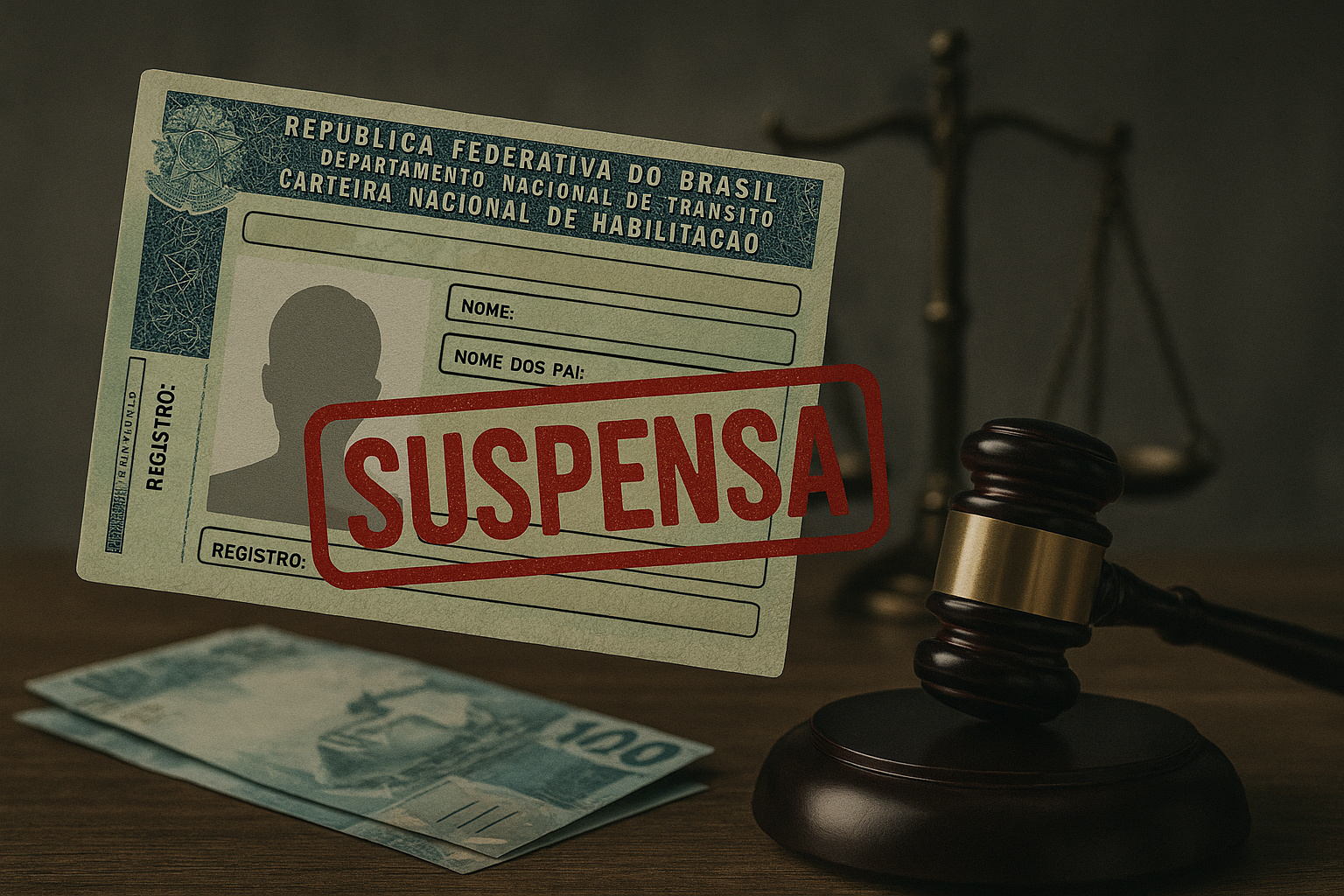


Illegal Suspension of the Driver’s License Generates Right to Compensation: Courts Have Established Up to R$ 10 Thousand and Determined the Return of Points to Affected Drivers.
The National Driver’s License (CNH) is an essential document for millions of Brazilians. More than allowing the right to drive, it is directly linked to the professional and personal life of those who depend on the vehicle to work, study, or commute. Thus, when the State suspends the CNH without respecting due process, the consequence can be disastrous — and the courts have recognized the driver’s right to compensation for moral and material damages, as well as the return of improperly applied points.
The Brazilian Traffic Code (CTB) stipulates that the suspension of the right to drive must be preceded by a regular administrative process, with the right to broad defense and adversarial proceedings (art. 265). When this rule is not followed, the suspension is considered illegal and opens the way for judicial redress.
Cases in Which the Suspension Is Considered Illegal
The CNH suspension can be annulled when it is identified:
-
“Man with Bipolar Disorder Claims ChatGPT Exacerbated Delusions, Leading to Suicide Attempt”

-
U.S. House Approves Bill to Protect Children on Social Media, Limit Addictive Features, and Demand New Measures from Platforms, But Senate Differences Could Stall Progress
-
78-Year-Old Brazilian Farmer Wins Legal Battle for Ownership of 108,000 m² of Land After Decades of Dispute with Federal Government

-
Brazilian Supreme Court Pauses Fines for Workplace Regulation Violations for 90 Days, but Companies Must Still Address Harassment and Overwork



- Unjustified fines or fines issued in duplicate, with no possibility for the driver to defend themselves;
- Irregular notification, when the driver was not properly informed of the infraction or the process;
- Administrative errors by the Detran, such as attributing points from another vehicle to the wrong driver;
- System failures, which prevent monitoring or filing appeals within the deadline;
- Automatic suspensions, without individual case analysis or without giving a chance for defense.
In all these situations, the courts have understood that the damage goes beyond inconvenience: there is a violation of fundamental rights, such as the right to a full defense and the free exercise of one’s profession, especially for those who depend on the CNH to work.


Judicial Decisions That Consolidated the Understanding
In recent years, several state courts have ordered the State and traffic agencies to compensate drivers in cases of illegal suspension of the CNH:
- The TJDFT ordered Detran to compensate a driver in R$ 10 thousand for erroneously suspending their license without respecting the due administrative process.
- In the TJRS, a driver was recognized the right to the return of improperly recorded points on their CNH, along with compensation of R$ 7 thousand for moral damages.
- The TJSP annulled the suspension of a taxi driver who relied on the CNH to work, ordering the State to pay compensation for lost profits in addition to moral compensation.
These precedents reinforce that arbitrary suspension cannot be treated as a mere bureaucratic error: when there is damage, compensation is due.
What Compensation Can Be Requested
The compensations recognized by the Justice vary according to the case:
- Moral damages: amounts between R$ 5 thousand and R$ 10 thousand, depending on the severity of the suspension and the damages caused.
- Material damages: return of improperly paid fees, canceled fines, or lost profits when the driver loses income due to inability to work.
- Return of points: annulment of records applied illegally, ensuring the correct return of points to the record.
Additionally, the Justice has determined the immediate restoration of the right to drive when the suspension is deemed null.
How the Driver Should Act in Case of Illegal Suspension
- Gather documents: notifications, infraction notices, CNH statements, and proof of address.
- Check deadlines: it is essential to demonstrate if there was a notification outside the deadline or lack of notice.
- Keep evidence of damages: receipts for alternative transport, loss of income, or unfulfilled contracts.
- Seek a lawyer or Public Defender: to file a lawsuit for annulment of suspension and compensation for damages.
In the Special Courts of the Public Treasury, actions of up to 60 minimum wages can be filed without initial costs, facilitating access to Justice.
A Reinforcement of Respect for Legal Guarantees in Administrative Processes
The message from the courts is unequivocal: suspending the CNH without respecting the law generates State liability. It is not merely a bureaucratic failure, but a violation of fundamental rights, which can be costly to the public treasury.
For the driver, the message is clear: those who suffer an unjust suspension of the CNH can appeal, request the return of points, and also receive compensation for moral damages, with amounts that have already reached R$ 10 thousand.
More than repairing individual damages, these decisions reinforce the importance of respect for legal guarantees in administrative processes that directly affect the lives of millions of Brazilians.