Portuguese
  Spanish



While Cheaper New SUVs Limit Comfort And Performance, The Used Market Opens Space For More Complete, Larger And Better-Equipped Models In The Same Price Range
The cheapest SUV in Brazil currently is the Fiat Pulse, which starts at R$ 102,990 equipped with a 1.3 aspirated engine and manual transmission. For many consumers, this configuration meets daily needs well. However, for those looking for more comfort, more technology, better performance, and a more complete package, the used market makes much more sense.
It’s precisely at this point that used SUVs up to R$ 119,000 gain prominence. With this budget, it’s already possible to move up a category, access more spacious models, more efficient turbo engines, and levels of equipment that rarely appear in entry-level new SUVs. In addition, there’s no need to resort to older vehicles or those with complicated maintenance, provided that the choice is well made.
The information was released by Auto+, which analyzed the market and selected used SUVs that still make sense in Brazil, focusing on cost-benefit, reliability, and mechanical balance. The list includes subcompact SUVs to medium models and a large seven-seater SUV, all within a price range considered strategic for Brazilian consumers.
-
End of an era in Brazil: beloved sedan by Brazilians is discontinued despite having a 2.0 engine with 151 hp, CVT transmission, 466-liter trunk, and up to 650 km of range.

-
New Law Proposal in Brazil Could Heavily Penalize Drivers: Dangerous Overtaking May Become a Serious Offense with Fines Increased Tenfold and a 12-Month License Suspension; Update on 2026 Progress

-
Electric Revolution: Watts W125 Motorcycle Offers 160 km Range, 90 km/h Speed, and Affordable Price Starting at $3,000
-
General Motors Replaces Over a Thousand Workers with 50 Cobots at Electric Vehicle Plant, UAW Union Criticizes Move Amid Industry’s Automation Push


Renault Kardian Première Edition 2025 Stands Out Among Subcompacts By Uniting Modern Design, Turbo Engine, And Low Mileage
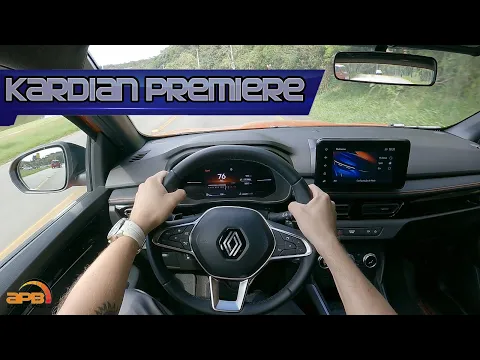

In the subcompact SUV segment, the Renault Kardian Première Edition 2025 appears as one of the most interesting and at the same time most unjustly overlooked options in the market. Part of this perception comes from the image built by Renault in Brazil in previous years, but the model marks a clear turning point for the manufacturer.
Launched in March 2024, the Kardian is part of the brand’s new phase, known as Renaulution. It uses the RGMP platform, the same one employed in European Renault models, and received updates in the 2026 line, presented in August. Therefore, the 2025 version remains extremely up to date in the used market.
The Première Edition version already has low mileage, costing an average of R$ 110,277. Its engine is the 1.0 turbo TCe, with three cylinders, delivering between 120 and 125 hp and torque of 20.4 to 22.4 kgfm, always associated with a six-speed automated transmission. In dimensions, the Kardian measures 4.11 meters in length, has 2.60 m in wheelbase, and a trunk capacity of 358 liters, numbers that are quite competitive for the category.
Peugeot 2008 Active 2025 Delivers A New Car Feel, Good Technology Package, And Modern Mechanics

Moving up to the compact SUV segment, the new generation Peugeot 2008 is already starting to appear below R$ 120,000 in the used market, especially in the Active version, with an average price of R$ 117,579. The model arrived in Brazil in August 2024, which guarantees a real feeling of a practically new car.
Built on the CMP platform of the Stellantis group, the same one used in several European models from the brand, the 2008 uses the 1.0 turbo T200 engine, delivering between 125 and 130 hp and 20.4 kgfm of torque, combined with a CVT transmission that simulates seven speeds. The setup is focused on comfort and efficiency in urban and highway use.
In measurements, the Peugeot 2008 has 4.30 meters in length, 2.61 m in wheelbase, and a trunk capacity of 374 liters. Even in the entry-level version, it already offers digital dashboard with i-Cockpit 3D, wide multimedia center, cruise control, and electronic parking brake. The main absence is the proximity key, an item that may bother some more demanding consumers.
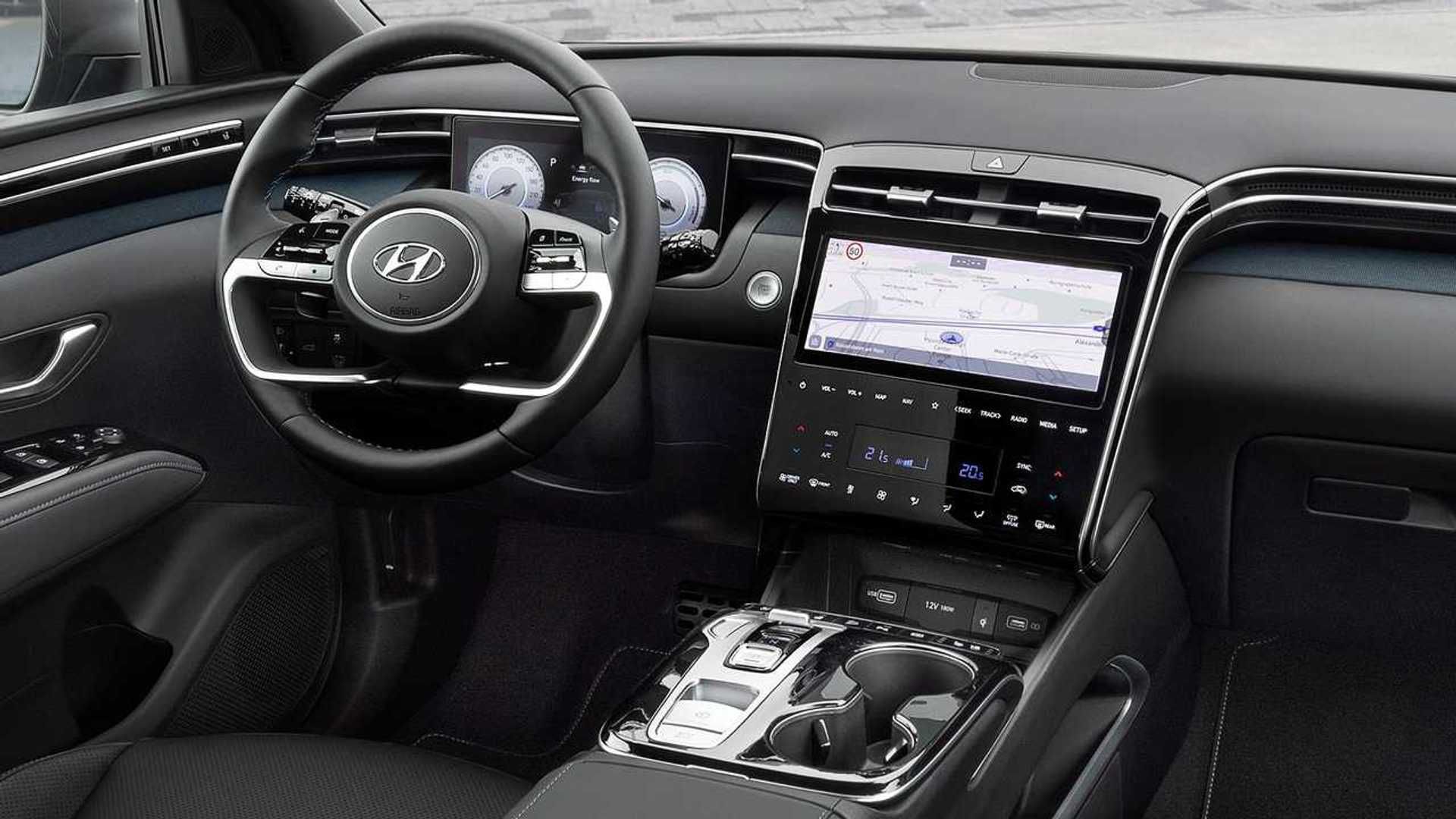
Hyundai Tucson GLS 2021 Emerges As A Reliable Alternative To More Sought-After Medium SUVs
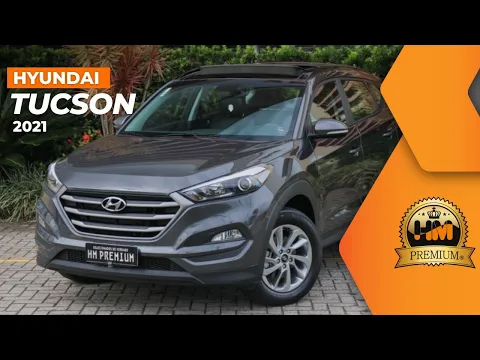
In the medium SUV segment, many buyers focus their attention on the Jeep Compass 2.0, known for oil cooler issues in certain units. This scenario opens space for less obvious alternatives, such as the Hyundai Tucson GLS 2021, which today appears for around R$ 114,614.
The Tucson uses the 1.6 turbo gasoline engine from the Gamma family, widely recognized for its reliability and still present in the Creta Ultimate. In this model, the setup delivers 177 hp and 27 kgfm of torque, mated to a seven-speed automated transmission. Another technical highlight is the independent suspension on all four wheels, something increasingly rare in the segment.
In terms of size, the Tucson offers 4.47 meters in length, 2.67 m in wheelbase, and a generous trunk capacity of 513 liters, surpassing many direct competitors. The catch is that it is not flex, using only gasoline.
Volkswagen Tiguan Allspace Comfortline 2019 Offers Seven Seats, Ample Space, And A Good Mechanical Package

For those who need real space and are thinking of family, the Volkswagen Tiguan Allspace Comfortline 2019 emerges as one of the most interesting options up to R$ 119,000, with an average price of R$ 118,349. It’s a large seven-seater SUV, something rare in this price range.
The model is equipped with the 1.4 TSI flex engine, which delivers 150 hp and 25.5 kgfm of torque, paired with a six-speed automatic transmission. The performance is not sporty, but sufficient for the size of the vehicle, with acceleration from 0 to 100 km/h in about 9.5 seconds.
Fuel consumption is impacted by weight and size, something expected in the segment. According to Inmetro, the Tiguan Allspace achieves up to 11.7 km/l with gasoline on the highway. In terms of dimensions, it measures 4.70 meters in length, 2.79 m in wheelbase, and up to 686 liters of trunk space with five seats in use. With seven occupants, the volume drops to 216 liters, still a reasonable number for the proposal.
In the end, the choice becomes clear: is it worth more to have a smaller, new SUV or to move up a category in the used market, giving up the manufacturing year to gain space, comfort, and technology?
Source: AutoMais TV